Description
Oregon Wheat Growers League, [No date: circa 1975]. Spiral Bound, 42 pp.; 28 cm; illustrated with line drawings; colored section-title leaves.

Rare, out-of-print & unusual books · Since 1997
Turn the pages with the arrows, keyboard, or a swipe.
Oregon Wheat Growers League, [No date: circa 1975]. Spiral Bound, 42 pp.; 28 cm; illustrated with line drawings; colored section-title leaves.
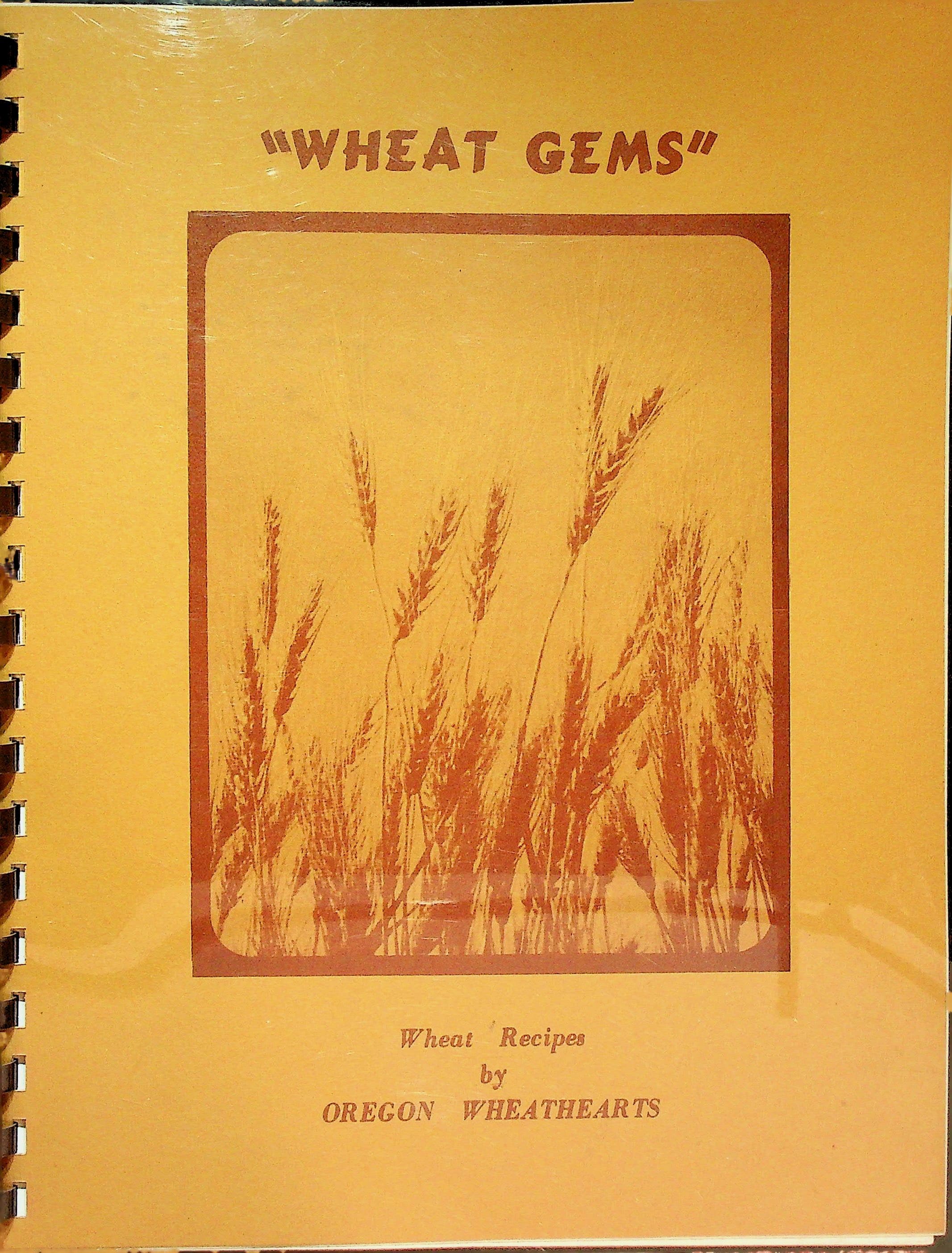
In Very Good condition. Mustard card covers printed in brown with a photographic image of wheat heads on front, rear cover plain, both under clear plastic sheets; brown plastic comb binding. Mild shelf and edge wear. Binding tight. Pages clean. Laid in: Wheat Flour Institute chart "a Kernel of Wheat" (Chicago, 1964), and two separate single-sheet Oregon Wheat Commission fact sheets on yellow and pale green paper, "Fact Sheet about American Wheat Exports" (printed signature of Ralph McKenna) and "Fact Sheet about U.S. Wheat," each folded horizontally. Otherwise unmarked. Community cookbook compiled by the Oregon Wheathearts, wives of Oregon Wheat Growers League members, to promote bulgur, cracked wheat, wheat germ, rolled wheat, ground wheat and whole wheat berries in the home kitchen. Sections for basic recipes, soups, salads, main dishes, accompaniments, breads and sourdough, breakfasts, desserts and quantity cooking, with bulgur used as a meat extender and in place of rice throughout (Bar-Be-Que Bulgur, Hawaiian Bulgur Patties, Bulgur Swedish Cabbage Rolls, Tacoburgers). Home winemaking tips explain the free federal permit (Form 1541 from the Alcohol, Tobacco and Firearms office in Seattle, up to 200 gallons a year, issued to the male head of household only), followed by a Canadian Whisky, or wheat wine, recipe from Condon, Oregon. The League was formed at Moro in 1926 after the winter wheat losses of 1924-25; the Oregon Wheat Commission, created in 1947 and funded by a producer tax on wheat, promoted export demand. In the laid-in fact sheets (fall 1975), wheat at Portland is down from $5.42 to $3.25 a bushel while bread has risen to 40 cents a loaf, of which the grower's share is about 5 cents. The Commission blames "political opportunists and special interest groups" for two months of interrupted sales to cash buyers, a reference to the 1975 dispute in which the AFL-CIO and the International Longshoremen's Association refused to load grain bound for the Soviet Union and further Soviet sales were suspended.