Description
Kangaroo Press (Kenthurst, N.S.W.), Published 1983. Hardcover, vii, 168 pp.; 25 cm; illustrated with black-and-white photographs; reprint edition (first published in 1982 by Boolarong Publications). Foreword by H.W. Thiele, Ph.D.

Rare, out-of-print & unusual books · Since 1997
Turn the pages with the arrows, keyboard, or a swipe.
Kangaroo Press (Kenthurst, N.S.W.), Published 1983. Hardcover, vii, 168 pp.; 25 cm; illustrated with black-and-white photographs; reprint edition (first published in 1982 by Boolarong Publications). Foreword by H.W. Thiele, Ph.D.
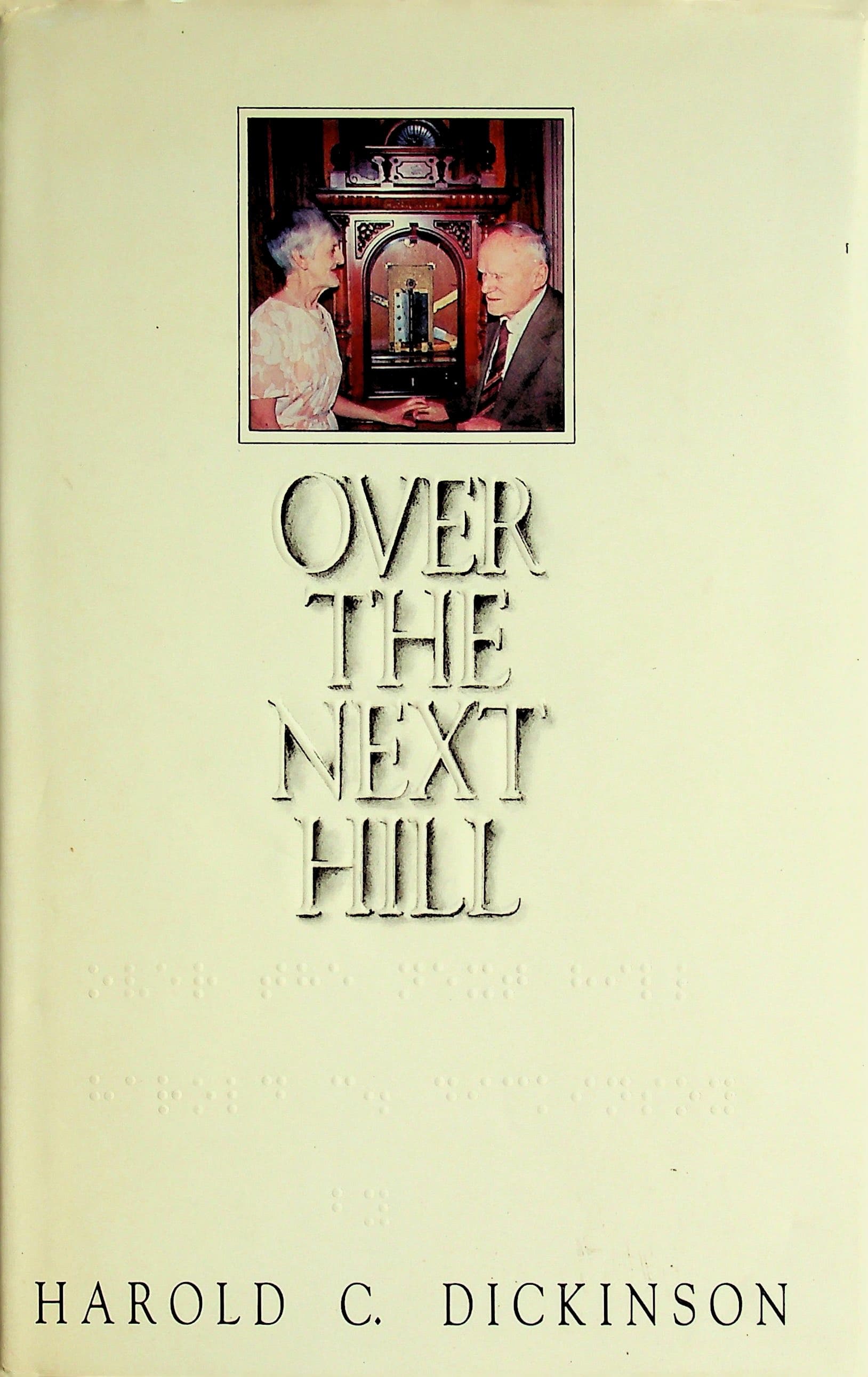
In Very Good condition with a Very Good dust jacket. Blue textured boards with silver spine lettering; mild shelf wear to the covers, binding tight. Pages clean, with a small black ink 'iv' notation to the bottom edge of the text block; otherwise unmarked. Cream pictorial jacket with inset photograph of the author and his wife, and the title rendered in both raised type and braille; 1/2 inch tear to the paper over the top edge of the rear panel near the spine, a few small edge nicks, light creasing along the edges, mild shelf wear overall and some toning to the spine. Now in an archival quality (removable) Brodart cover.[From the jacket flap] Harold Dickinson lost his sight in early childhood and grew up in an education system which, by present day standards, made extremely limited provision for the blind. Despite this, his contributions to society and his technical achievements have been extensive and his life has been full of the richness of music and literature, and of enterprises planned and well carried out. He was awarded the M.B.E. in 1967 in recognition of his achievements and for his pioneering work in the use of machinery by blind people in industry. He suffered the pangs of the Depression, the death of his wife and parents and later the death of his older brother with whom he was partner in a furniture business. In 1962 he married Mercy Griffith, a Fulbright Scholar, university graduate and teacher, despite her own blindness since the age of seven. In 1963 he commenced work as the Foundation Director of the Training and Placement Centre for the Blind in Queensland, and with Mercy as his guiding spirit, saw this enterprise develop into a viable and on-going institution. He retired in 1978 to concentrate on his hobbies of restoring clocks and music boxes, and reading. This book should be read, not only by those who have a sympathy for the blind, but also those who seek some inspiration, those with some disability who may learn from this man's philosophy, and it should be read by the community at large because here is a man who could stand alongside the renowned Helen Keller as one who has found it more blessed to give than receive.Contents: Acknowledgements; Foreword; Beginnings; England; Sydney; Toowoomba; Hendra; School; "The Moving Finger Writes -"; ". . . And Having Writ - Moves On"; "The Old Order Changeth"; Epidemic; Variations on a Theme; Last Years at School; Our Work Together Begins; The Good Companions; Man Does Not Live By Bread Alone -; Theme and Development; Mounting Adversity; Electric Machines; "Shoes and Ships and Sealing-Wax"; "Of Cabbages and Kings!"; War; Mavyn; The Circle Breaks; "A Thing of Shreds and Patches"; England Again; Hanover and the Pied Piper; Wimbledon Park and St. Ives; In Search of Facts and Friends; "Goodbye, Piccadilly!"; Epilogue.