
Description
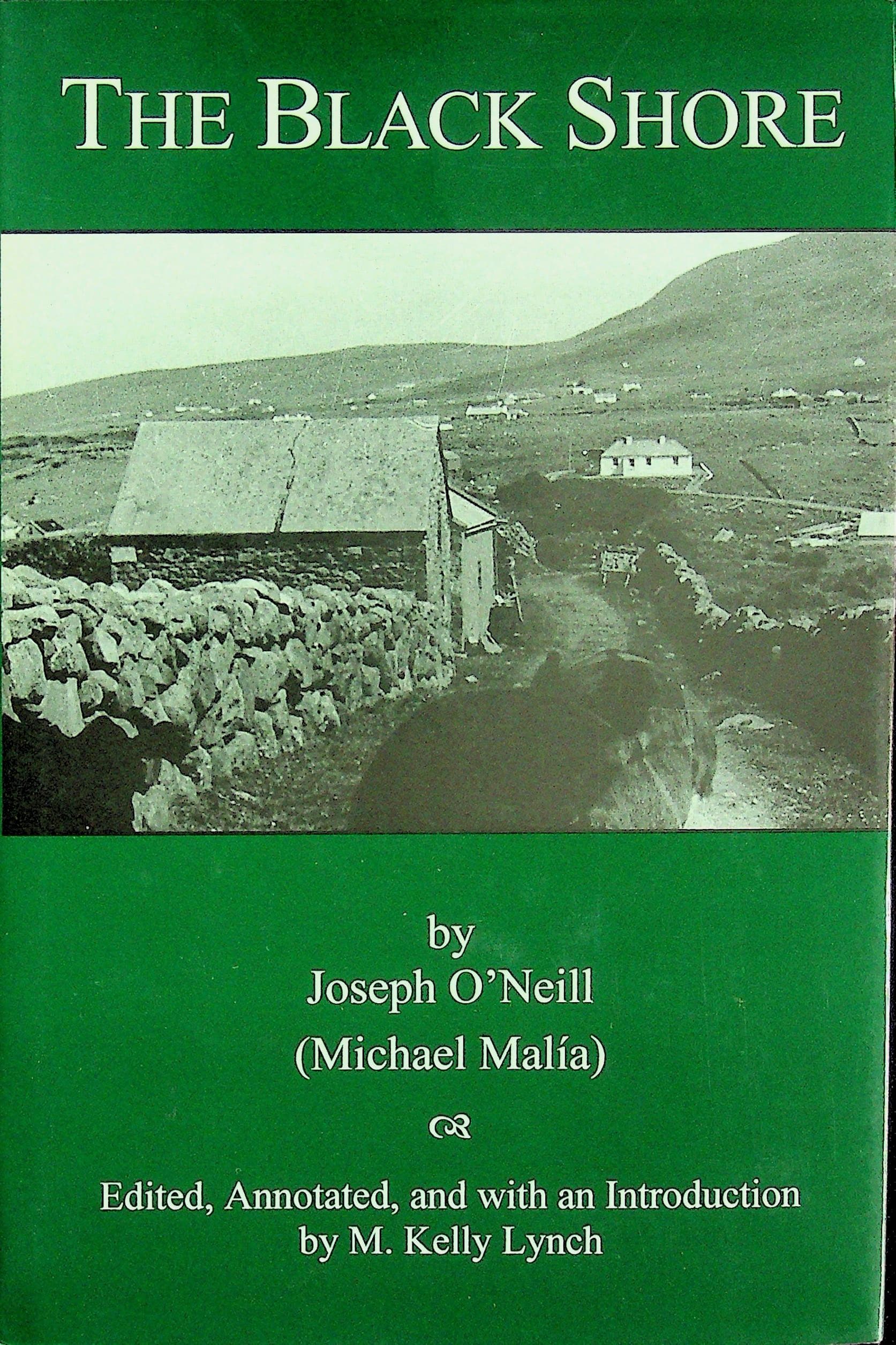
Bucknell University Press [Published date: 2000]. Hard cover, 263 pp. Inscribed (personalized) and signed by M. Kelly Lynch (Editor) on title page. Very good in very good dust jacket. Black cloth covered boards with gold lettering on spine. Light bumping and scuffing to edges of covers. Binding tight. Pages clean and unmarked. Dust jacket has a few tiny nicks and light creasing along the edges. Light overall scuffing to jacket as well. Now in an archival-quality (removable) Brodart Cover.. NOT Ex-library. NO remainder marks. [from jacket flaps] The Black Shore by "Michael Malta" is actually the final novel of the Irish counter-Utopian and historical novelist Joseph O'Neill. Written in 1947-48, five years before his death, The Black Shore is extremely important to a complete understanding of O'Neill's works in that it shows clearly that although his previous novels were set in times and places as remote as Norse Dublin of the eleventh century, Jerusalem of 33 A.D., the English Renaissance, under the ground, and in the future, he was clearly writing about Ireland and the Irish, but fearful of doing so directly because he was for most of his adult life an Irish civil servant, the Permanent Secretary of Education of the Irish Free State. Even this novel, written after he had retired from civil service, he wrote under a pseudonym. In The Black Shore, O'Neill finally expresses his criticism of Ireland, Irish nationalism, and Irish Catholicism, often in hilariously satiric scenes and with a cast of characters as ugly and unsavory as any to be found in modem Anglo-Irish literature. Here are the Irish usurers, the drunks, the fanatic nationalists, the sexually repressed; here are women who are nothing but baby factories and men who regard their wives' refusals of sexual intercourse a sin against their God-given marital rights. Here are the priests who relish their food, their whiskey, and their tobacco while their parishioners starve, and priests so devout that they wear hair shirts and flagellate themselves until they go mad. . . The Black Shore is also a fitting final statement of the man Joseph O'Neill who spent twenty-five years buried in the bureaucracy of the Irish Department of Education, loathing the petty, bourgeois life he lived, longing for the heroic past, for the time - if it ever existed - when a man s thoughts and actions functioned in accord. In each of the previous novels the protagonist remains on the threshold of some heroic action which he does not complete; here, he simply sighs, accepts his lot and gets on with a life without swords, stolen kisses, or striding the ramparts - life as it is - quiet, gray, dull, absurd, but livable. This edition of The Black Shore includes a glossary of Irish words and phrases appearing in the text, as well as footnotes identifying sources for many of the quotations O'Neill employs and explaining regional references not familiar to a contemporary or non-Irish reader.