
Description
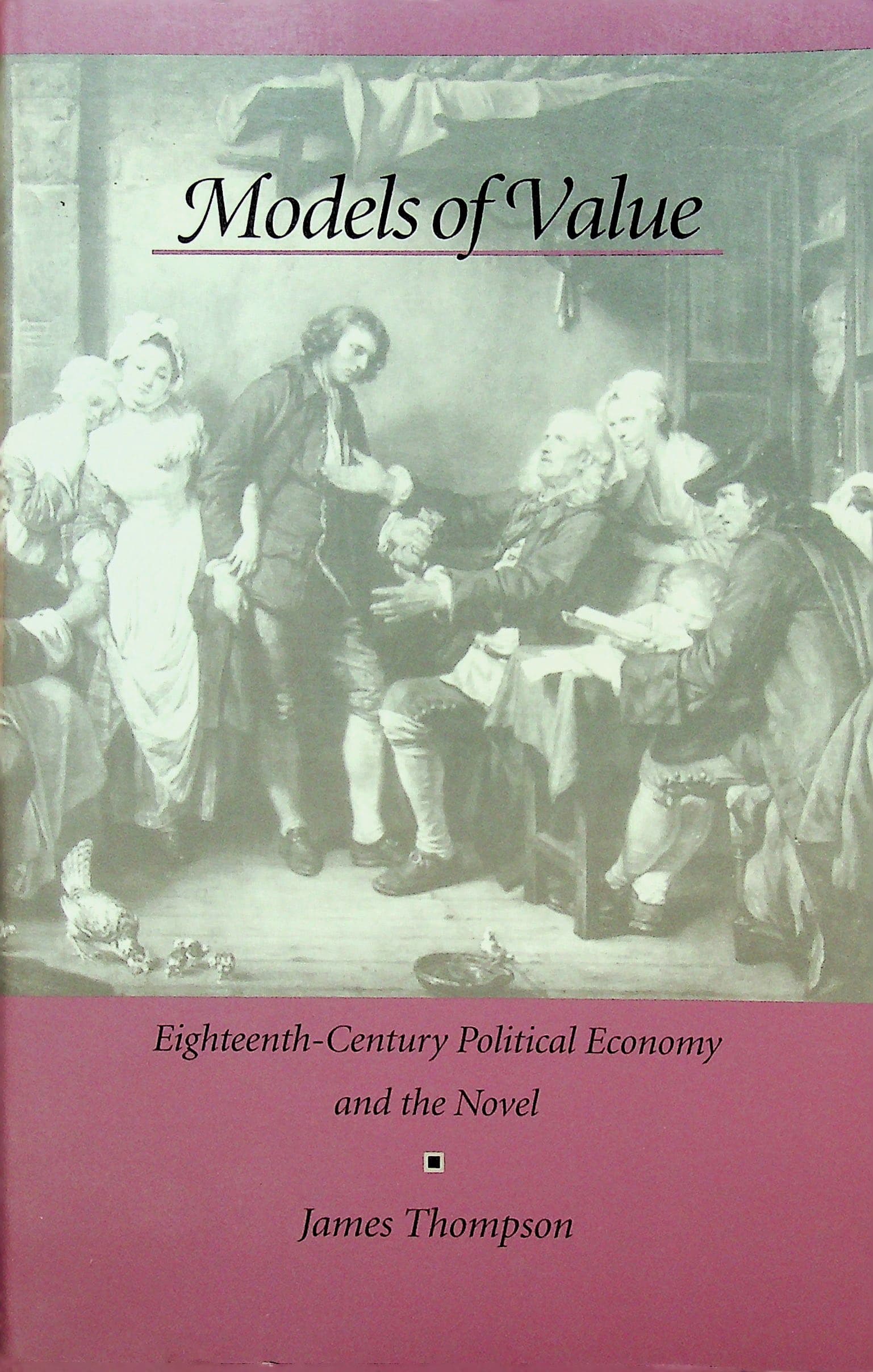
Duke University Press, Published 1996. Paperback, viii, 271 pp.; 23 cm. In Very Good condition. Glossy illustrated paper covers with bumping and creasing to edges and corners and mild shelf wear. Black remainder mark on bottom edge of text block. Binding tight, pages clean and unmarked.[From back cover] James Thompson examines the concept of value as it came to be understood in eighteenth-century England through two emerging and divergent discourses: political economy and the novel. By looking at the relationship between these two developing forms (one having to do with finance, the other with romance) Thompson demonstrates how value came to have such different meaning in different realms of experience. A highly original rethinking of the origins of the English novel, Models of Value shows the novel's importance in remapping English culture according to the separate spheres of public and domestic life, men's and women's concerns, money and emotion. In this account, political economy and the novel clearly arise as solutions to a crisis in the notion of value. Exploring the ways in which these different genres responded to the crisis (political economy by reconceptualizing wealth as capital, and the novel by refiguring intrinsic or human worth in the form of courtship narratives) Thompson rereads several literary works, including Defoe's Roxana, Fielding's Tom Jones, and Burney's Cecilia, along with influential contemporary economic texts.One of the founding texts of the 1990s economic turn in eighteenth-century novel studies; Lennard J. Davis in Eighteenth-Century Fiction called it a brilliant contribution to the history of the novel. Cover art: L'Accordee de Village by Jean-Baptiste Greuze (Musee du Louvre).Contents: Acknowledgments; Introduction: Models of Value; Representation and Exchange; Money as Sign; Defoe and the Narrative of Exchange; Fielding and Property; Burney and Debt; Conclusion: Austen and the Novel; Notes; Works Cited; Index.