Description
International Textbook Company, Published 1936. Hardcover, v, 68, 66, 52 pp.; 20 cm; illustrated with black-and-white line engravings throughout, including full-page plates.

Rare, out-of-print & unusual books · Since 1997
Turn the pages with the arrows, keyboard, or a swipe.
International Textbook Company, Published 1936. Hardcover, v, 68, 66, 52 pp.; 20 cm; illustrated with black-and-white line engravings throughout, including full-page plates.
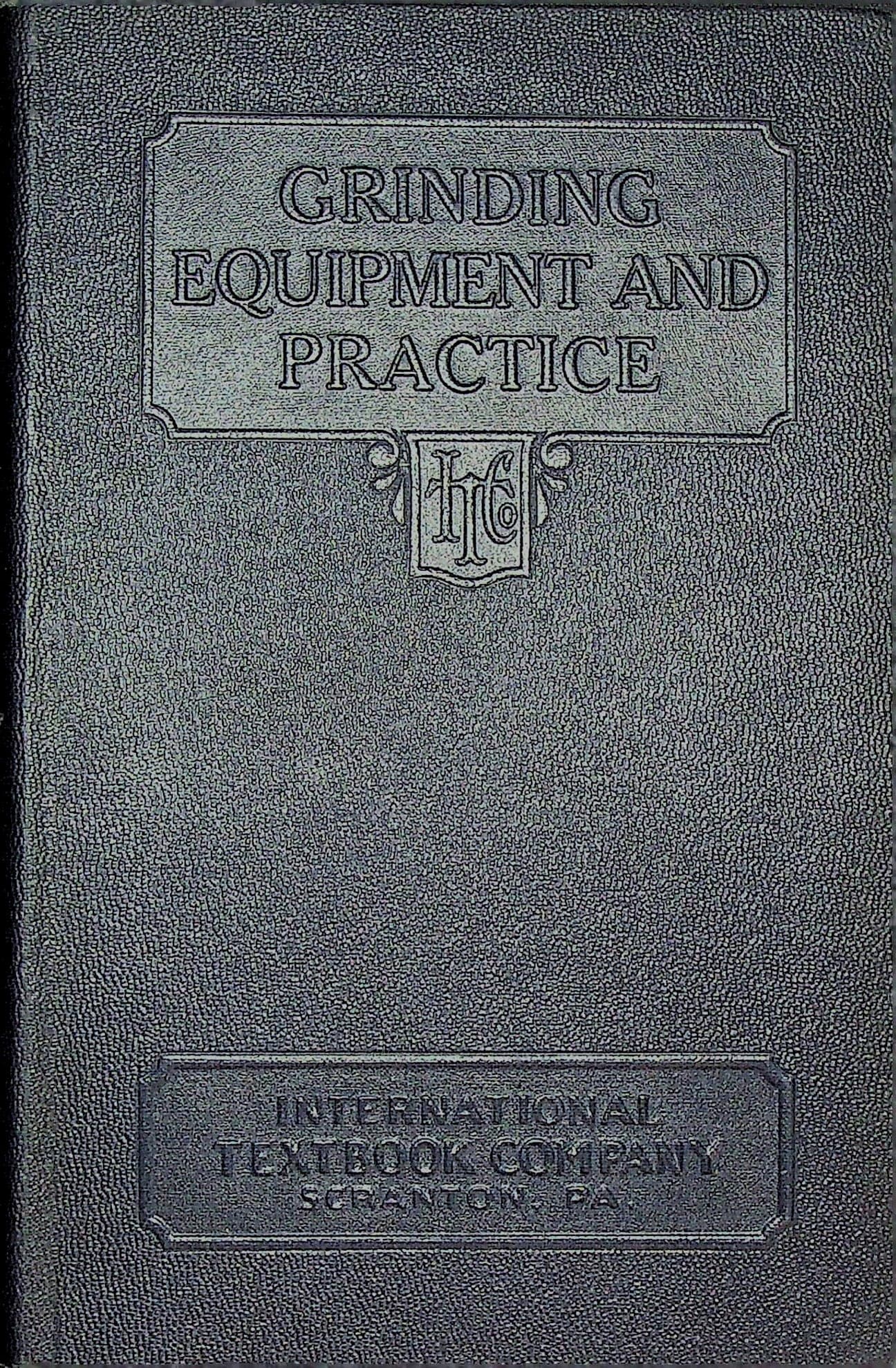
In Very Good condition, no dust jacket. Black pebble-grained cloth, blind-stamped title panel and International Textbook Company monogram on front cover, blind-stamped publisher's panel at foot, gilt lettering on spine bright with no wear to spine. Mild shelf and edge wear. Binding tight. Green and cream marbled endpapers, blue-stained page edges. Pages clean and unmarked.Volume 184 in the bound series issued by International Textbook Company, the publishing arm of the International Correspondence Schools of Scranton, Pennsylvania. ICS grew out of a mine-safety question-and-answer column run by Thomas J. Foster in the Colliery Engineer and Metal Miner and enrolled its first class of 500 miners in 1891; cumulative enrollment reached four million by 1930, making it the most successful correspondence school in American history. The bound volumes gathered the loose serial-numbered Instruction Papers into permanent form, this one comprising Grinding Equipment (Serial 2237, Edition 2), Grinding Practice, and Tool Grinding. The first section is the materials-and-machines half: abrasives natural and artificial, emery and corundum against alundum, aloxite, adamite, boro-carbone and carborundum, the composition and truing of grindstones, then grain, grade, bonding, shape and balancing of manufactured wheels and their mountings, and finally the machines, bench and floor grinders, swing-frame, portable air-motor, electric and flexible-shaft grinders, plain and universal cylindrical grinders, roll and cylinder grinders, surface and disk grinders, and the centerless machine. The second section is about running them: speeds and wheel contact, glazing and loading, chattering and feed lines, cylindrical grinding between centers and in the chuck, taper and crankshaft work, magnetic chucks and surface grinding, internal and taper-hole grinding, polishing belts and buffing wheels, and a long treatment of lapping down to valve seats and diamond tools. Tool Grinding closes the volume with the sharpening of lathe and planer tools, milling cutters, formed gear cutters, spiral mills, circular saws, reamers, taps and chasers, twist drills and the testing of drill points, and the use of oilstones. A notice on the copyright page explains the publisher's practice of periodic review, each section carrying an edition date recording the year it was last examined and passed as sound; Grinding Equipment and Grinding Practice are both marked 1936 over copyrights of 1934 and 1933 respectively (each also 1927), while Tool Grinding carries copyrights of 1934 and 1927.Contents: Grinding Equipment: Grinding Wheels; Grindstones; Grinding Materials; Composition and Use of Grindstones; Manufactured Grinding Wheels; Grain, Grade, and Shape; Wheel Mountings; Grinding Machines; Hand Grinding Machines; Machine, or Automatic, Grinders. Grinding Practice: Machine Grinding, Polishing, and Lapping; Machine Grinding; Introduction; Cylindrical Grinding; Flat, or Surface, Grinding; Internal Grinding; Polishing Devices; Buffing; Lapping. Tool Grinding: General Equipment; Tool-Grinding Machines; Grinding Lathe and Planer Tools; Grinding Milling Cutters and Reamers; Tool Grinding Methods; Examples of Tool Grinding; Grinding Taps and Chasers; Drill Grinding; Oilstones.