Description
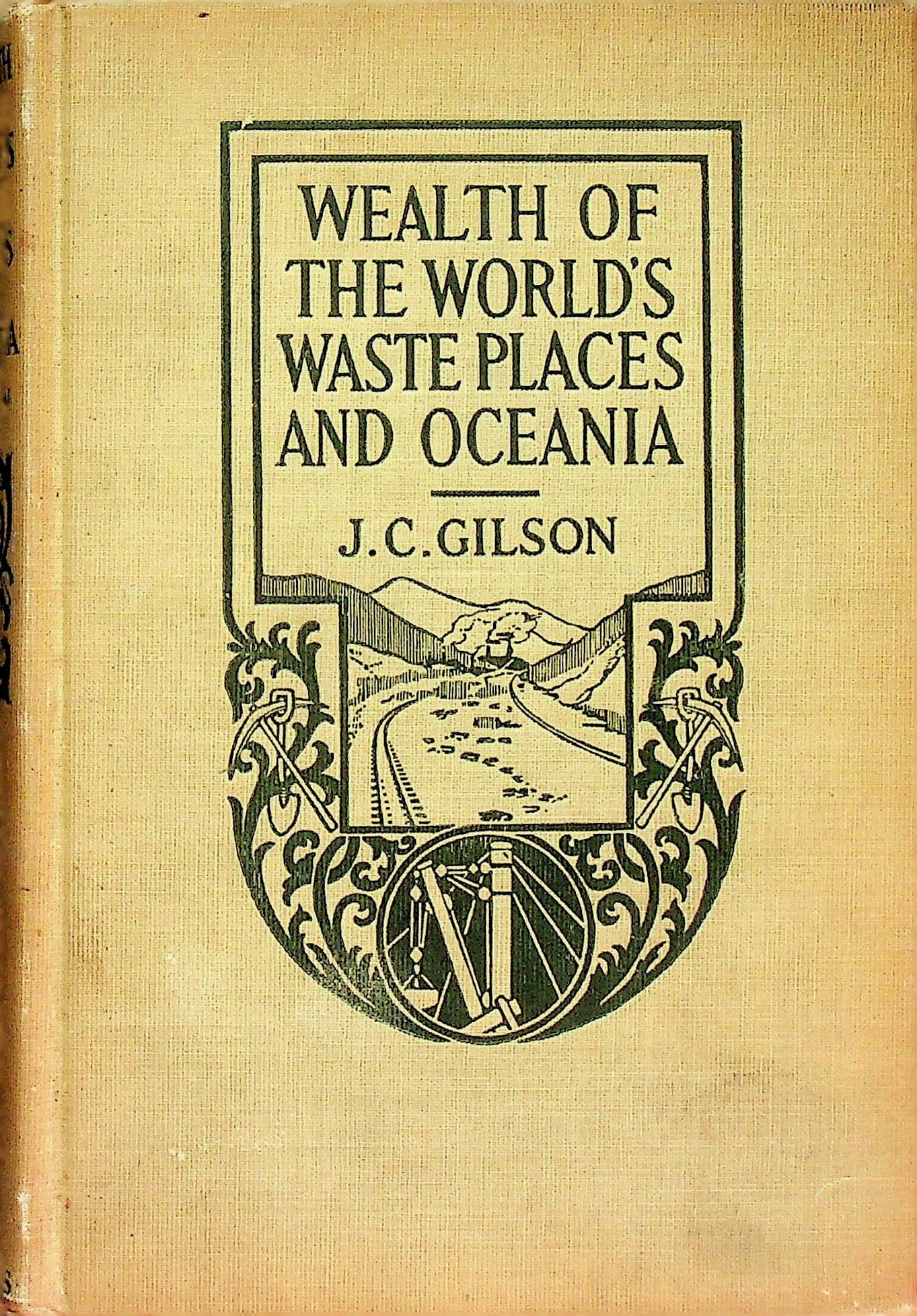
Charles Scribner's Sons, Published 1913. Hardcover, xiii, 327 pp.; 19 cm; First Edition (1913); Redway's Geographical Readers series; illustrated with over 60 black-and-white photographic plates.

Rare, out-of-print & unusual books · Since 1997
Turn the pages with the arrows, keyboard, or a swipe.
Charles Scribner's Sons, Published 1913. Hardcover, xiii, 327 pp.; 19 cm; First Edition (1913); Redway's Geographical Readers series; illustrated with over 60 black-and-white photographic plates.
In Good condition, no dust jacket. Publisher's tan pictorial cloth, stamped in dark green, with light to moderate soiling, darkening, and shelf wear to the covers and a few small nicks to the cloth at the corner tips and spine ends. Binding tight. Endpapers toned, with browning to the front free endpaper. Interior pages toned but otherwise unmarked.A Progressive-era geographical reader arguing that the world's "waste places" (deserts, polar regions, high mountains) hold hidden economic value and stand in "definite relation to the rest of the world, and therefore to the well-being of man." Part I surveys the arid Southwest, the Grand Canyon, Yellowstone, Death Valley, the Andes, Siberia, the Sahara, the polar regions, the Baku oil fields, and the South African diamond fields; Part II covers Oceania, "more especially our island possessions in the Pacific Ocean," including Hawaii, Guam, the Philippines, and the Dutch East Indies. Written by Jewett C. Gilson, former Superintendent of Schools in Oakland, California, with the subject of Part I suggested by the geographer Jacques W. Redway, F.R.G.S. A characteristic document of pre-First World War American commercial geography, reflecting both the era's resource-optimism and the post-1898 framing of the Pacific as American territory.Contents, Part I (Wealth of the World's Waste Places): The Wealth of the Arid Southwest; The Grand Canyon of the Colorado; Yellowstone Park; Two Prehistoric Cemeteries; Death Valley; The Mineral Wealth of the Andes; The Czar's Greater Domain; The Mystic Highlands of Asia; The Primal Home of the Saracen; The Sahara; Polar Regions, The Conquest of the Arctic; Polar Regions, Antarctica; Iceland; Greenland; Where the Two Great Oceans Meet; Reclaimable Swamp Regions; Strange Rock Formations (Natural Bridges, Table Mountain of California, Gibraltar); The Baku Oil Fields; The South African Diamond Fields. Part II (Oceania): The Islands of the Pacific; Australia; The Great Barrier Reef; The Gold Fields of Australia; Tasmania; New Zealand; Samoa and Fiji; The Hawaiian Islands; Guam; The Philippine Islands; The Dutch East Indies (Java, Sumatra and Celebes); Borneo and Papua.