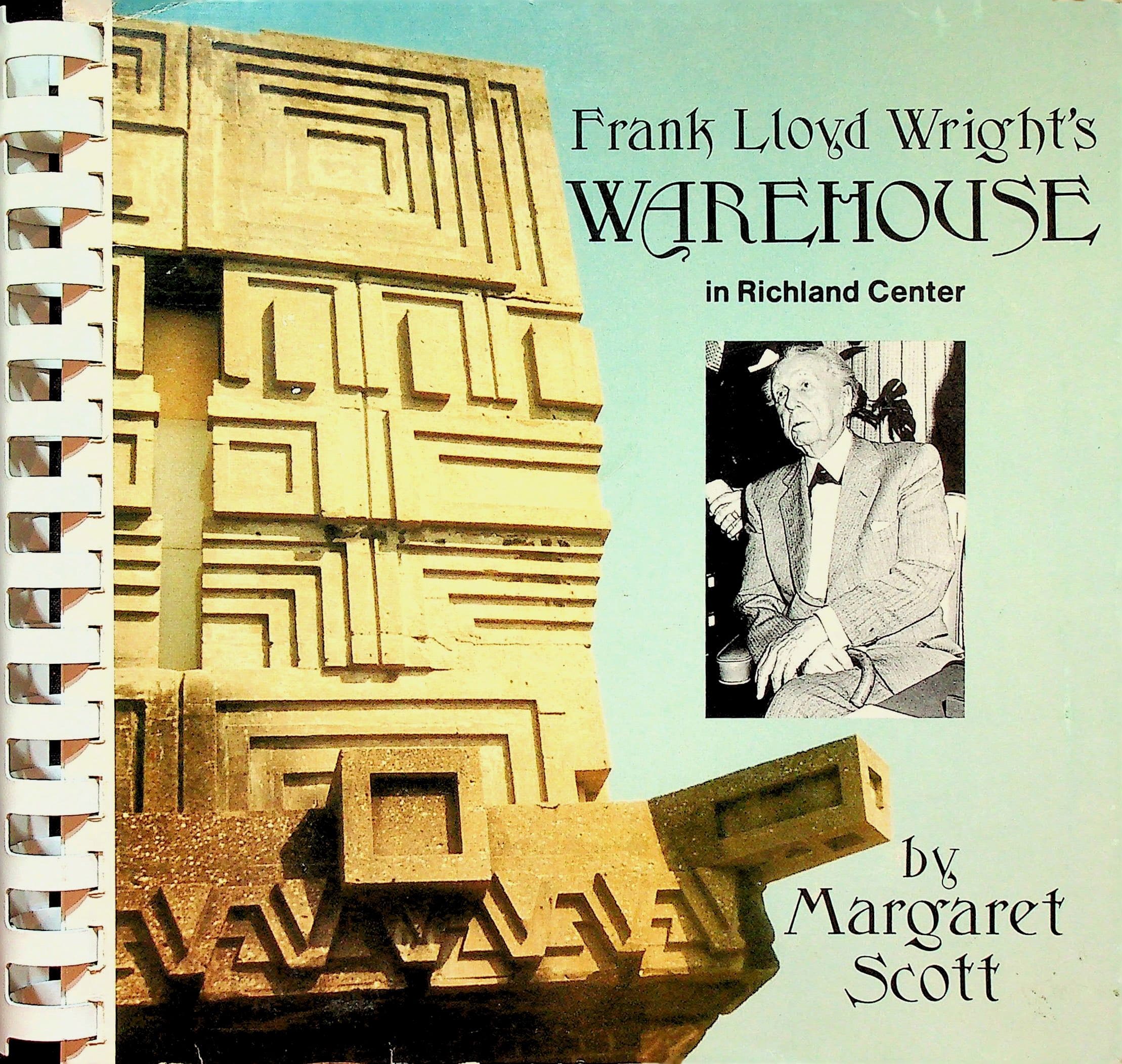
Description
Richland County Publishers, Published 1984. Plastic comb bound, xvi + 230 pp; 21 cm; the only edition issued; illustrated throughout with black-and-white photographs and architectural drawings (sixty-plus illustrations in total). Pictorial paper covers with a color photograph of the warehouse's textile-block ornament on the front and an author portrait on the rear. Inscribed by the author in black ink on the title page: "Sincerely, Margaret H. Scott."
Condition & notes
In Very Good condition. Covers show light bumping to the edges and mild shelf wear with a hint of color loss along the edges. Binding tight. Pages clean. Otherwise unmarked.The A.D. German Warehouse, commissioned in 1915 by Richland Center merchant Albert Dell German and constructed beginning in 1917, is one of Frank Lloyd Wright's few commercial buildings in the Mayan Revival decorative-concrete manner that he would more fully develop in the textile-block houses of southern California a few years later (Hollyhock, Storer, Freeman, Ennis). Construction halted in 1921 over financing; the building was never fully completed as Wright intended and stood for decades as a partially finished shell in the architect's own hometown.Margaret Helen Scott was, at the time of writing, in her 86th year, a Richland Center native and a librarian, educator, and local historian who had organized the County Historical Room of the Brewer Memorial Library; this was the sixth of her books on Richland County history. The project was undertaken at the suggestion of Bruce Barrett, a former Frank Lloyd Wright apprentice, who supplied materials and recorded interviews with townspeople and others who had known Wright or worked on the warehouse. The book is grounded in those interviews together with the published Wright literature (Scully, Twombly, Henning, Drexler, Wright's own Autobiography, the Richland Observer) and is dedicated "To the Memory of Frank Lloyd Wright who built a Warehouse in my Home Town."Contents: Introduction, followed by twenty-one chapters: Truth Against the World; They Named Him Frank; Mama's Boy; Within, Without; What Man Wears a Cape?; What Is Money?; Hiroshige's "Sudden Shower at Ohashi"; Tower Hill, Hillside, Taliesin; To My Neighbors; Blackened Walls; The Warehouse, Where?; Prerequisites; As a Tree Grows; "At the Rim of the Well of the Itzas"; Frank, We Must Stop; Death of a Grandiose Dream; From Slippery Elm to Television Sets; A Noble Effort; Two Rural Towns; The Pillars Rejoice; Tribute to Genius; with addenda, bibliography, and index.