Description
Oxford University Press, Published 1986. Paperback, xv + 365 pp.; 23 cm; Oxford India Paperbacks series; illustrated with 7 maps. Copyright page bears only the 1986 statement with no later printing notations.

Rare, out-of-print & unusual books · Since 1997
Turn the pages with the arrows, keyboard, or a swipe.
Oxford University Press, Published 1986. Paperback, xv + 365 pp.; 23 cm; Oxford India Paperbacks series; illustrated with 7 maps. Copyright page bears only the 1986 statement with no later printing notations.
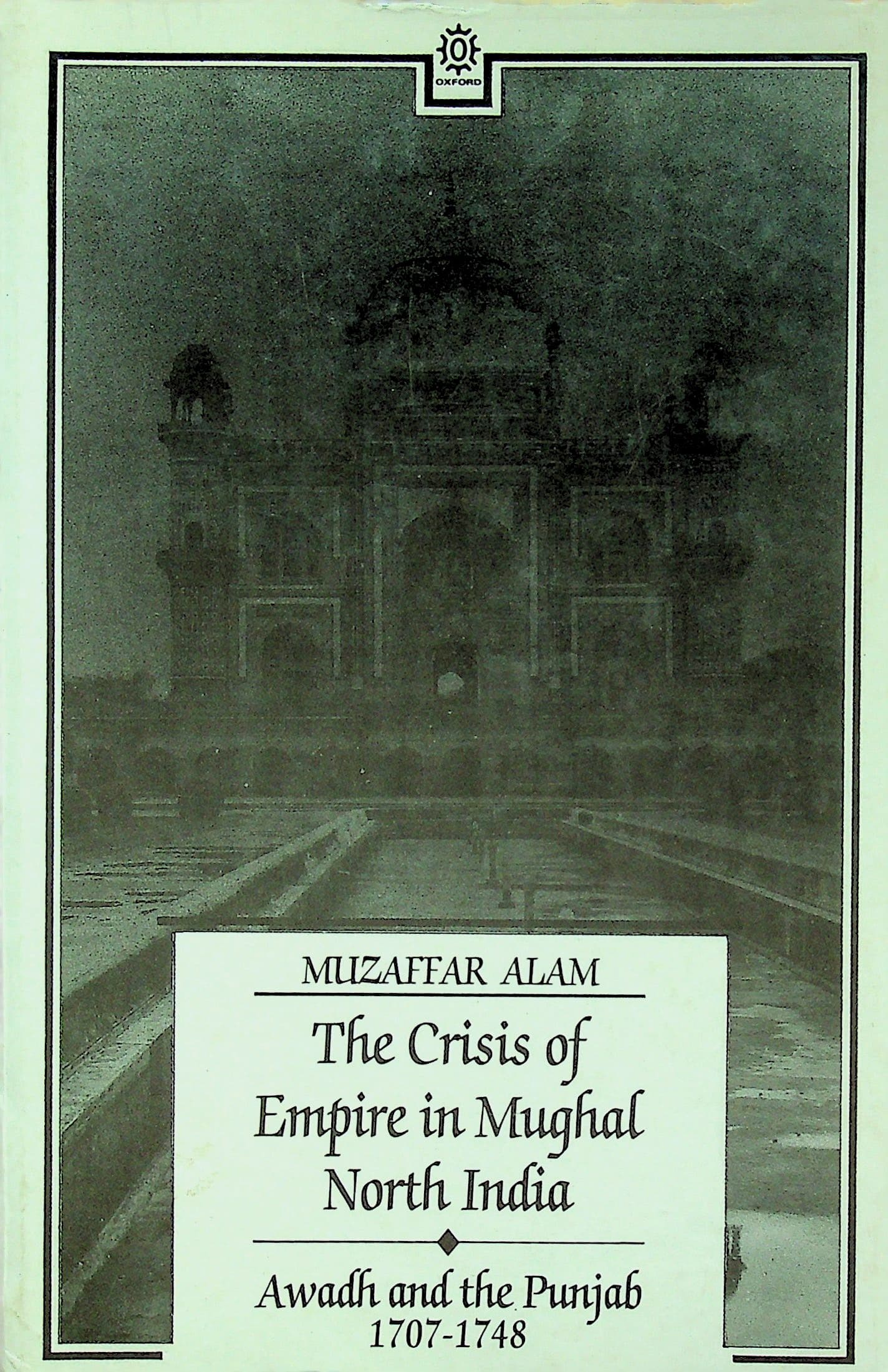
In Very Good condition. Glossy black-and-white pictorial paper covers (a moody photograph of a Mughal-era domed monument by Mukul Mangalik, with cover design by J.M.S. Rawat) showing light bumping to edges and corners, mild shelf wear, and a hint of peeling to the thin plastic coating along the cover edges. Binding is tight. Pages clean and unmarked.[From back cover] The period following the death of Aurangzeb has usually been viewed from the perspective of the decline and subsequent decay of the Mughal empire. The historiography of this period is replete with such images of eighteenth-century India as systemic failure, political fragmentation, social unrest and economic decay. This study, while examining two major and contrasting regions of north India, makes the point that the period 1707-1748 saw the emergence of a new order with local and regional idioms, even though echoes from the imperial period continued to be heard. Drawing extensively on eighteenth-century Persian sources, the book focuses on the interplay of the forces of imperial collapse with the processes of regional restructuring in Awadh and the Punjab. The author analyses the workings of the jagirdari system and the nature of zamindar uprisings, and the problems they posed to imperial power in and around these regions. The study offers an explanation of how in Awadh the local social groups were mobilized to establish a viable nawabi rule, while in the Punjab the attempt to do so failed and the province lapsed into chaos and confusion. In both the provinces, however, the semblance of empire was sustained in the interests of individuals and groups who had been the bulwarks of the imperial order and were now the rulers in the regions. Between 1707 and 1748 the patterns of power changed: the centre which controlled the provinces earlier on, came subsequently to be controlled by them. Muzaffar Alam is Professor at the Centre for Historical Studies, Jawaharlal Nehru University, New Delhi.Contents: Introduction; I. Breakdown of Imperial Organization; II. The Changing Position of the Governor; III. The Zamindars, the Madad-i Ma'ash Holders and Mughal Administration in Awadh c.1707-1722; IV. Mughal Power, the Sikhs and other Local Groups in the Punjab; V. The Punjab after 1715, the Zamindars and the Problems facing the Provincial Government; VI. Growth of Nawabi Rule in Awadh and its Relations with Local Social Groups; VII. The Imperial Court, the New Subadars and the Region; Conclusion; Bibliography; Index.