Description
Charles E. Tuttle Co., Published 1966. Hardcover, 411 pp.; 21 cm; first printing of this edition (originally published 1912); with 16 color plates and numerous black-and-white illustrations of coverlet patterns and weaving drafts.

Rare, out-of-print & unusual books · Since 1997
Turn the pages with the arrows, keyboard, or a swipe.
Charles E. Tuttle Co., Published 1966. Hardcover, 411 pp.; 21 cm; first printing of this edition (originally published 1912); with 16 color plates and numerous black-and-white illustrations of coverlet patterns and weaving drafts.
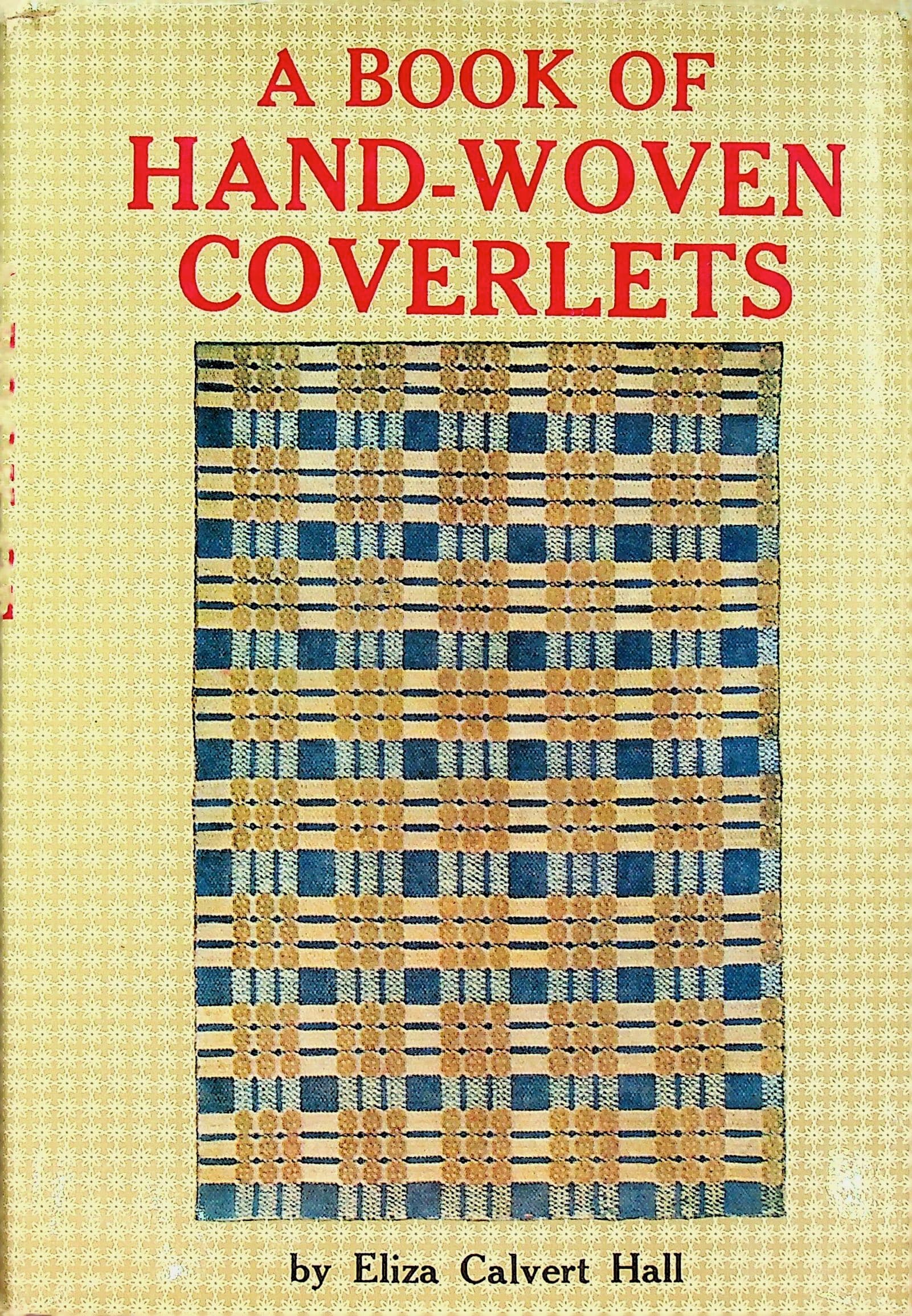
In Very Good condition with a Good dust jacket. Gray cloth boards stamped overall with an intricate white woven-coverlet design featuring repeating geometric motifs of four-petal flower forms, diamonds, and interlocking grid elements covering the full surface of both boards, with the title lettered in gold at center. Mild surface and edge wear to covers, with some flaking to the white decorative design along the edges. Binding tight. Mild toning to the decorative small-patterned pale teal endpapers and to the edges of the text block. Pages clean and unmarked. Dust jacket is yellow-cream with a pictorial front panel showing a blue-and-amber geometric woven coverlet design, title in red, author name in black; price clipped, with a 1/2 in. tear over the back cover, a few small nicks and tears elsewhere, light creasing to edges, and light overall shelf wear and toning. Now in an archival quality (removable) Brodart cover. [From jacket flaps] The art of making coverlets (or bedspreads if you prefer) is painfully fading into the past like so many of the manual skills of yesterday. Together with the delicate intricacy of embroidery, coverlet making has passed from being an ordinary task in the homes of generations past to the art it is now considered, with only a relative few still knowledged in the creative skill. This book, then (first published in 1912), purposes to record for posterity a discussion of the craftsmanship involved in making coverlets. It reproduces more than 50 distinctive coverlet designs (16 of them in color), and all of them reflecting the painstaking but loving care that went into their creation. The author discusses the more interesting stories behind some of the coverlet designs, as well as the tenderness with which they are affectionately named: Rose in the Wilderness, Islands of the Sea, Path of the Sunbeam, and so forth. If this feminine art is to be another victim of the modern world of technical skills, then we are indeed indebted to the author for having written this book with its generous helping of illustrations. For the present, however, let us examine the rich traditions of the time when the making of coverlets was prevalent and probably less appreciated than it is now. Let us peek at the author's side into the country log cabins, the colonial mansions, the servants' quarters, where sturdy women sat at the looms guiding the yarn with deft and patient hands. There are some who undoubtedly will say that the subject if not worth documenting, but there are others who would just as strongly aver that it is as important as recording the facts as they happened at Bunker Hill or Boston Bay. In any case, no one can deny the coverlet its rightful place in the culture of colonial America; perhaps not next to, but close by its revered sister, hand-sewn by Betsy Ross. Contents: List of Plates; Foreword; I. Long, Long Ago; II. A Backward Glance; III. The Mountain Weavers; IV. Coverlet Names; V. Coverlet Designs; VI. Coverlet Colors; VII. The Professional Weaver; VIII. The Storied Coverlet; IX. The Ancient Coverlet; X. The Heirloom Unappreciated