Description
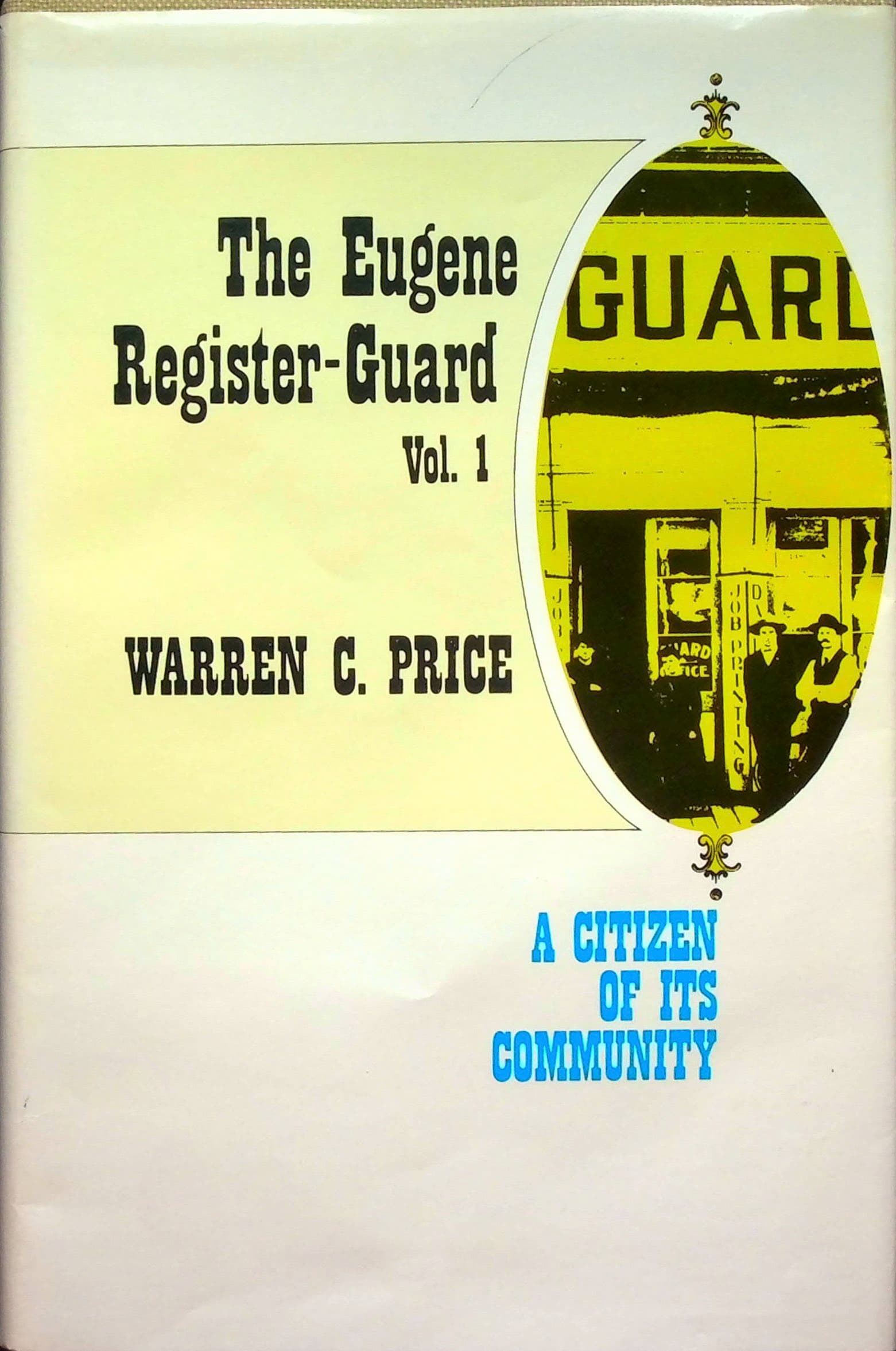
Binford & Mort, Portland, Oregon, Published date: 1976. Volume 1. Hardcover; xiv, 365 pp; 22 cm; First edition. Some black and white photographic reproductions of historic newspaper pages and related images.

Rare, out-of-print & unusual books · Since 1997
Turn the pages with the arrows, keyboard, or a swipe.
Binford & Mort, Portland, Oregon, Published date: 1976. Volume 1. Hardcover; xiv, 365 pp; 22 cm; First edition. Some black and white photographic reproductions of historic newspaper pages and related images.
In very good condition in a good dust jacket. Original tan cloth boards with blue lettering on spine and front cover; light shelf wear and mild age toning to covers; binding sound. Previous owner's name and date in ink on front free end paper. Otherwise interior pages are clean and unmarked. Dust jacket present, with a few small nicks to edges, creasing to paper over the rear cover, and mild overall toning and soiling. Now in an archival quality (removable) Brodart cover. Historical study of the Eugene Register-Guard newspaper from its founding in 1867 through the mid-twentieth century, examining editorial policy, ownership, political alignments, and the newspaper's role in the civic, political, and social development of Eugene and Lane County, Oregon. Includes bibliography; index. [From jacket flaps] When the weekly Eugene Guard first published in 1867, it was "intensely Confederate," even though the Civil War had been over for two years. No longer Confederate, the paper still maintains a strong editorial position and a distinctive kind of service to its community. The late Warren C. Price, who taught journalism at the University of Oregon for more than 20 years, researched the history of the Guard, the Register and other newspapers that appeared and disappeared in the century after the Guard was established. He died before he completed the book. This is the story of the paper and the town from the paper's founding until about 1950. It is as much a story of the town as it is of the paper. Eugene City was mudville, with board sidewalks that floated when it rained. But it grew. The University of Oregon came to town and lived precariously. Some politicians wanted to kill it and move it to Corvallis. The Register-Guard wouldn't stand for that and waged a heated editorial campaign against the so-called Zorn-MacPherson bill. The university was saved. The paper weathered a depression and grew. Alton F. Baker and William M. Tugman acted as a keenly synchronized team that saw the merger of the Guard and the Register and the emergence of the Register-Guard as a nationally recognized newspaper. The paper has always been interested in Eugene and Lane County. The slogan that a newspaper "is a citizen of its community" has been the guiding star through much of the paper's life. Parks, schools, streets, lights, good water, cheap power, all those have been the Register-Guard's goals for its community. And here is the story, although it is not the complete story of the paper's first century because Mr. Price died too soon to finish his work, for which he was awarded a posthumous doctor of philosophy degree from the University of Minnesota. It is the story of Siamese twins, the town and the paper, neither of which would be what it is today without the other.