Description
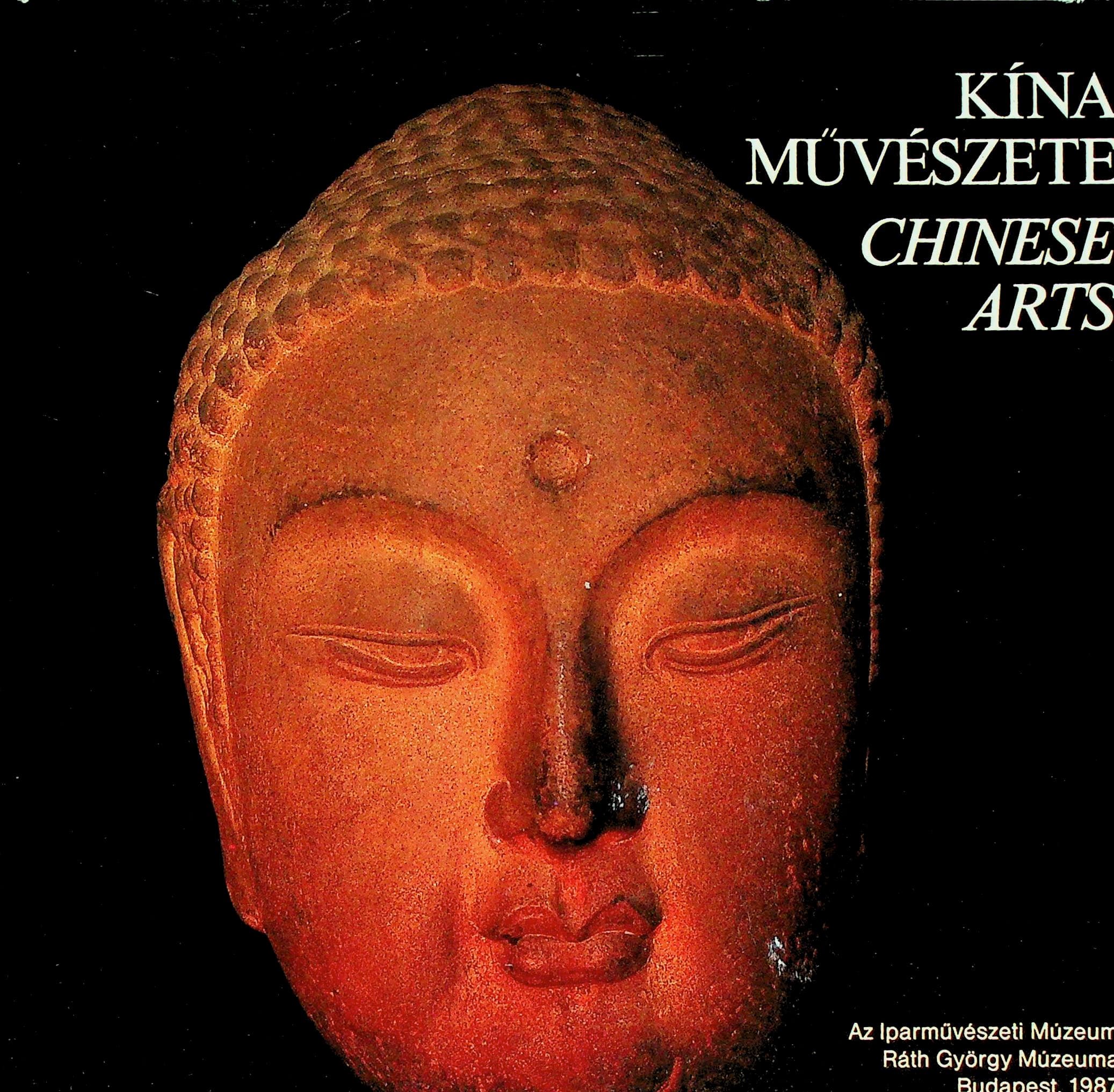
Iparmuveszeti Muzeum Rath Gyorgy Muzeuma, 1987. Paper covers, 58 pp. Bilingual text in Hungarian and English. Black and white illustrations; 22 cm. Catalog published in conjunction with a 1987 exhibition at the Rath Gyorgy Museum in Budapest.
Condition & notes
In very good condition with light bumping and creasing to edges and corners and light overall scuffing with a bit of the color scuffed off along edges. Binding tight. Pages clean and unmarked. The catalog showcases a curated selection of Chinese art pieces, providing insights into their historical and cultural significance. Includes detailed descriptions and illustrations of the exhibited items. [From Preface] Interest in collecting Eastern Asiatic works of art started in Europe only a hundred and fifty years ago, their study started even later. Until the beginning of this century, works of art of this genre were kept in the great museums - from London to St. Petersburg, from Paris to Vienna - as curiosities. Only then, in the first two decades of this century the great public collections of Oriental works of art were founded, mostly from private collections the number of which steadily increased from the end of the last century. This was how the Ferenc Hopp Museum of Eastern Asiatic Art came into being. This is the first and hitherto only museum of this kind in Central Europe which asserts its professional independence by being housed in a building of its own. Ferenc Hopp (1833 - 1919), gazer after whom the museum is named was a rich businessman, owner of the optical instruments firm Calderoni and Co., who travelled round the world five times between the years 1882 and 1914. His interest in the art of China and Japan was already aroused during his first journey and he soon found a specialist to advise him as a collector in the person of Zoltan Felvinczi Takacs (1880 - 1964), art historian at the Museum of Fine Arts in Budapest. When the collection and the villa house it was bequeathed to the Hungarian state at the death of Ferenc Hopp, it already contained four thousand five hundred objects from the Far East. As a result of the oriental collections of several other museums were added to it, that of the Museum of Fine Arts being the richest with its 2300 pieces. Among them, the original Hopp collection still proved to be the most valuable, the major part of the present exhibition, too, comes from this source. Actually the whole collection of the museum numbers about twenty thousand pieces. Its growth owes much to the activity of Zoltan Felvinczi Takacs, the first director of the museum (from 1919 to 1947). Professor Felvinczi Takacs was a professor of art history at the university of Kolozsvar between 1904 and 1944, and at the university of Szeged used the modest financial means of the museum very efficiently to purchase important objects for the collection. His professional authority included a number of specialists, art dealers and others to patronize the museum. Thus the major part of the oldest pieces of the Chinese collection were donated to the museum by art dealers Geza Szabo (Peking) and Imre Schwaiger (Delhi-London).