Description
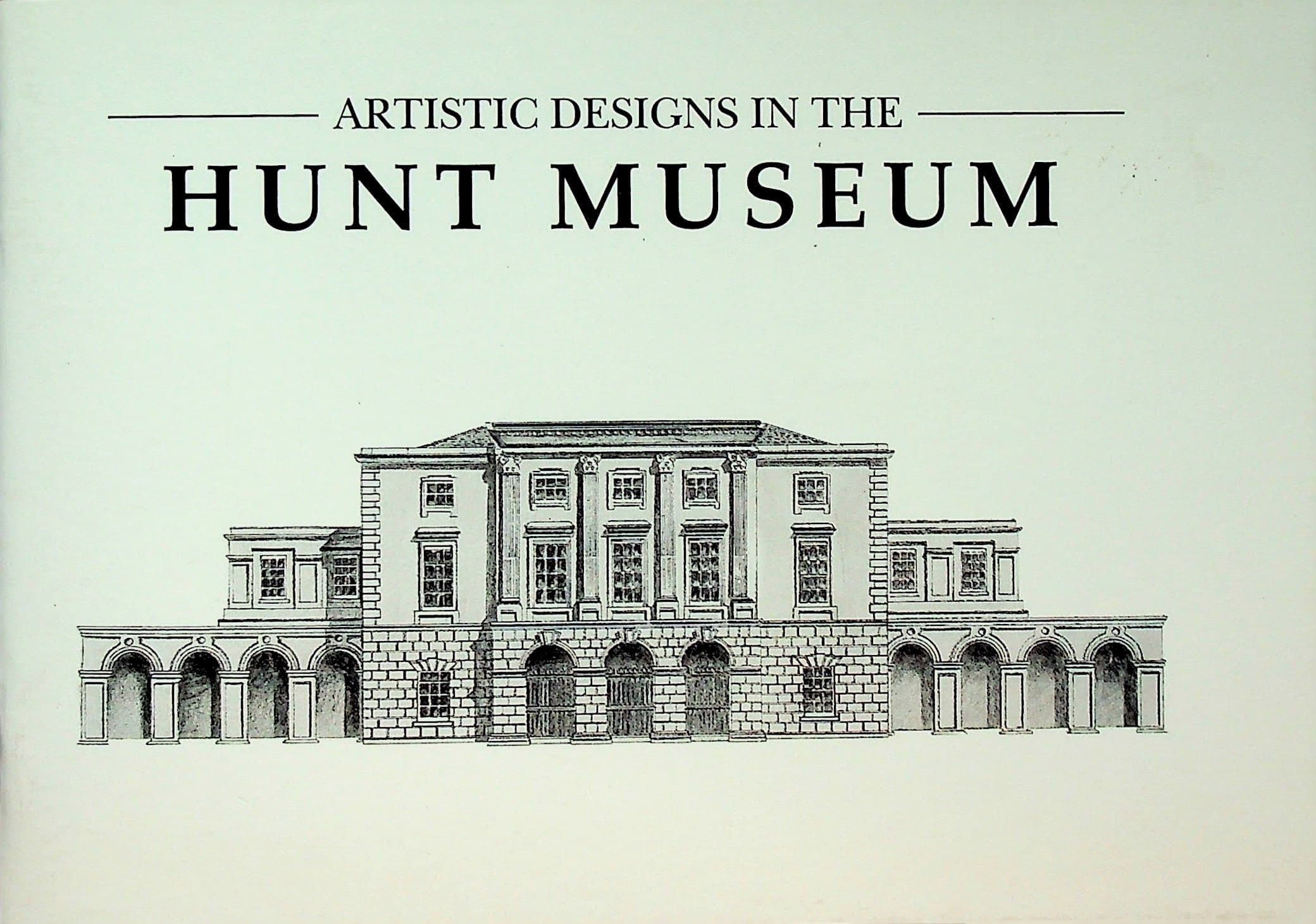
The Hunt Museum, Limerick, 1994. Paper covers, 40 unnumbered pages. No other printings listed.

Rare, out-of-print & unusual books · Since 1997
Turn the pages with the arrows, keyboard, or a swipe.
The Hunt Museum, Limerick, 1994. Paper covers, 40 unnumbered pages. No other printings listed.
In very good condition. Black and white illustrated paper covers have light bumping to edges and light overall scuffing. Binding tight (staple bound). Pages clean and unmarked. Color illustrations. This booklet offers a curated exploration of the Hunt Museum's collection, emphasizing the artistic designs and craftsmanship of selected artifacts. Highlights include discussions on a Renaissance bronze horse statuette and a medieval Limoges Reliquary. Illustrated with color photographs, the guide reflects the museum's dedication to preserving and showcasing pieces of significant artistic value. [From Preface] The munificence of John and Gertrude Hunt and of their children John Jr and Trudy places them amongst the greatest benefactors of this State. Respected internationally for their scholarship and their knowledge of medieval works of art, John (1900-76), and Gertrude (1903-) Hunt made their own personal collection, which included items as diverse as Neolithic flints, Coptic bone-carvings and Picasso drawings. The unifying factor was that each met their criteria in quality of form, suitability to function, standard of craftsmanship and applied design as well as historical importance. Intrigued by the past, John and Gertrude Hunt proselytised, saying that an essential ingredient in the study of our economic and cultural history - European and Irish - was a study of the objects created. They believed that such an understanding could influence our appreciation of our present surroundings and our attitude to the creation of future works. The gift to the Irish nation of John and Gertrude Hunt's magnificent collection challenges us to approach its study in their enlightened manner. Supported by the Department of Arts, Culture and the Gaeltacht, the University of Limerick, Limerick Corporation, Shannon Development and the local business community, the Hunt Museum is working to become the national centre for the study of European decorative art.