
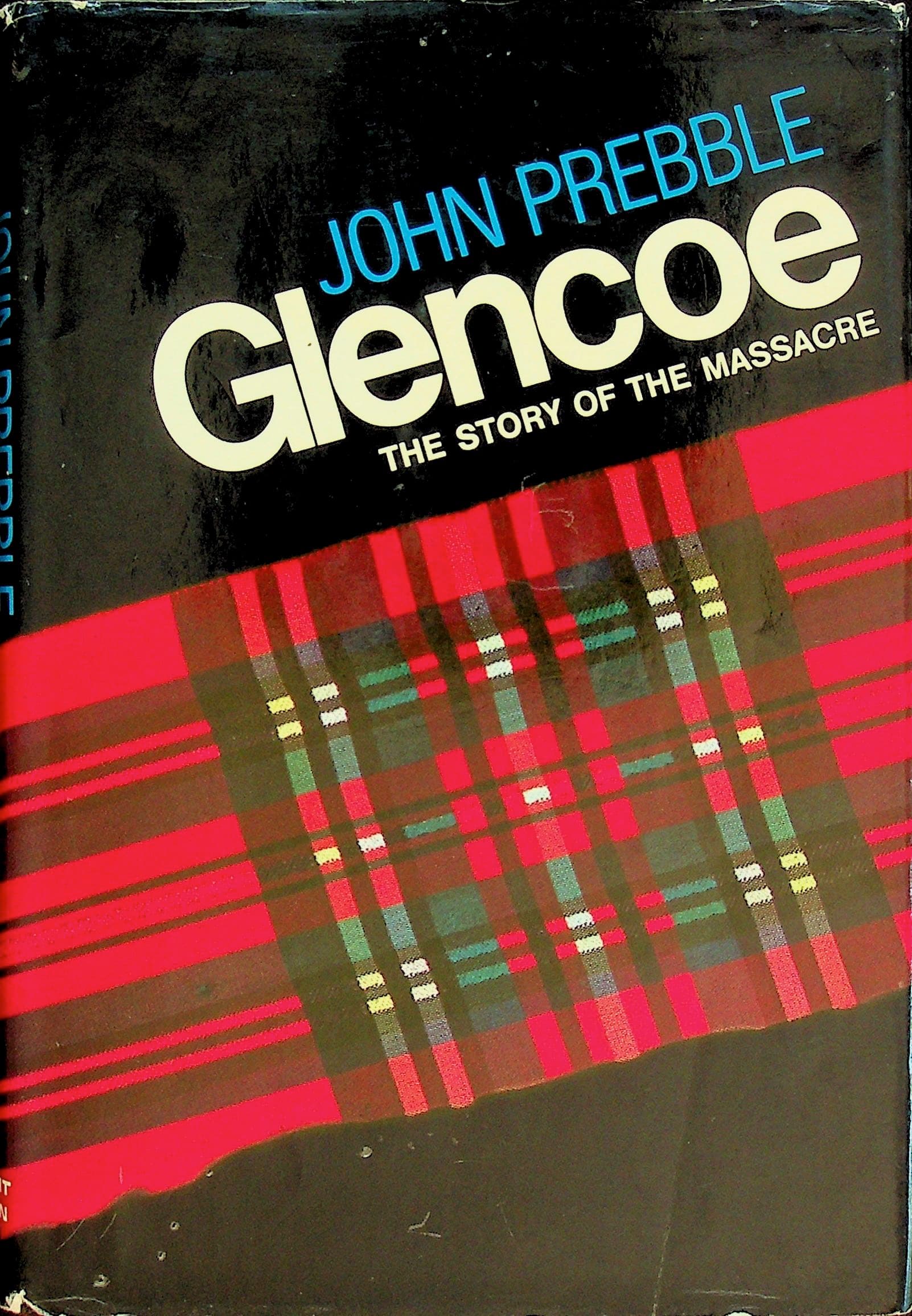
Description
Holt Rinehart and Winston [Published Date: 1966]. Hardcover, 336 pp. Stated First Edition. Good in good dust jacket. Black cloth covered boards with red lettering on front and spine. Light bumping, scuffing and fading to edges of covers. Binding tight. Previous owner's large coat of arms and other ownership stamps on front free end paper and title page in red and blue ink. Previous owner's partial address label affixed to front free end paper. Otherwise pages are lightly aged but unmarked. Dust jacket has several 1" or less nicks and tears and creasing along edges. Light damp-staining to paper over top of spine. light overall scuffing and soiling to jacket as well. NOT price clipped. Now in an archival-quality (removable) Brodart Cover. Black and white illustrations. [From jacket flaps] In the early hours of February 13, 1692, soldiers of the Earl of Argyll's Regiment, who for the past week had been peacefully quartered on the inhabitants of Glencoe under the command of the Earl's cousin, Campbell of Glenlyon, fell upon their MacDonald hosts. In the ensuing hours, thirty-six defenseless men, women, and children were coldly slaughtered; if a driving blizzard had not intervened, the whole of Clan Donald would have been extirpated. It is a tale of intrigue and treachery, heroism and pathos, men moved by passion rather than good sense, that John Prebble has to tell - and he tells it extremely well. He follows step by step the plotting that preceded the February dawn when the fiery independent MacDonalds awoke to find their Campbell guests at their throats. His characters - the proud MacIain with his brass blunderbuss and mane of white hair; Colonel John Hill, the Englishman who strove to do God's work among the clans; Grey John of Breadalbane, greedy for power and influence; Captain Robert Campbell of Glenlyon, the drunkard who was ordered to carry out the massacre and lived thereafter with "Glencoe on his face"; William III of England, who thought he would profit from the bloody deed; and his Secretary of State for Scotland, Sir John Dalrymple, the Master of Stair, for whom the union of Scotland and England was all and who planned the killing as a "great work of charity" - all come marvelously alive. But above and beyond these central figures are the Highlands and their inhabitants. Prebble gives an unforgettable description of the Glen, that narrow gorge between the moor at Rannoch and the sea at Loch Leven, where pagan rites and superstitions still flourished, and the daily life of the cattle thieves and marauders who went under the name of Campbell, Stewart, MacDonald, MacDiarmid, and MacGregor. As a piece of historical research Glencoe is outstanding; as a story to stir the blood it can have few rivals.