
Description
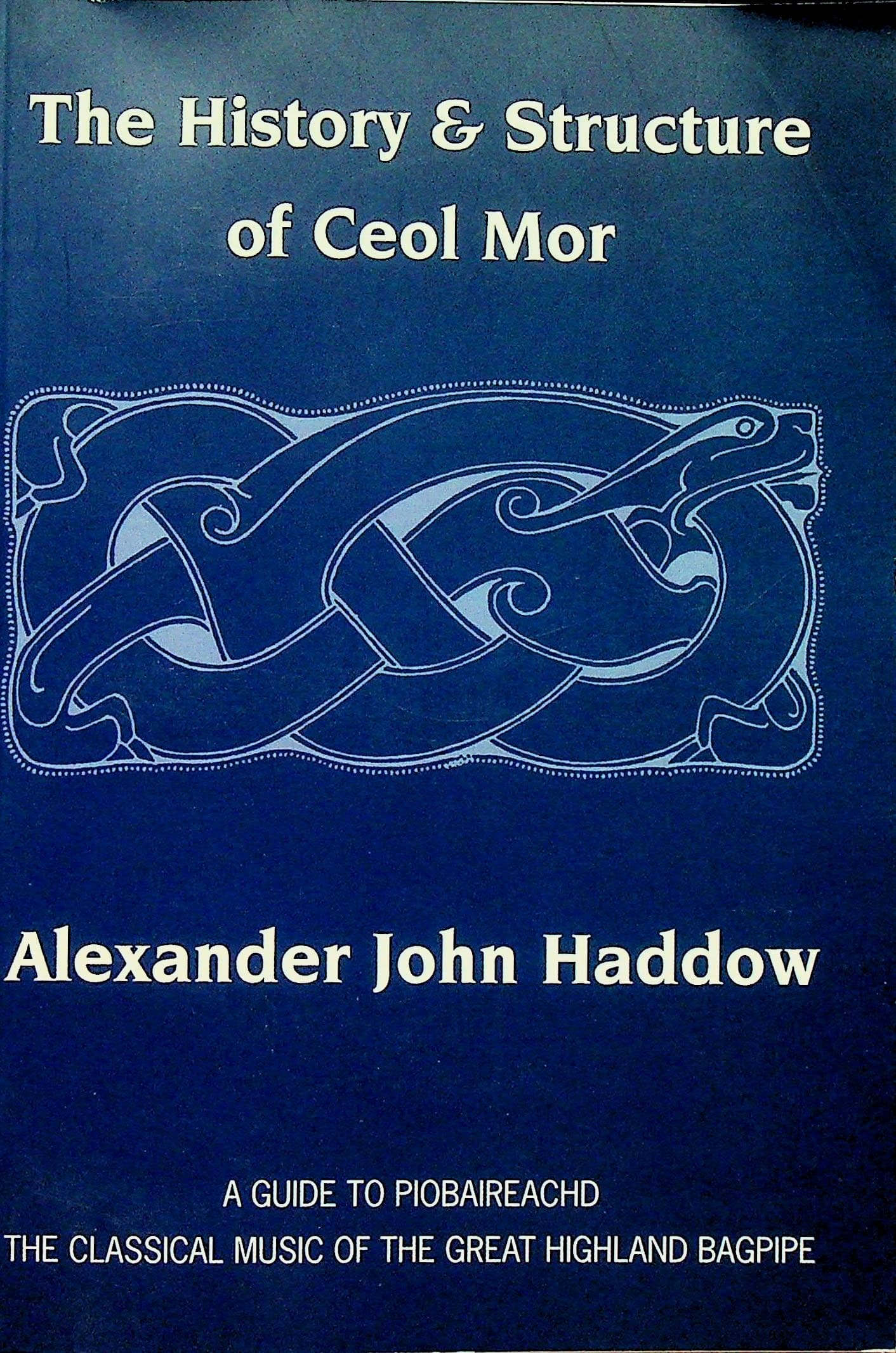
Piobaireachd Society, 2003. Soft cover, 224 pp. Reprint edition. In very good condition with light bumping to edges and light overall scuffing. Binding tight. Pages clean and unmarked. [from Introduction] This book was first published in 1982, and as David Hannay points out in the foreword, it had been a labour of love for many years before that. I remember Alec Haddow as a friend and a supporter at a time when the study of ceol mor was very much in its infancy. This book contains the results of his research on the two themes that excited him most - the role of the piper in Gaelic history and tradition, and the technique of composition as revealed by close study of the music itself. It sets a high standard. Many previous writers had compiled "stories of the tunes" but few had gone to such trouble to find the original sources, and fewer still realized how important it was to back up every statement with proper references. Alec's studies of structure were just as rigorous, and they helped to change our way of thinking about the connections between different types of tune.It may be appropriate to mention here just two points which are typical of his scientific approach. One refers to what he called "uneven-lined piobaireachd". He noted the contrast between the way a tune is constructed and the way it is played. In playing, pipers tend to express the music in three lines of unequal length, but it is equally true that there are two lines of equal length with a "reciprocal" relationship between them. It was the variability of certain phrases in a tune, and the consistency of other phrases, that demonstrated the pattern (page 155). The other point is that he defined structure in terms of repetition of phrases, and if such repetition did not occur he pointed out frankly that his analysis could not be carried out (as for example with "Lament for the Children", page 192). More recently that situation has changed and a good many more tunes can now also be brought within the range of orthodox construction. It is the mark of a good scientist to recognize that a model can be valuable but still not explain everything. The first edition of this book was published privately by Alec Haddow's widow, Mrs. Peggy Haddow. The copyright was donated by Mrs. Haddow to Glasgow University, who gave permission for The Piobaireachd Society to publish this reprint in view of numerous requests for it. The reprint has the support of the Haddow family and the new covers have been designed by Magnus Orr, a cousin of Mrs. Haddow. This reprint was also made possible by a substantial contribution from The Highland Society of London.The essays and notes have been reprinted exactly as they were, but there is a list of errata compiled by Archie Kenneth after the first edition was published. Alec always recognized that they were very much work in progress rather than being the last word on any topic. There can be no doubt that if he had lived longer he would have welcomed the more recent research and continued to add to it himself. Nevertheless, his own work as he left it still makes excellent reading, and it is good to see it in print once again.