Description
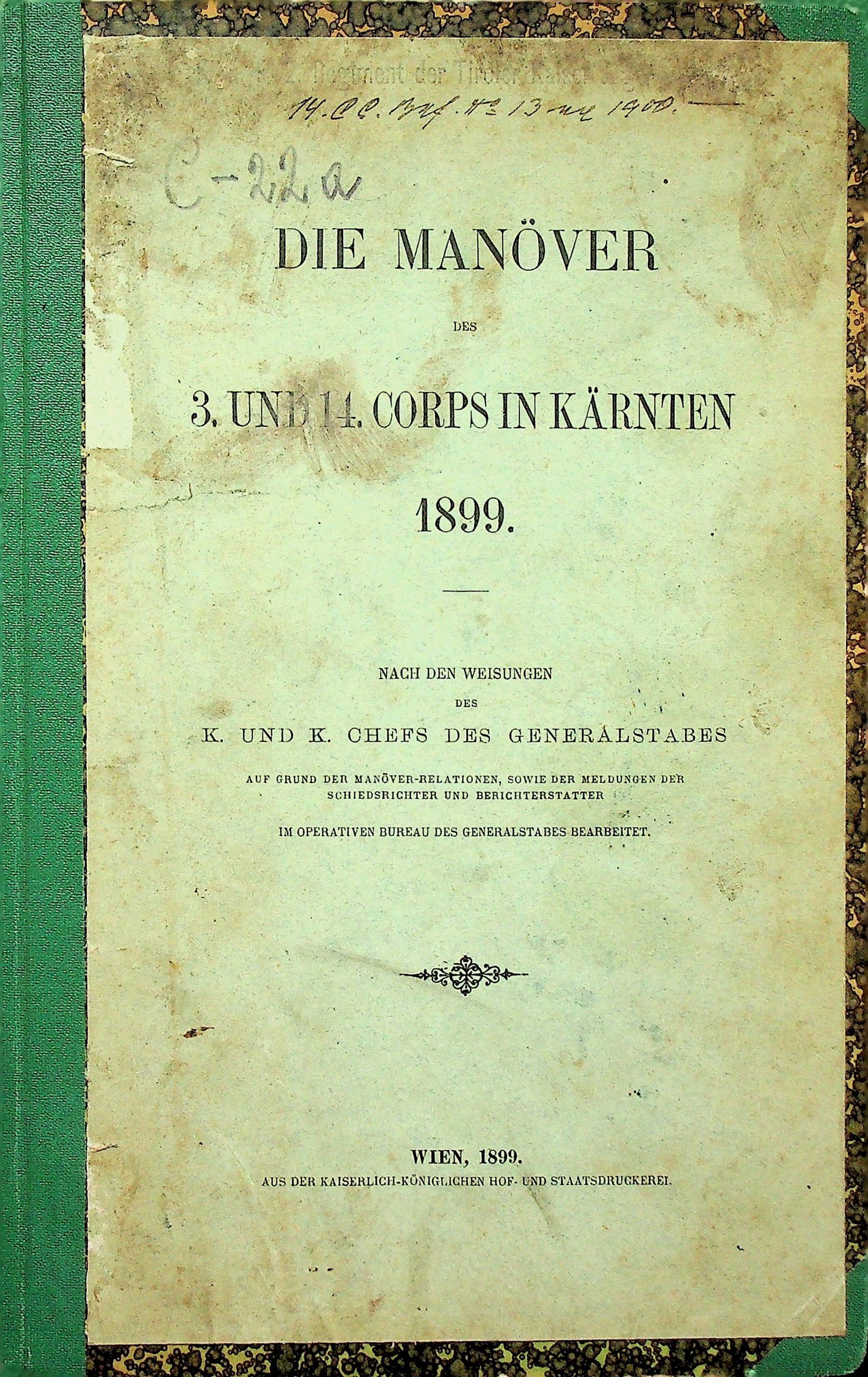
Kaiserlich-Koniglichen Hof- und Staatsdruckerei, 1899. [Full Title] Nach den Weisungen des K. Und K. Chefs Des Generalstabes. Auf Grund der Manover-relationen, sowie der Meldungen der Schiedsrichter und Berichterstatter: Im Operativen Bureau des Generalstabes Bearbeitet. Hard cover, 195 pp. Text in German.
Condition & notes
In acceptable condition. Green marbled paper over boards with green cloth at corner tips and spine. Boards are aged, scuffed and quite soiled. "2. Regiment der Tiroler, Kaiser" stamped on front cover as well as some other hand written notes. Binding tight. Title page has dirt smudges in top corner near spine and some light doodling in pen underneath the title. Page 5 has some dirt smudges along the top edges as well. Otherwise pages are lightly aged but unmarked with occasional light spotting and corner creasing. This rare military publication documents the 1899 Austro-Hungarian military maneuvers conducted by the 3rd and 14th Corps in Carinthia, analyzing operational planning, tactical execution, and logistical challenges in preparation for potential conflicts in the Balkans and against European adversaries. The book provides critical insight into pre-World War I military doctrine, highlighting both strategic strengths and weaknesses that would later manifest in Austria-Hungary's campaigns on the Eastern and Italian Fronts, including issues with railway logistics and troop mobilization that would become severe liabilities during the war. Notably, pg 9 of the book contains a reference to an early test of an Austro-Daimler motor truck provided by the "osterreichischen Daimler-Motoren-Commandit-Gesellschaft" , one of the earliest known military applications of mechanized transport within the empire. The truck, however, was unsuccessful in traversing the steep Alpine passes, highlighting the early limitations of motorized transport in mountainous warfare - a challenge that would later plague Austria-Hungary during WWI.