Description
Parish of La Madeleine [Published date: 2000]. Soft cover, 56 pp. Text in English.

Rare, out-of-print & unusual books · Since 1997
Turn the pages with the arrows, keyboard, or a swipe.
Parish of La Madeleine [Published date: 2000]. Soft cover, 56 pp. Text in English.
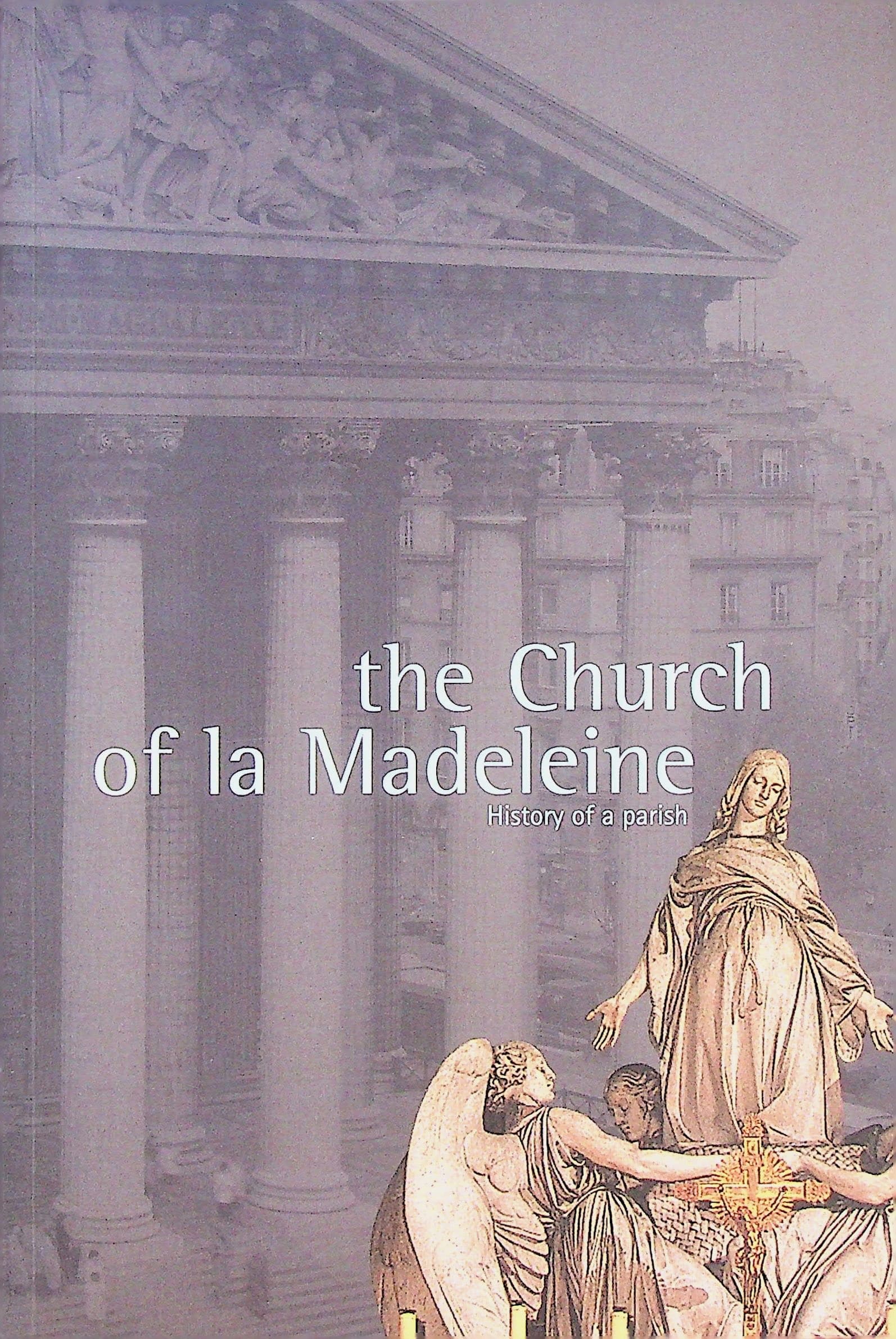
In very good condition. Illustrated paper covers with French flaps. Light bumping to edges and covers and light overall scuffing. Binding tight. Pages clean and unmarked. NOT Ex-library. NO remainder marks. Color and black and white illustrations. [From Foreword] The church of La Madeleine has an exceptional location: it dominates the Faubourg Saint Honore and the Grand Boulevards, and gave its name to this district of Paris. Originally a Royal foundation, it acted as one of the cornerstones of the westward expansion of the capital in the middle of the 18th century. It was designed to dominate the perspective between the two elegant buildings on the Place of La Concorde. Its construction caused many problems to the French State and took over eighty years to be completed. Before being the parish of the Elysee Palace (the French President's residence) and the sanctuary of the very international business area, frequented by artists and tourists, a variety of functions were proposed for this building dedicated to Saint Mary Magdalen. Parish, then Temple as a memorial for the heroes and the victims of the French Revolution, of the Napoleonic Empire and the Bourbon Restoration which followed: the sanctuary suffered from the hesitations of its builders. The aesthetic of La Madeleine is ambiguous: because of its colonnades, it looks like the Palais Bourbon (Chamber of Deputies) across the river or the Bourse (stock exchange). Its neoclassical shape is similar to the Pantheon (where the Great People are buried), and has so many statues that it could almost be a sculpture museum. La Madeleine, standing on its monumental pedestal, can discourage sightseers from going up its steps, for it looks like just another public building. The semidarkness of the nave and the lack of chapels makes it an unusual sanctuary. With so many marbles and so few pictures, the art lover might be disappointed at not finding the same diversity in the works of art of other Parisian churches. Nevertheless, the sumptuousness of the place inspires respect. Uniform and impressive, La Madeleine is worth a thorough visit. The vigour of the classical orders, the beauty of the marbles and the subtle use of colours illustrate the architect's choice: this majestic airy space is suitable for big gatherings, such as the World Youth Days in 1997, the Jubilee and the third millennium. Contents include : Chronology; History of a Parisian parish : the three sanctuaries, a political issue, the present church; Description of the exterior : the pediment, the bronze gate, impost, the statues of the saints on the portico, facade on rue Tronchet, facade on rue Royale; Description of the interior - the painted decoration: the interior of the sanctuary, the painted decoration, the fresco by Ziegler, the mosaic by Lameire; Description of the interior - the sculpted decoration : the sculpted decoration, the two chapels of the vestibule, the nave, the choir; Conclusion; Basic bibliography & Glossary