
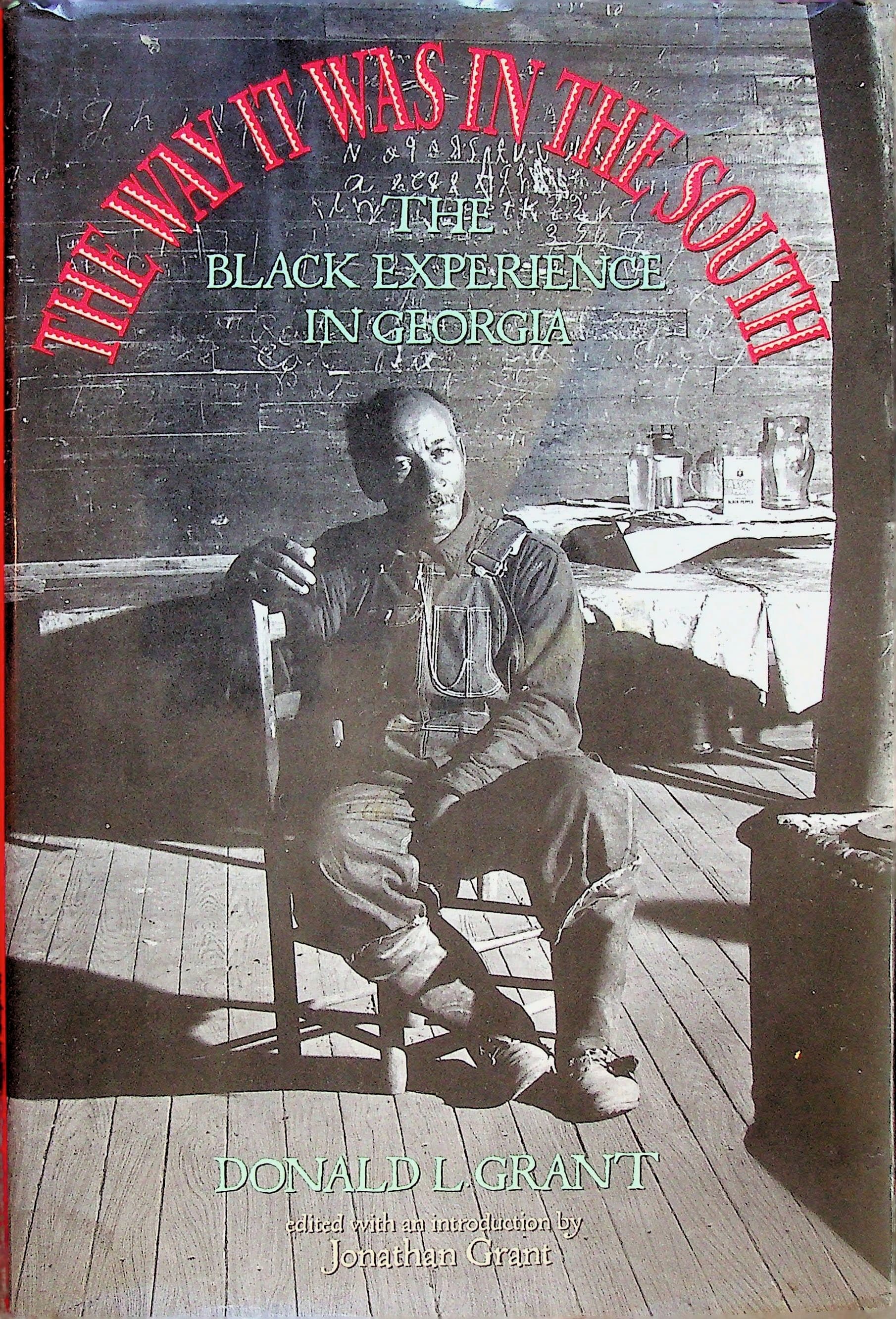
Description
Birch Lane Press / Carol Publishing Group [Published Date: 1993]. Hardcover, 624 pp. First Printing, (with full number line). Very good in very good dust jacket. Grey paper over boards with black cloth and red metallic lettering on spine. Light bumping and scuffing to edges of covers. Binding tight. Pages clean and unmarked. Dust jacket has a few small nicks and light creasing along edges. Light overall scuffing to jacket as well. NOT price clipped. Now in an archival-quality (removable) Brodart Cover. NOT Ex-Library. NO remainder marks. [From jacket flaps] Edited with a foreword by Jonathan Grant. From its beginning in 1733, when England's youngest colony banned slavery, Georgia has been obsessed with matters of race. Over the next 130 years, Georgia's slaveholders led the way in defending the peculiar institution, and for a century after slavery s demise, Georgia's leaders vociferously opposed black advances. White Georgians also led in developing a racist mythology to explain the subordinate status of blacks and to romanticize a past of magnolias and mint juleps that, for most Georgians, black and white, simply never was. During all this time blacks were not content to accept white definitions of "their place." Contrary to popular beliefs, Georgia's blacks fought from Colonial times - against great odds - to uplift themselves and improve their condition. During the American Revolution, most of Georgia's slaves escaped, and in the antebellum period whites lived with fear of slave uprisings. When the Civil War came, whites were stunned to learn what their slaves thought of them. Afterward, blacks struggled to make real the promise of freedom, only to see their hopes for political equality dashed by a wave of terrorism unmatched in any other state. The Way It Was in the South, a comprehensive account of the black experience in Georgia from the early 1500s to the present day, debunks the mythology and supremacist lore that have been taught to blacks and whites alike. It explores the remarkable contradictions of a state that was home to the twentieth-century Ku Klux Klan and to the civil rights movement and its leader, Dr. Martin Luther King, Jr. Dr. Grant presents this brilliantly researched work with the vigor of a lively novel, racing along to reveal a fascinating, in-depth picture of a people and a place. No book similar in scope and depth has ever been written about the interactions of blacks and whites in one state. In no other work can a reader see the rise and development in such detail of African-Americans in one particular locale. . .