Description
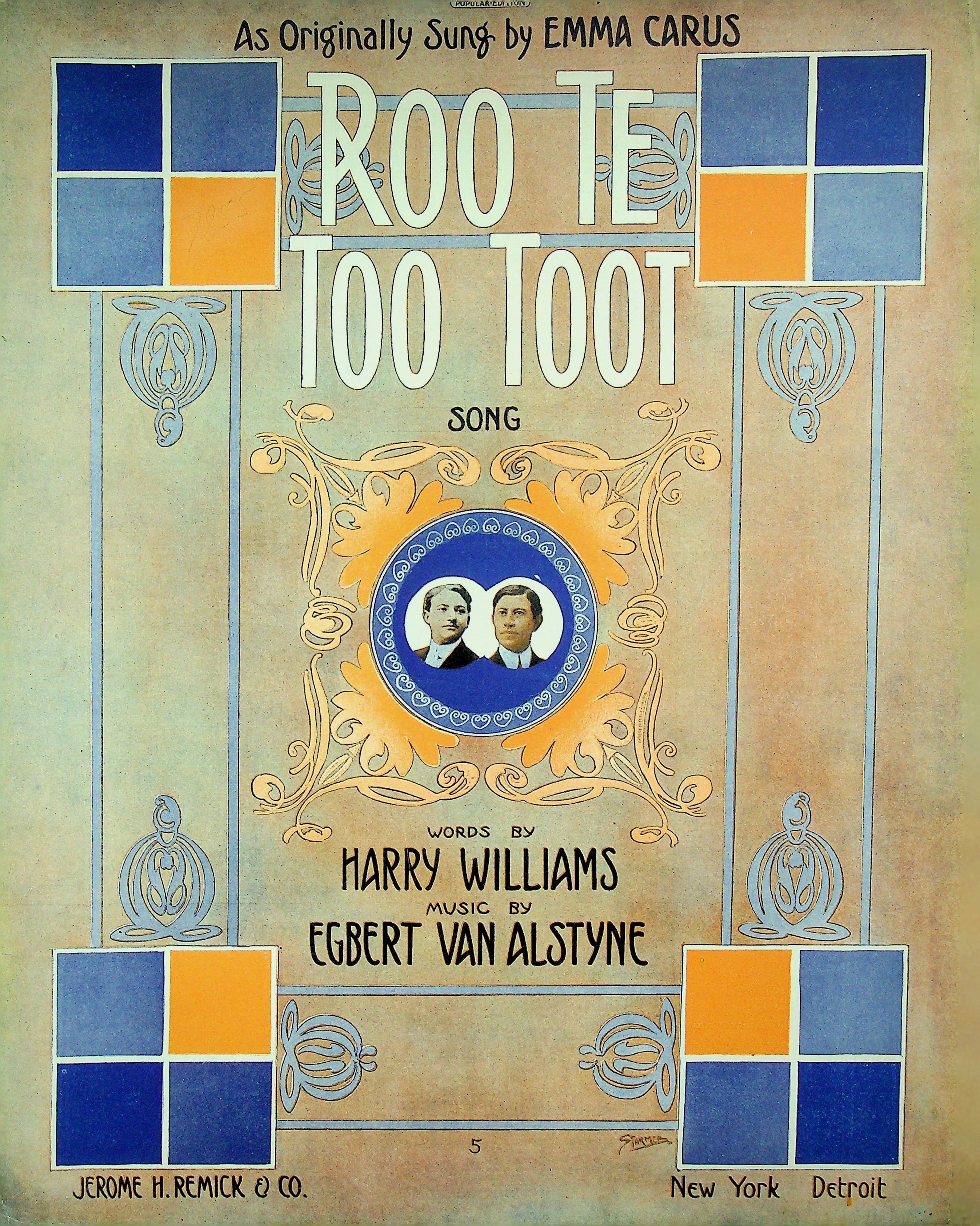
Jerome H. Remick & Co.[Published Date: 1912]. Sheet music, large format (10 x 13.5"). Paper covers, 6 pages (including covers). For voice and piano. "Popular Edition" " As Originally Sung by Emma Carus" With inset photos of Williams and Van Alstyne. Nice cover art by Starmer.
Condition & notes
In good condition with a few small nicks and tears and light creasing along edges. Light overall scuffing, aging and soiling to pages as well, but otherwise unmarked. Egbert Van Alstyne (1878 - 1951) and Harry Williams (1879 - 1922) were a successful songwriting duo whose work shaped early American popular music. Van Alstyne, from Illinois, and Williams, from Minnesota, began collaborating around 1900, blending Van Alstyne's melodic compositions with Williams' witty lyrics. They became widely known for hits like In the Shade of the Old Apple Tree (1905), popular in vaudeville and Tin Pan Alley. Their partnership lasted until about 1911, with Roo te too toot being one of their last collaborations. After their split, Van Alstyne continued composing, while Williams' career wound down before his death in 1922. Emma Carus (1879 - 1927) was a well-known contralto singer who starred in vaudeville and was part of the original Ziegfeld Follies cast in 1907. She also appeared in Broadway productions, gaining fame for her energetic stage performances. [Verse I] Willie Fail who started in Yale a year ago, Was very very slow In things he ought to know. He couldn't spell, but still he could yell to beat the band. In ev'ry game he won his fame. By rooting in the stand. For he knew his college cry, He'd root 'till his throat was dry And after the game he'd holler the same, he rotted for Rock and Rye. [Chorus] Roo-te-too-toot, Roo-te-too-toot, Roo-te-too-too-te-too-toot! I'm as happy as I can be, I don't care what becomes of me. Roo-te-too-toot, Roo-te-too-toot, Officer, officer, shoot! But I won't go home until morning, With my Roo-te-too-too-te-too-toot! A note about the cover art : Some of the most creative and eye-catching cover art of the ragtime-era were done by one of the prolific, but elusive, Starmer Brothers. Their work was of consistently high quality and they were turning out nearly a quarter of all large format covers from the late 1890s to around 1919. The identity of the artists was unknown until an invoice was discovered with a printed heading describing "Starmer" as artist and medical draughtsman. Not much else is known about the Starmer family.