Description
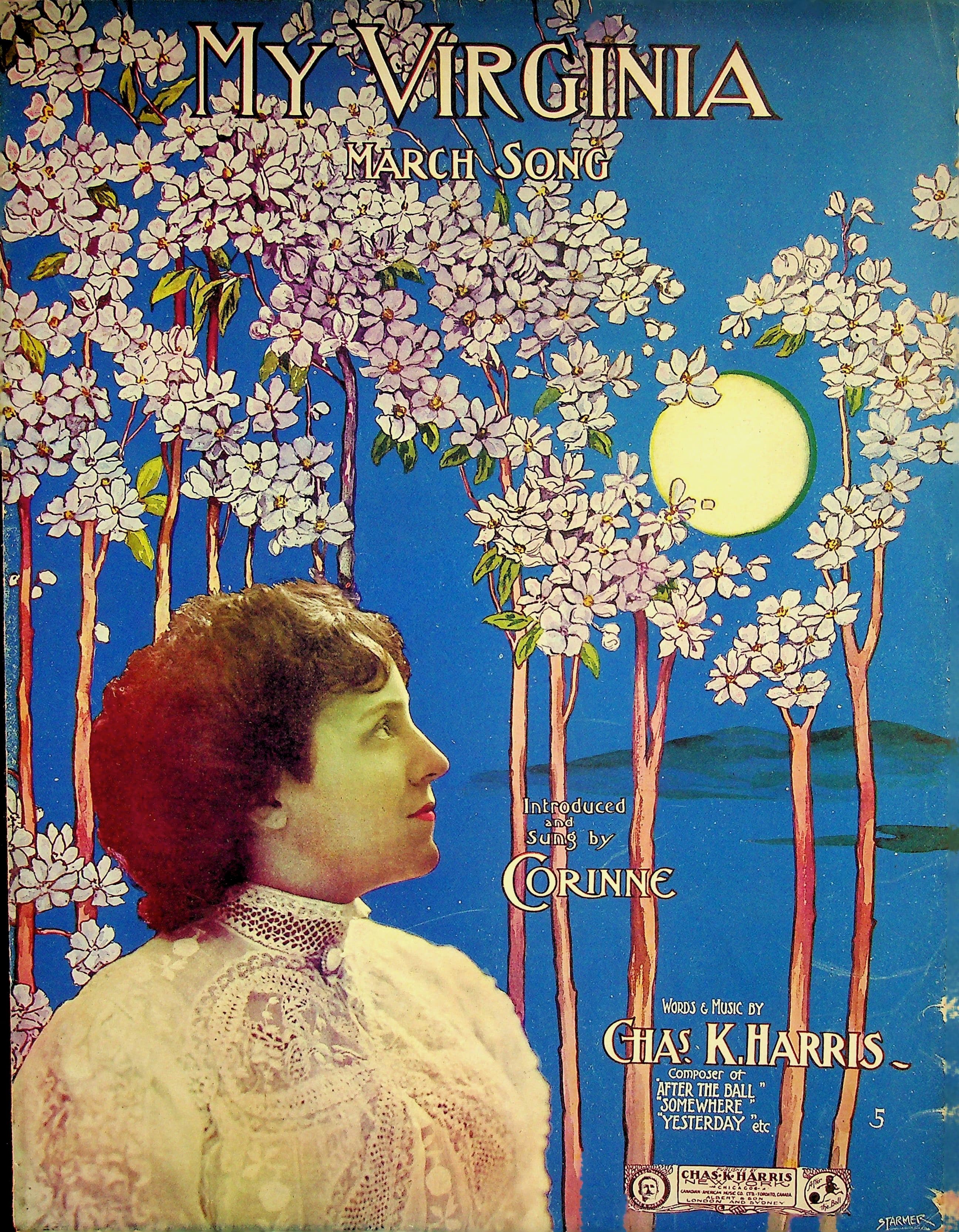
Chas. K Harris [Published Date: 1907]. Sheet music, large format (10 x 13.5"). Paper covers, 6 pages (including covers). For voice and piano. "Introduced and sung by Corinne; words & music by Chas. K. Harris, composer of 'After the ball' 'Somewhere' 'Yesterday' etc."
Condition & notes
In good condition with a few small nicks and tears and light creasing along edges. Light overall scuffing, aging and soiling to pages as well, but otherwise unmarked. Beautiful cover design by Starmer. Includes advertisements for other songs as follows: "Try this over on your piano. Yesterday" on p. [2]; "Popular favorites by the most popular composers" on p. [6]. Lyrics are as follows: Are you waiting for your lover, What's the use, Virginia Dear? For they say he loves another 'Way up North, Virginia Dear. He is false to you. My girlie, And he won't return, don't fear, Can't you love me just a little, Won't you try Virginia dear. Chorus: My Virginia, from Virginia sweeter than the flow'rs that grow, I am coming home to wed you, let the folks all know, Don't you listen to the tales they tell you, don't you weep or sigh - For I love you, my Virginia, love you till I die. Are you signing for your liver, Don't you cry, my little dear, In his arms he hold another 'Tis not you, Virginia dear; But she proudly says "He's faithful' I can fell is presence near, Hearts are true in old Virginia, he will find me waiting here. The composer, Charles K. Harris (1867 - 1930), is often called the "the father of popular music." One of the founders of Tin Pan Alley, he had a profound influence on America's culture. He began his career as a banjo player, then quickly moved on to writing songs for vaudeville acts and later for silent films. His first and most famous song, "After the Ball," was the first song to sell one million copies. Harris went on to become one of the most successful music publishers on Tin Pan Alley. A note about the cover art : Some of the most creative and eye-catching cover art of the ragtime-era were done by one of the prolific, but elusive, Starmer Brothers. Their work was of consistently high quality and they were turning out nearly a quarter of all large format covers from the late 1890s to around 1919. The identity of the artists was unknown until an invoice was discovered with a printed heading describing "Starmer" as artist and medical draughtsman. Not much else is known about the Starmer family.