
Description
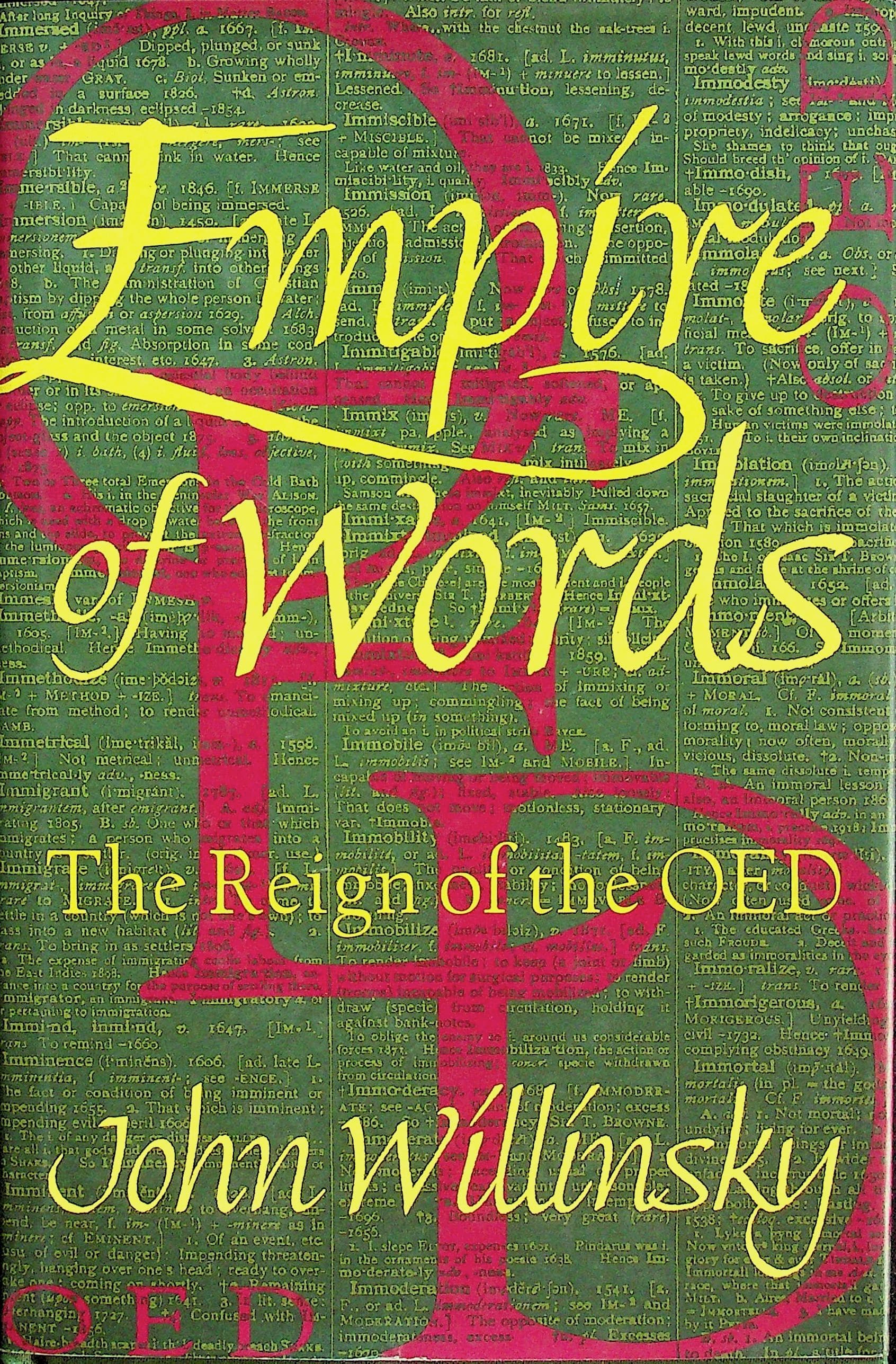
Princeton University Press [Published date: 1994]. Hard cover, 258 pp. First Edition, with full number line. Very good in very good dust jacket. Green cloth covered boards with pale green lettering on spine. Light bumping and scuffing to edges of covers. Binding tight. Light spotting to top edge of text block. Otherwise pages are clean and unmarked. Dust jacket has a few tiny nicks and light creasing along the edges. Light overall scuffing to jacket as well. Now in an archival-quality (removable) Brodart Cover. NOT Ex-library. NO remainder marks. [From jacket flaps] What is the meaning of a word? Most readers turn to the dictionary for authoritative meanings and correct usage. But what is the source of authority in dictionaries? Some dictionaries employ panels of experts to fix meaning and prescribe usage, others rely on derivation through etymology. But perhaps no other dictionary has done more to standardize the English language than the formidable twenty-volume Oxford English Dictionary in its 1989 second edition. Yet this most Victorian of modern dictionaries derives its meaning by citing the earliest known usage of words and by demonstrating shades of meaning through an awesome database of over five million examples of usage in context. In this fascinating study, John Willinsky challenges the authority of this imperial dictionary, revealing many of its inherent prejudices and questioning the assumptions of its ongoing revision. "Clearly, the OED is no simple record of the language `as she is spoke,'" Willinsky writes. "It is a selective representation reflecting certain elusive ideas about the nature of the English language and people. Empire of Words reveals, by statistic and table, incident and anecdote, how serendipitous, judgmental, and telling a task editing a dictionary such as the OED can be." Willinsky analyzes the favored citation records from the three editorial periods of the OED's compilation: the Victorian, imperial first edition; the modern supplement; and the contemporary second edition composed on an electronic database. He reveals shifts in linguistic authority: the original edition relied on English literature and, surprisingly, on translations, reference works, and journalism; the modern editions have shifted emphasis to American sources and periodicals while continuing to neglect women, workers, and other English-speaking countries. . .