Description
University of Nebraska Press, Published 1994. Hardcover, xxxiv, 388 pp., 8 unnumbered pages of plates; 27 cm; 100 illustrations, chiefly early maps, ten in color.

Rare, out-of-print & unusual books · Since 1997
Turn the pages with the arrows, keyboard, or a swipe.
University of Nebraska Press, Published 1994. Hardcover, xxxiv, 388 pp., 8 unnumbered pages of plates; 27 cm; 100 illustrations, chiefly early maps, ten in color.
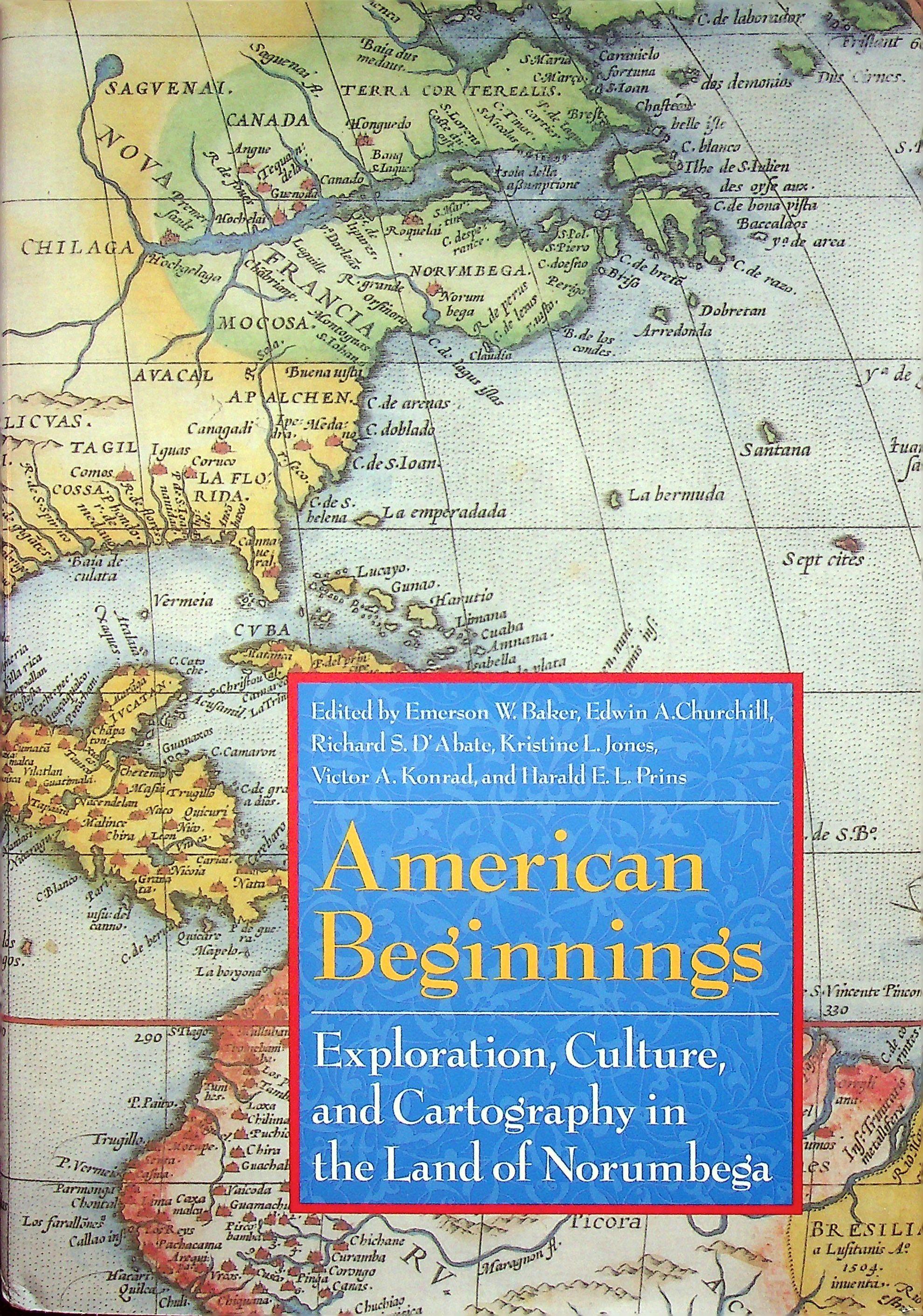
In Very Good condition with a Very Good dust jacket. Blue cloth boards with gold lettering on spine; mild shelf and edge wear. Binding tight. Mustard endpapers. Pages clean and unmarked. Illustrated dust jacket (Abraham Ortelius, Americae Sive Novi Orbis, Nova Descriptio, 1570) with light bumping to edges and corners and mild shelf wear. Now in an archival quality (removable) Brodart cover. Collection of essays on the European exploration, mapping and settlement of Norumbega, the sixteenth-century name for the coast of Maine and the Maritimes around the Penobscot River, and on the Wabanaki peoples who lived there. The volume grew out of a 1988 conference in Portland, Maine, held alongside an exhibition at the Portland Museum of Art, and brings together contributors from history, archaeology, anthropology and geography. Essays include David B. Quinn on the early cartography of Maine, John L. Allen on the search for the Northwest Passage, James Axtell on Native perspectives, and J. B. Harley on New England cartography and the Native Americans. Most of the 100 illustrations come from the Osher Map Library at the University of Southern Maine and reproduce early maps from Behaim's 1492 globe to Champlain, Ortelius and Wytfliet, with a section of color plates. Publication assisted by a grant from the National Endowment for the Humanities. Contents: List of Illustrations; Preface; General Introduction; Part One, "There Appeared a New Land": European Discovery, Exploration, and Cartography: The Indrawing Sea: Imagination and Experience in the Search for the Northwest Passage, 1497-1632; The Early Cartography of Maine in the Setting of Early European Exploration of New England and the Maritimes; On the Meaning of a Name: "Norumbega" and the Representation of North America; Part Two, "Wenooch"; or, Who Are These Strangers? Native Americans and the European Encounter: Children of Gluskap: Wabanaki Indians on the Eve of the European Invasion; Mapping Otherness: Myth and the Study of Cultural Encounter; Trade and Alliances in the Contact Period; The Exploration of Norumbega: Native Perspectives; Part Three, "Planting, Ruling, Ordering and Governing": European Colonization and Settlement: Political Definitions: Creating Maine and Acadia; "Wee Tooke Great Store of Cod-fish": Fishing Ships and First Settlements on the Coast of New England, 1600-1630; Fort Pentagoet and Castin's Habitation: French Ventures in Acadian Maine; Mid-Seventeenth-Century Maine: A World on the Edge; The World of Thomas Gorges: Life in the Province of Maine in the 1640s; Part Four, Victims of a Map: New England Cartography and the Native Americans; Notes; Notes on the Contributors; Index.