Description
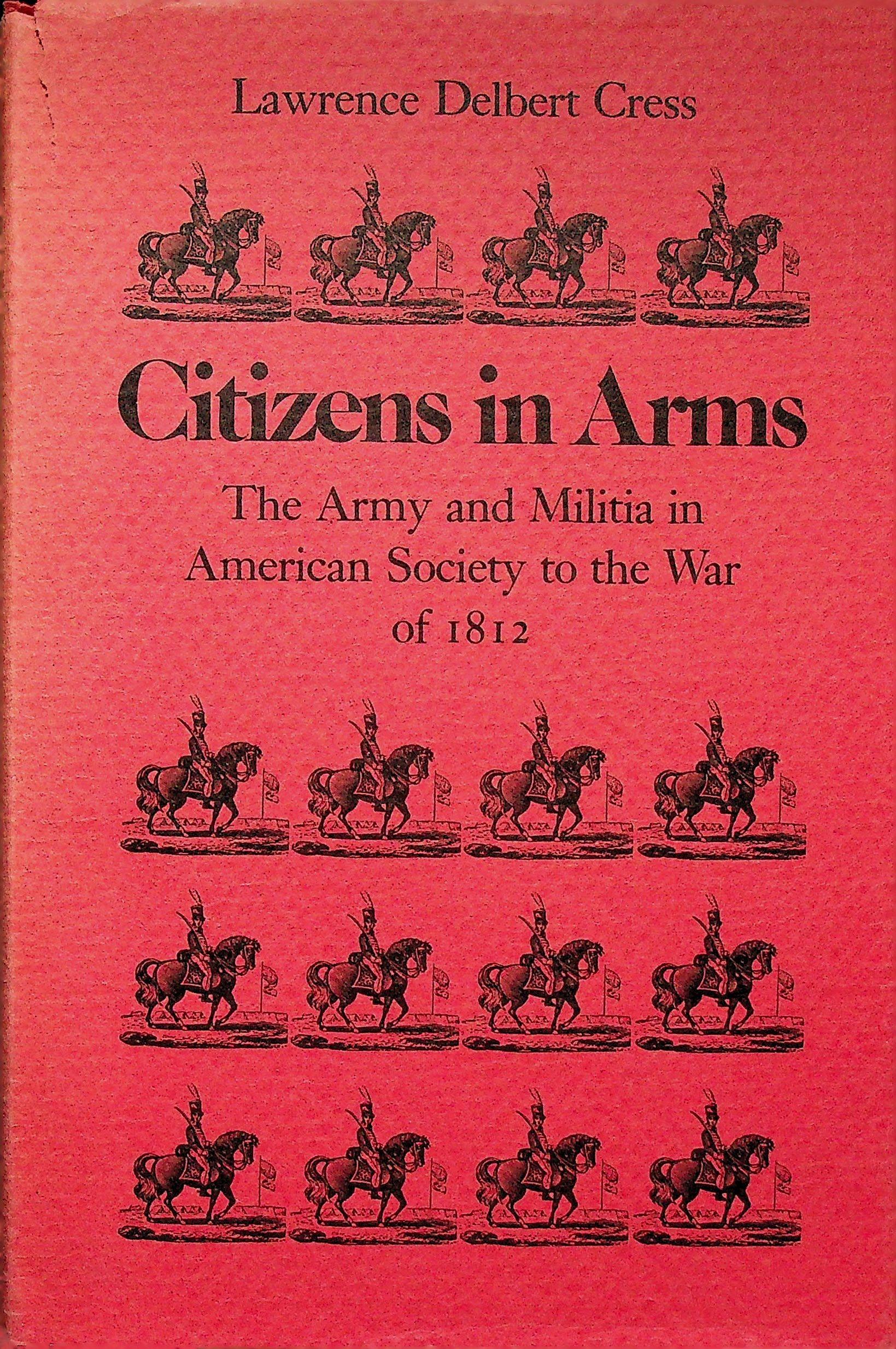
University of North Carolina Press, Published 1982. Hardcover, xiv, 238 pp.; 24 cm; Studies on Armed Forces and Society; woodcut-style vignettes of a mounted soldier on title page and chapter openings.

Rare, out-of-print & unusual books · Since 1997
Turn the pages with the arrows, keyboard, or a swipe.
University of North Carolina Press, Published 1982. Hardcover, xiv, 238 pp.; 24 cm; Studies on Armed Forces and Society; woodcut-style vignettes of a mounted soldier on title page and chapter openings.
In Good condition with a Good dust jacket. Quarter red cloth over tan speckled paper boards, black lettering on spine. Mild shelf and edge wear. Binding tight. Check marks, marginal brackets and lines, some underlining, and a few light marginal notes throughout, all in pencil; no ink. Red textured dust jacket printed with repeated woodcut vignettes of a mounted soldier; 1.5-inch tear at top edge of front panel near spine, a few smaller nicks and tears along edges, spine panel faded. Now in an archival quality (removable) Brodart cover. A study of how Americans thought about the army and the militia from the colonial period to the War of 1812, and of why the question turned on republican ideology rather than national security alone. Cress traces the English radical and moderate Whig arguments over standing armies into colonial and revolutionary America, then follows the debate through the Confederation, the framing of the Constitution, the Washington administration, the Provisional Army crisis of 1798, and the Jeffersonian years, with a coda on the call for military professionalism. The book grew out of Cress's University of Virginia dissertation, directed by Merrill D. Peterson; Cress was then assistant professor of history at Texas A&M. Published in association with the Inter-University Seminar on Armed Forces and Society. Notes, bibliography, and index. Contents: Acknowledgments; Introduction; Part One, Ideas and Institutions on the Eve of the American Revolution: The Military in American Colonial Society; Citizens and Soldiers in English Political Theory; The British Army in Prerevolutionary American Political Theory; Part Two, Society, Arms, and the Republican Constitution: The Wartime Army; Liberty and Security in the Postwar Period; The Military and the Federal Constitution; Part Three, Creating a Peace Establishment: Policy and Ideology in the Washington Administration; The Crisis of Ninety-Eight; Jeffersonian Victory and Defeat; Coda: A Call for Military Professionalism; Notes; Bibliography; Index.