Description
Methuen Australia, Published 1982. Hardcover, 176 pp.; 28 cm; First Edition; over 130 numbered plates in color and black-and-white, with maps.

Rare, out-of-print & unusual books · Since 1997
Turn the pages with the arrows, keyboard, or a swipe.
Methuen Australia, Published 1982. Hardcover, 176 pp.; 28 cm; First Edition; over 130 numbered plates in color and black-and-white, with maps.
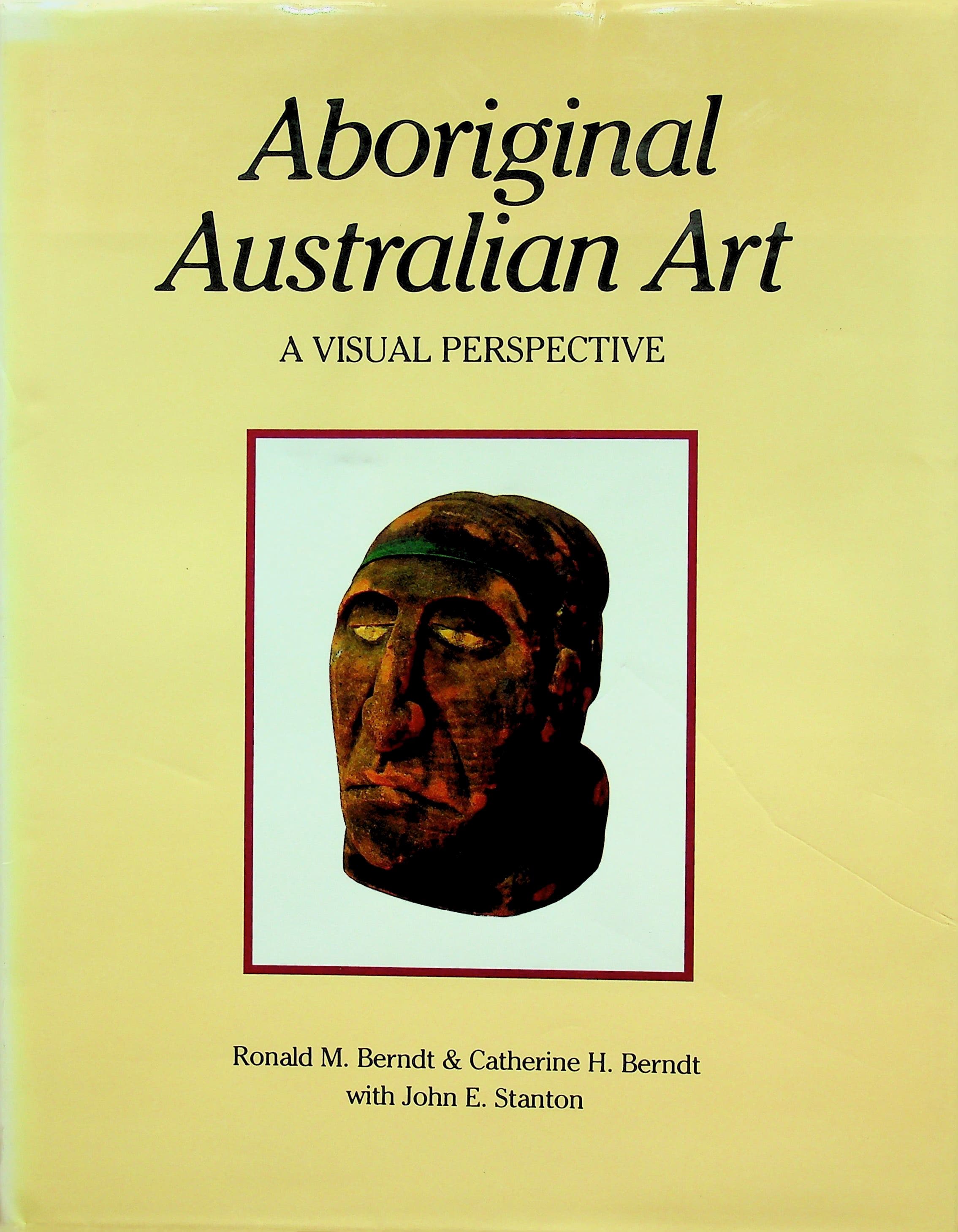
In Very Good condition with a Very Good dust jacket. Maroon cloth boards, white lettering on spine with METHUEN at foot. Mild bumping to edges and corners, a hint of color loss along edges, front board slightly bowed and does not lie perfectly flat. Binding tight. Interior pages clean and unmarked. Pale yellow pictorial jacket, front panel with a stone head from La Grange, Western Australia, rear panel with a bark painting, Aranga, Oenpelli, western Arnhem Land. Light bumping and creasing to jacket edges and corners, mild shelf wear, with fading to the jacket spine and over the top edge of the rear panel. Now in an archival quality (removable) Brodart cover. A national survey of Aboriginal art across rock painting and engraving, bark painting, sculpture, body art and domestic objects, set within its socio-cultural and religious context rather than treated formally. Ronald M. Berndt (1916-1990) and Catherine H. Berndt (1918-1994) came to the University of Western Australia in 1956 to establish anthropology there, and in 1976 founded its Anthropology Research Museum, renamed the Berndt Museum of Anthropology after his death; their collaborator John E. Stanton was its curator. The book is dedicated to the Aboriginal artists whose work it illustrates, with royalties assigned to a trust fund for the museum to buy Aboriginal art, and the Preface divides the labour: Ronald Berndt wrote the text and plate annotations, Catherine Berndt edited it, Stanton assembled the plates and maps. Published as Aboriginal art was being revalued from ethnographic artefact to fine art, the closing chapter, Changing Directions, takes up the trend away from traditional forms, work through a European medium and what the authors call the renascence of Aboriginal art, and the front flap puts the case plainly: none of it can be seen to advantage if forced into the narrow confines of "primitive" or "ethnic" art. Contents: List of Plates; Acknowledgements; Preface; Perspectives and Meaning; Living Traditional Art; More about Living Traditional Art; Art in Everyday Affairs; More Art in Everyday Affairs; Changing Directions; Descriptive Annotations to the Plates; Bibliography; Name Index; Subject Index.