Description
New York University Press, Published 1966. Hardcover, xv, 225 pp.; 28 cm; First Edition, first impression (so stated); color frontispiece portrait and 181 black-and-white illustrations.

Rare, out-of-print & unusual books · Since 1997
Turn the pages with the arrows, keyboard, or a swipe.
New York University Press, Published 1966. Hardcover, xv, 225 pp.; 28 cm; First Edition, first impression (so stated); color frontispiece portrait and 181 black-and-white illustrations.
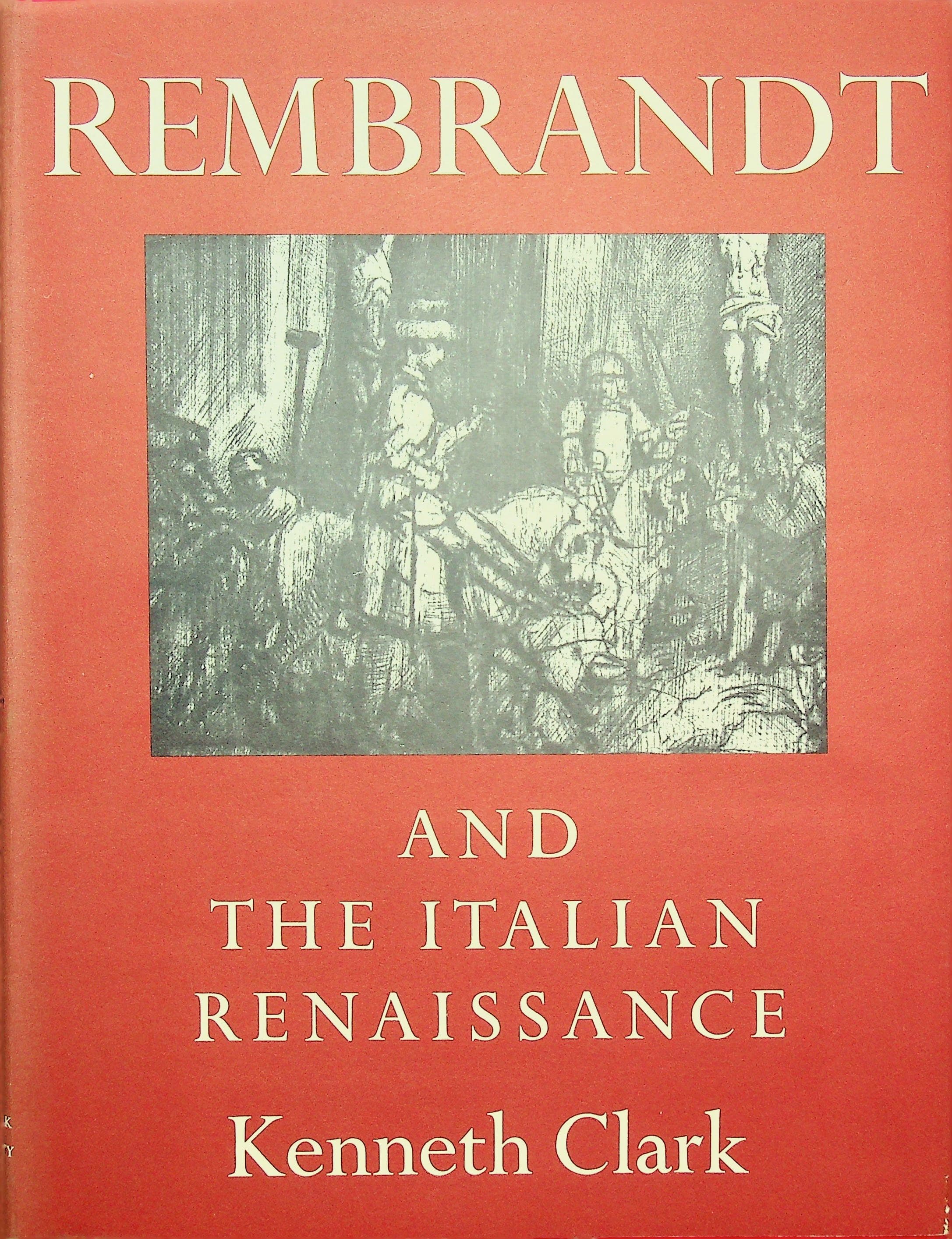
In Very Good condition with a Very Good dust jacket. Cardinal cloth boards, gilt lettering and rule decoration on spine with publisher's device gilt at foot, gilt bright and unrubbed. Small nick to cloth along bottom edge of front cover, mild shelf and edge wear. Binding tight. Mild toning to endpapers, pages otherwise clean and unmarked. Red pictorial jacket, front panel reproducing Rembrandt's The Three Crosses (circa 1661) in green-black, rear panel with a photographic portrait of Clark by Janet Stone. Panels bright, with sunning to the jacket spine, a few small nicks and short tears to the edges and a small chip at the spine foot. Jacket is price clipped. Now in an archival quality (removable) Brodart cover. The first volume of the Wrightsman Lectures, endowed by Charles and Jayne Wrightsman and delivered annually under the auspices of the New York University Institute of Fine Arts; Clark gave the inaugural series at the Metropolitan Museum of Art in 1964, and later volumes included Erwin Panofsky on Titian and Francis Haskell's Rediscoveries in Art. Across five lectures Clark argues that Rembrandt's debt to the Italians was not a matter of borrowed motifs but the source of the range and dignity of his mature style, tracing it through Marcantonio and Raphael, the monumental tradition behind The Night Watch, Titian and the Venetians, and finally Mantegna and Carpaccio. The position set him against Jakob Rosenberg, who had held that Rembrandt took up Renaissance features for his own ends while rejecting what was fundamental to the classical conception. Reviewing the book in the New York Review of Books in September 1966, John Pope-Hennessy called it the most articulate and sensitive of all introductions to Rembrandt, while allowing that specialists would find some of the redatings and rejections overconfident. An appendix prints an English translation of the 1656 inventory of Rembrandt's possessions drawn up at his insolvency, which Clark states in the Foreword he supplied because no complete English translation then existed. Clark had been Director of the National Gallery at thirty-one, Surveyor of the King's Pictures and Slade Professor at Oxford, and wrote and produced Civilisation in this same year, three years before the BBC broadcast it. Contents: The Anti-Classical Rembrandt; Rembrandt and the High Renaissance; Rembrandt and the Monumental Tradition; Rembrandt and the Venetians; Rembrandt and the Quattrocento; The 1656 Inventory of Rembrandt's Possessions; A Short List of the Chief Books and Articles Used; Notes; Index.