Description
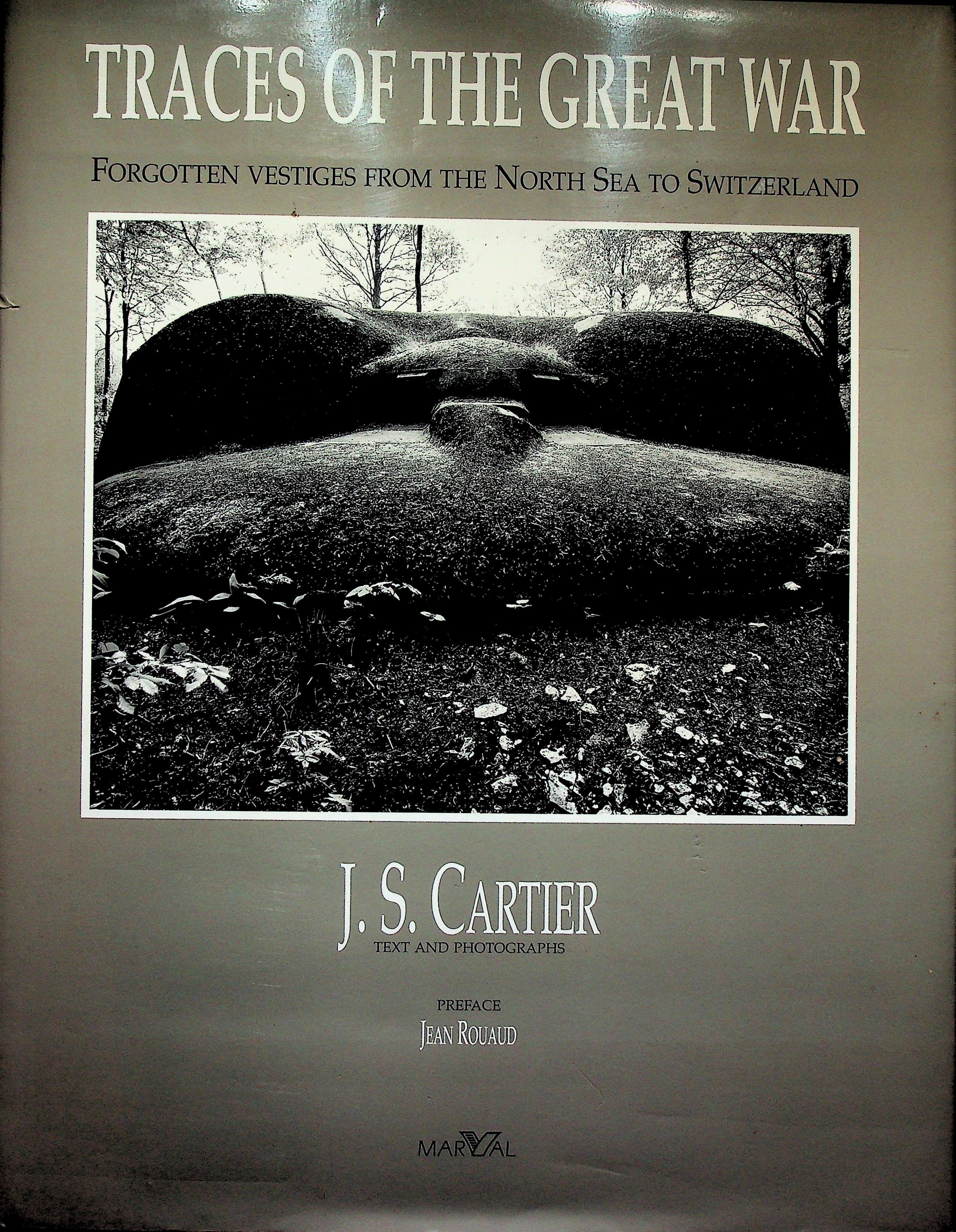
Marval (Paris, in co-publication with the Ministere des Anciens Combattants et Victimes de Guerre), Published 1994. Hardcover with dust jacket, 260 pp; 33 cm; text in English and French on facing pages; profusely illustrated throughout with full-page black-and-white photographs by Cartier of First World War sites. The original 1994 Marval edition, later reissued by Vilo in 1995 and by Distributed Art Publishers in 2000. Preface by Jean Rouaud.
Condition & notes
In Very Good condition with a Very Good dust jacket. Dark cloth boards titled in gilt on the spine; small bump to the spine; mild shelf wear along the edges of the covers. Binding tight; interior pages immaculate and unmarked throughout. Dust jacket with a half-inch closed tear in the paper over the front hinge of the spine, approximately two inches down from the top edge, no other tears; light creasing along the edges and mild shelf wear overall. Now in an archival quality (removable) Brodart cover.J. S. Cartier photographed more than 350 sites along the entire Western Front of the First World War between 1985 and 1993, working in Belgium, Nord-Pas-de-Calais, Picardy, Champagne-Ardennes, Lorraine, and Alsace. The plates are quiet and elegiac: bunkers and pillboxes overgrown with moss and bracken, isolated grave markers in pine forests, collapsed casemates and rusted ordnance returning to landscape, each plate captioned only by place name and date of exposure. Cartier, born in Paris and trained as a painter at the Ruskin School of Art at Oxford on the GI Bill after a stint in the US Army in the early 1950s, turned from painting to large-format photography in the 1970s following a workshop with Ansel Adams, and began the Great War project in 1990 with his wife Anna. His photographs are held in the permanent collections of the Metropolitan Museum of Art, the Brooklyn Museum, and the Bibliotheque Nationale. The preface is by Jean Rouaud, author of Les Champs d'honneur and 1990 winner of the Prix Goncourt; a brief foreword is contributed by Philippe Mestre, then Minister for Veterans and War Victims. The rear of the dust jacket carries an elegiac portrait of an aged French veteran in his medals, with an accompanying text by Pierrette Fleutiaux that frames the volume's project as photography in the service of recovery against the disappearing memory of 1914-1918.