Description
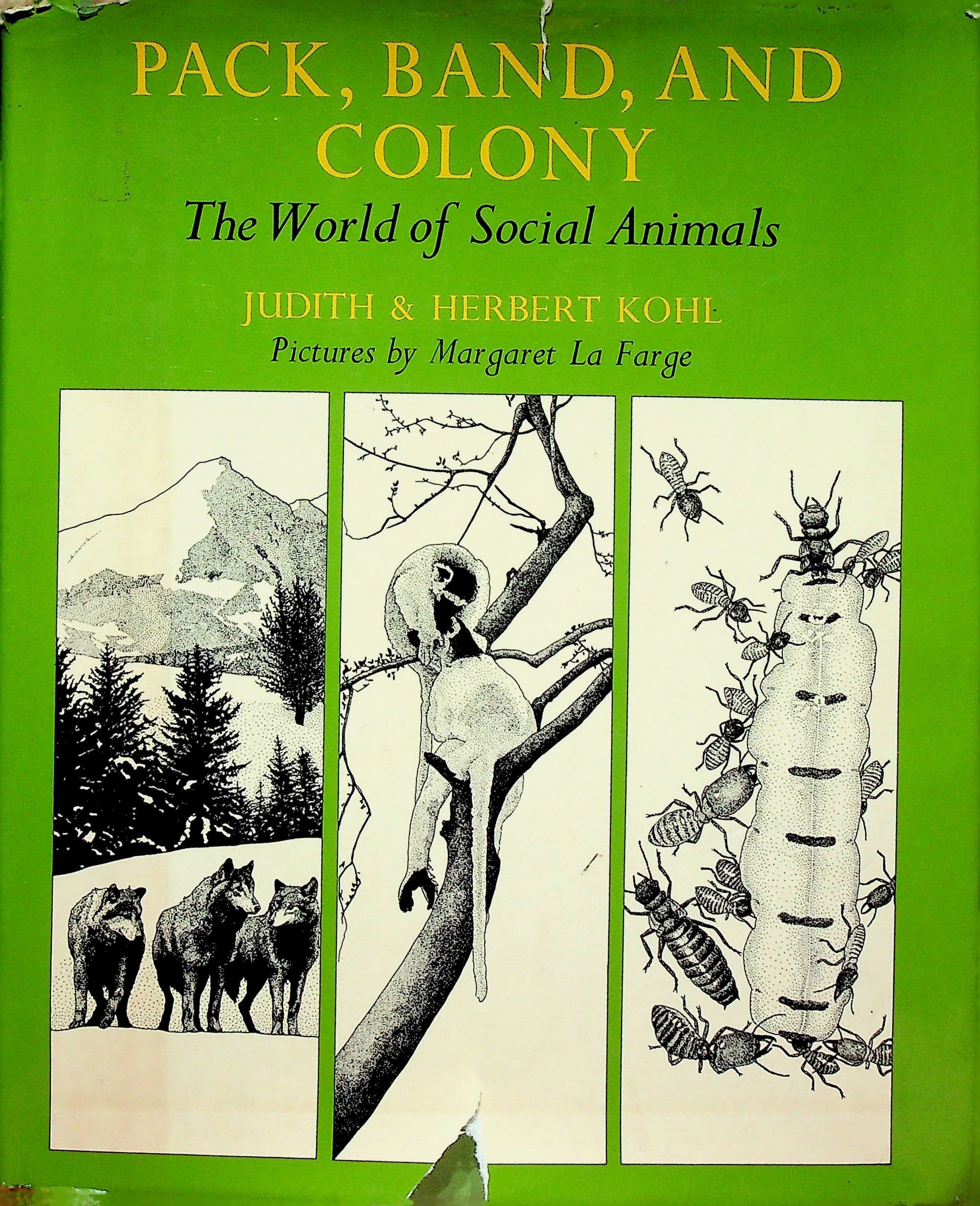
Farrar, Straus and Giroux, Published 1983. Hardcover, 114 pp.; 24 cm; First Edition; illustrated throughout with black-and-white pen-and-ink drawings by Margaret La Farge.

Rare, out-of-print & unusual books · Since 1997
Turn the pages with the arrows, keyboard, or a swipe.
Farrar, Straus and Giroux, Published 1983. Hardcover, 114 pp.; 24 cm; First Edition; illustrated throughout with black-and-white pen-and-ink drawings by Margaret La Farge.
In Very Good condition with an Acceptable dust jacket. Publisher's quarter-cloth binding: yellow cloth spine with green lettering, green paper over boards with a gold-stamped wolf-head device on the front board. Mild shelf and edge wear to the boards. Binding tight; mild spotting to the edges of the text block; otherwise pages clean and unmarked. Dust jacket shows two 4-inch tears running down from the top edge of the back panel, both taped from the verso, along with a 1-inch triangular chip to the paper at the bottom edge of the front cover and several smaller nicks and short tears increasing toward the edges. Mild overall surface wear and toning to the jacket; price of $11.95 present on the front flap. Now in an archival quality (removable) Brodart cover.A children's natural history written by educator and author Herbert R. Kohl and Judith Kohl, examining the social lives of three very different animal groups: wolves, sifaka lemurs, and Macrotermes termites.[From the front flap] Wolves consider a forty-square-mile territory home and roam over a hundred square miles. Sifaka lemurs spend ninety percent of their time in trees fifty feet aboveground and are found only on the small island of Madagascar. Macrotermes termites live in mounds that can be twenty feet tall, and in groups numbering hundreds of thousands, making it impossible to tell one from the other. In this fascinating look at non-human societies, Judith and Herbert Kohl take the reader on imaginary voyages to explore the world of wolves, lemurs, and termites. They go beyond the complexity and variety of scientific observations required to study each group, and discuss the unique social bonds that account for the legendary teamwork of a wolf pack, the non-violent behavior of lemurs, and the astounding communications system of a termite colony that makes it an entity in itself. The Kohls expand on such observations as these to describe the similarities between these non-human societies and our own, as well as suggest the value and achievement possible for those who choose to study them.Contents: Setting Out; Social Life: The Individual and the Group; What Animals Do You Like?; The Wolf's World; Lemurs: A Voyage of Discovery; Termite Cities; Conclusion: The World of Social Animals; Sources; Further Reading.