Description
Yale University Press, Published 1969. Hardcover, xiii, 179 pp. plus 28 unnumbered leaves of plates; 22 cm; second printing (first published 1963); illustrated with black-and-white photographic plates, drawings, and diagrams. Yale Caribbean Series, 6.
Condition & notes
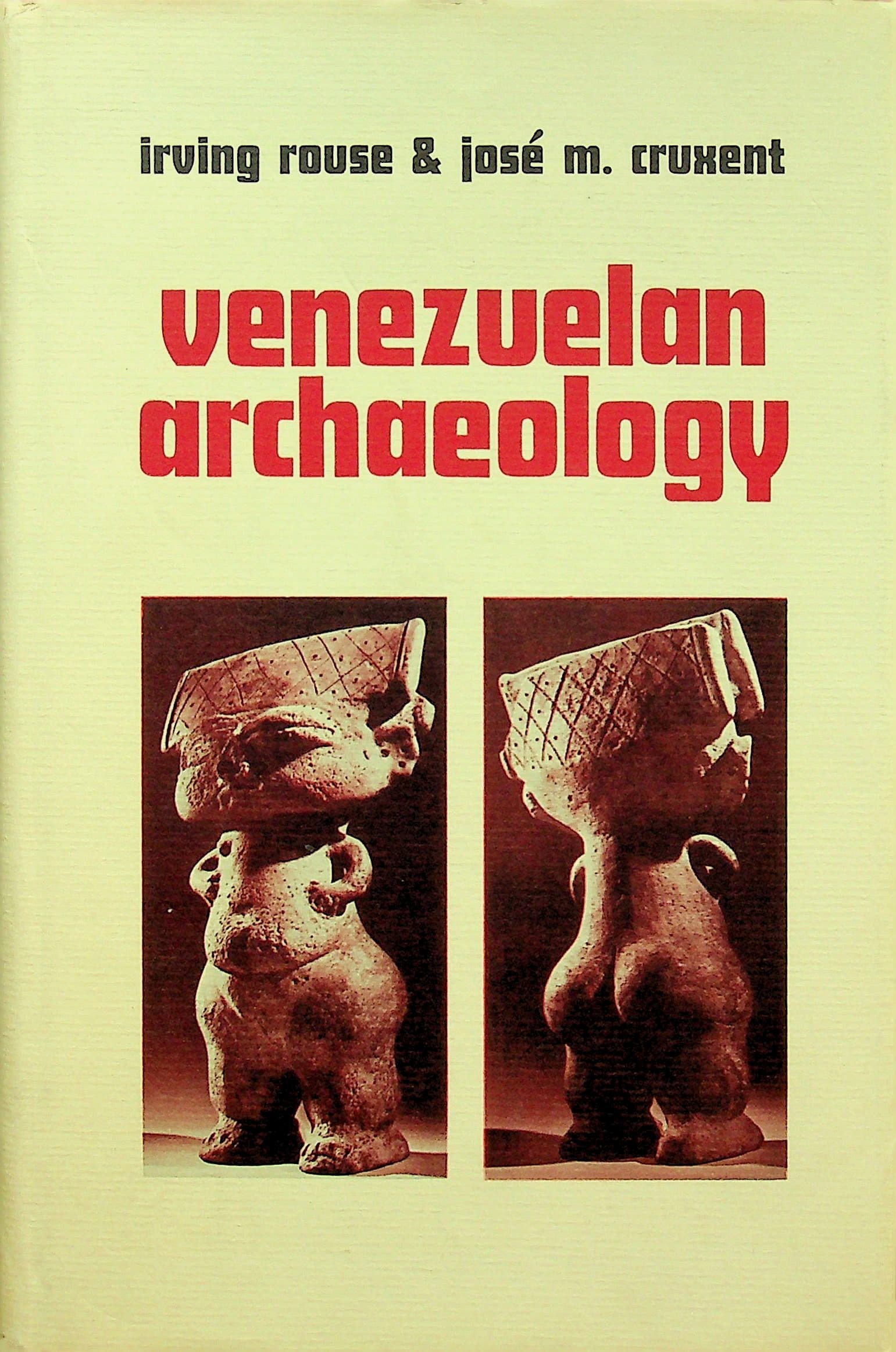
In Very Good condition with a Very Good dust jacket. Brown mottled paper-covered boards with deep coral cloth spine, gold lettering and rule lines, gilt rectangular title panel mid-spine, and a small gold pre-Columbian decorative stamp at lower right of front board; mild edge wear with a bit of color loss to corner tips and to top and bottom of spine. Binding tight. The 1974 date and an "Ex Libris" inscription with prior owner's name and number on the front free endpaper, otherwise pages clean and unmarked. Pale yellow-green pictorial dust jacket featuring two sepia photographs of Valencia-style clay figurines on the front; a few small nicks and mild shelf wear; price clipped. Now in an archival quality (removable) Brodart cover. The first detailed synthesis of the archaeology of tropical lowland South America by two of the field's leading practitioners. [From front jacket flap] Throughout prehistoric times Venezuela was the geographical meeting ground of cultural developments on both sides of northern South America. Many cultural features seem to have originated there and to have diffused, particularly into the West Indies. The authors of this first detailed synthesis of the archaeology of tropical lowland South America, who have done at least 50 per cent of the original field work in Venezuela, present a brilliant interpretive picture of the complex cultural relationships in time and space, using ceramics and radiocarbon dating as the primary guides to cultural stability, influence, and development. The story begins with the first known inhabitants (around 15,000 B.C.) and continues into the period after the arrival of Europeans. A 56-page section of illustrations complements the text. Irving Rouse is professor of anthropology at Yale University and José Cruxent is at the Instituto Venezolano de Investigaciones Cientificas, Caracas. Contents: Introduction; Approaches to Venezuelan Archaeology; Paleo-Indian Epoch; Meso-Indian Epoch; Neo-Indian Epoch: Introduction; Neo-Indian Epoch: Western Venezuela; Neo-Indian Epoch: Central Venezuela; Neo-Indian Epoch: Eastern Venezuela; Indo-Hispanic Epoch; Summary and Conclusions; Plates; Appendix: Venezuelan Radiocarbon Dates; Bibliography; Index.