Description
Argia liburuak, Published 2006. Hardcover, unpaged; 22 x 30 cm; text in Basque with parallel Spanish, French, and English translations; illustrated throughout with black-and-white photographs.

Rare, out-of-print & unusual books · Since 1997
Turn the pages with the arrows, keyboard, or a swipe.
Argia liburuak, Published 2006. Hardcover, unpaged; 22 x 30 cm; text in Basque with parallel Spanish, French, and English translations; illustrated throughout with black-and-white photographs.
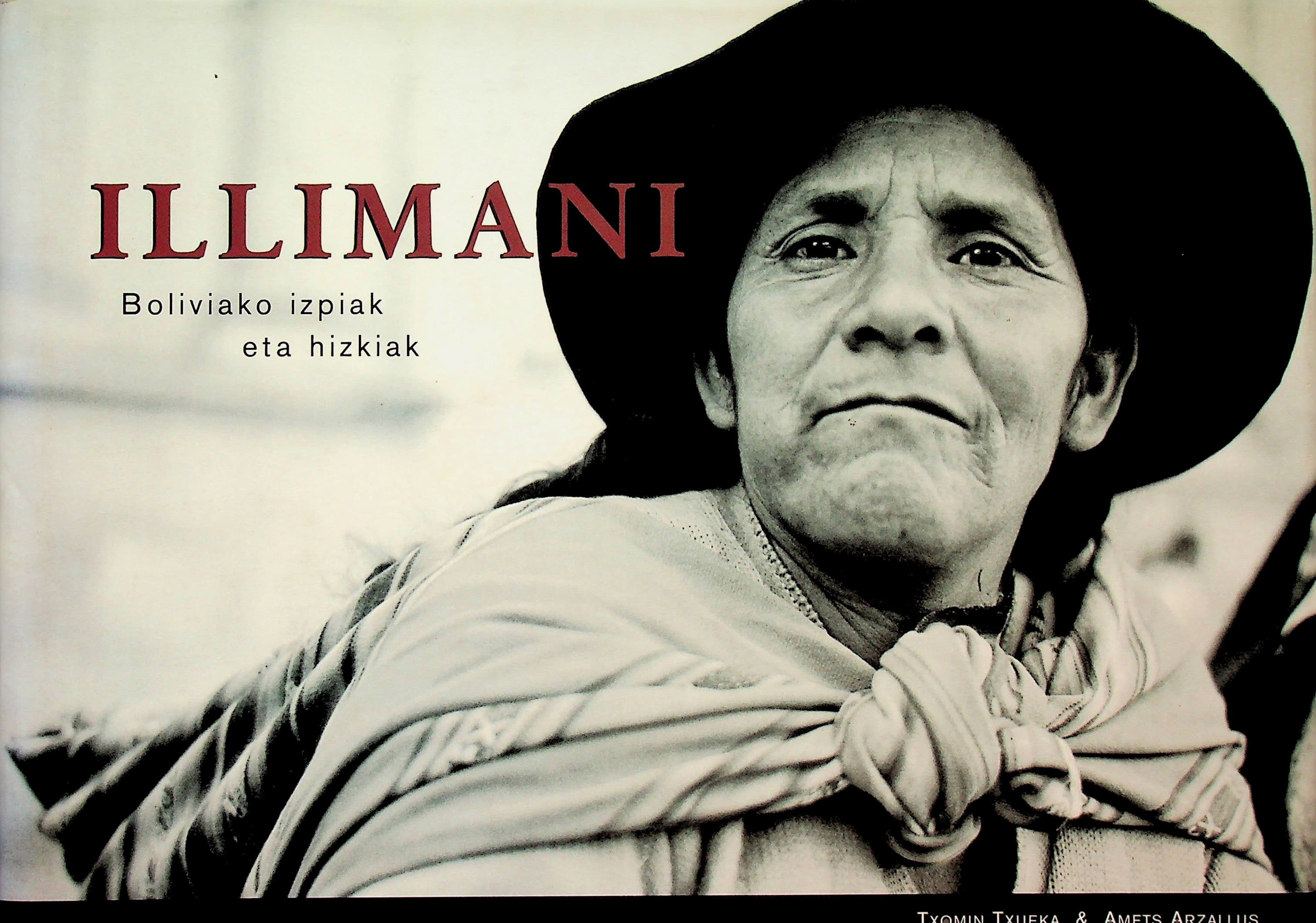
In Very Good condition with a Very Good dust jacket. Black cloth covered boards with blindstamped lettering to the front board. Mild shelf wear with light bumping along edges of covers. Binding tight. Pages clean and unmarked. Pictorial photographic dust jacket featuring a close B&W portrait of a Bolivian woman in bowler hat with the title in red. Dust jacket shows a few small nicks and closed tears, light creasing along the edges, and mild shelf wear overall. Now in an archival quality (removable) Brodart cover. A landscape-format photographic essay on Bolivia by Basque photojournalist Txomin Txueka (Getaria, 1960) with facing-page texts by journalist and bertsolari Amets Arzallus (Hendaia, 1983), published in Basque with parallel Spanish, French, and English translations by Xabier Paya, Joana Falxa, and Alan R. King. Photographed and written in 2006, the year Evo Morales took office as Bolivia's first indigenous president, the book captures a transformative political moment and includes a dated interview (29 July 2006) with Felipe Quispe, ex-leader of the Tupac Katari Guerrilla Army and a central indigenous Aymara political figure. Txueka's Leica portraits move through La Paz street vendors, the San Pedro prison, Aymara women of the altiplano, shoeshiners (zapatistas), and rural bus passengers, while Arzallus's short prose-poems and reportage layer the images with observations on class, coloniality, and indigenous political ascendancy. Produced by the Basque-language publisher Argia liburuak and supported by the Mondragon worker cooperatives Irizar and Fagor, the book is both a document of Morales-era Bolivia and an artifact of Basque international solidarity, giving a rarely-seen European minority-language perspective on contemporary Andean politics and daily life.