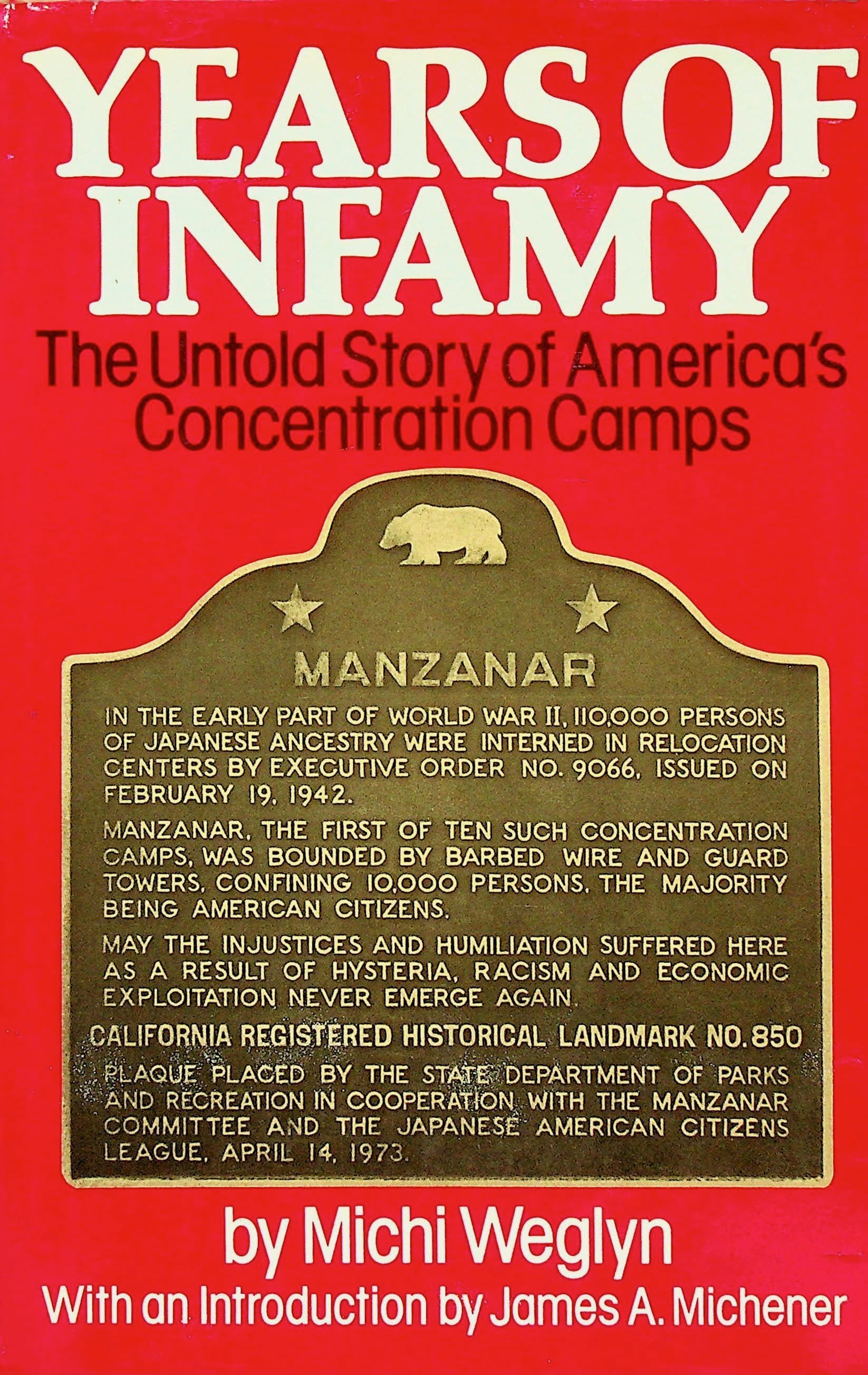
Description
William Morrow and Company, Inc., Published 1976. Hardcover, 351 pp.; 25 cm; illustrated with black-and-white photographs, drawings, and newspaper clippings; map of wartime relocation centers. First edition, first printing. With an Introduction by James A. Michener.
Condition & notes
In Good condition with a Good dust jacket. Black paper over boards with tan cloth spine, gold lettering on spine; light scuffing and fading to board edges. Crack to front hinge from top edge, approximately two inches, between front free endpaper and first photograph; remaining binding solid. Mild toning to endpapers and text block edges; pages otherwise clean and unmarked. Inscribed by the author on the half-title page: "To Clara, Whose friendship I cherish. With fond regards. Michi." Dust jacket has a few small nicks and tears and light creasing along edges; mild overall shelf wear and toning. Now in an archival quality (removable) Brodart cover.Winner of the Anisfield-Wolf Book Award. Described as the "Bible of the Redress Movement," this landmark work provided the documentary evidence that contributed directly to the passage of the Civil Liberties Act of 1988, which provided reparations to surviving Japanese-American internees.[From front jacket flap] Here is the first book to expose fully the bitter truth behind "the single worst wholesale violation of civil rights of Americans in our history" (the World War II evacuation and internment of 110,000 Japanese Americans): Why the secret pre-Pearl Harbor loyalty investigation, conducted under President Franklin D. Roosevelt's own mandate, was ignored when it concluded, unequivocally, that persons of Japanese ancestry posed no threat to national security. How the military accomplished the unconstitutional surgical removal of a minority, "legally." Why the United States State Department, Justice Department, Army and Navy "legally" kidnapped thousands of hostages of Japanese descent from South and Central American republics to be placed in concentration camps on the U.S. mainland. Years of Infamy uses startlingly incriminating government documents, finally unearthed, to provide riveting insights into these and other "forgotten" parts of the tapestry of the internment years. . . .