Description
Brassey's, Published 1998. Hardcover, xviii, 273 pp.; 25 cm; First edition; illustrated with black-and-white photographs and period illustrations.

Rare, out-of-print & unusual books · Since 1997
Turn the pages with the arrows, keyboard, or a swipe.
Brassey's, Published 1998. Hardcover, xviii, 273 pp.; 25 cm; First edition; illustrated with black-and-white photographs and period illustrations.
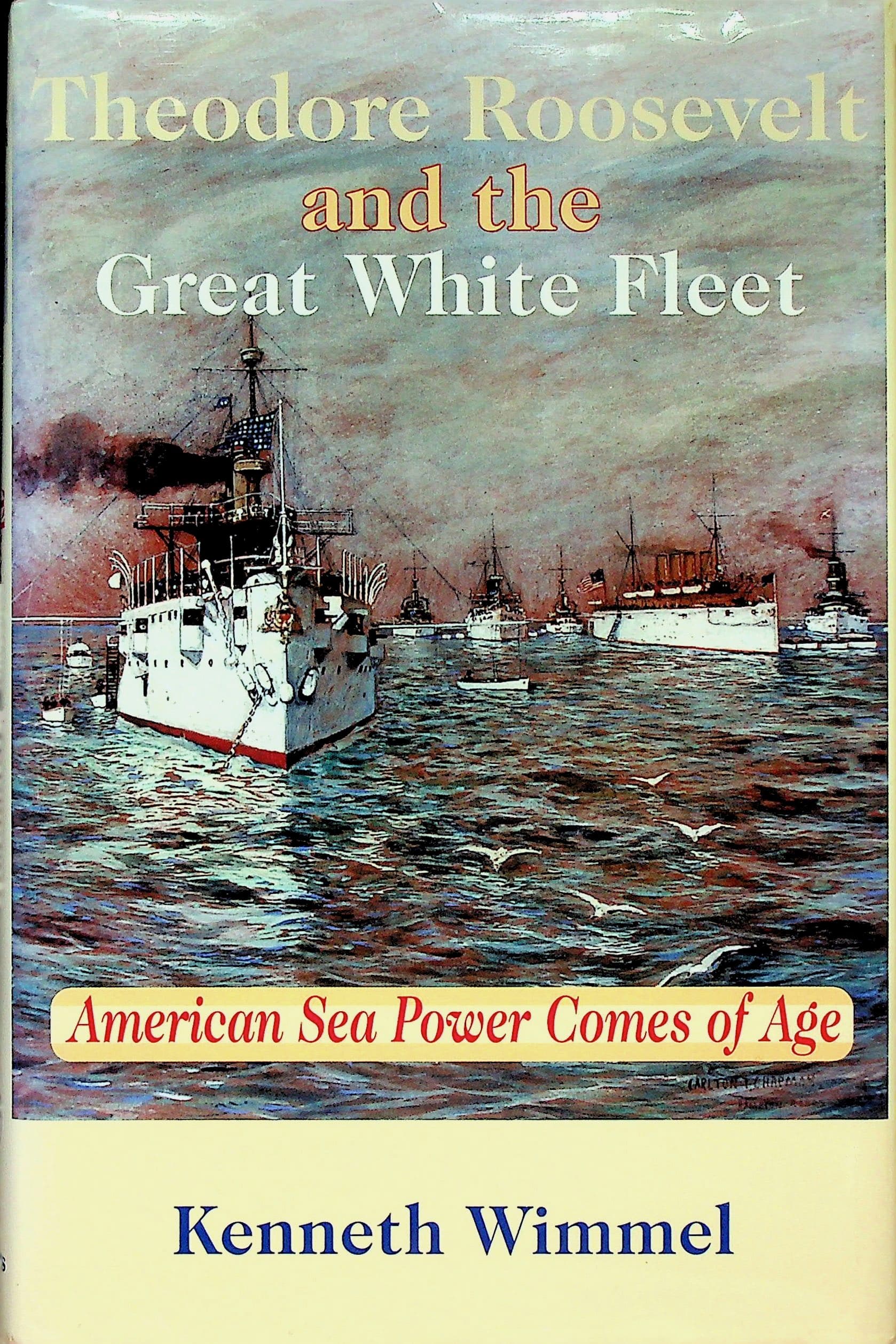
In Very Good condition with a Very Good- dust jacket. Brown cloth-covered boards with gilt lettering on spine; light edgewear to covers. Binding tight. Pages clean and unmarked. Dust jacket bears a painted scene of battleships at sea in blue-grey tones, with the title in dark lettering above and a gold banner bearing the subtitle across the center; a few small nicks and light creasing to edges, with mild overall shelfwear. Now in an archival quality (removable) Brodart cover. [From dust jacket] In 1909, President Theodore Roosevelt's "Great White Fleet" of sixteen battleships arrived back in the United States from its epic voyage. The homecoming marked the completion of a technological triumph: the first circumnavigation of the globe by a fleet of steam-driven warships. Many naval experts had said it could not be done. The achievement underscored the world ranking that the U.S. Navy had attained, now second only to Britain's Royal Navy in size and firepower. But scarcely a generation earlier, in 1880, the U.S. Navy had reached the nadir of a precipitous decline that had begun just after the Civil War. . . This remarkably rapid metamorphosis, which heralded the emergence of the United States as a decisive player in world affairs, can be largely credited to the ideas, determination, and energy of one man, Theodore Roosevelt. In 1880, while still a student at Harvard, he began writing The Naval War of 1812, which established his credentials as an expert on naval affairs. The secretary of the navy ordered a copy placed aboard every American naval vessel. From then until he left public office, Roosevelt continually prodded his fellow politicians into supporting the Navy, badgered often-reluctant senior officers into accepting the technological changes being thrust upon them, and instilled in his countrymen an abiding understanding that their country's security and responsibilities demanded a strong naval force. Contents: Preface; Prologue: "Did You Ever See Such a Fleet and Such a Day?"; Chapter 1: "Teedy's Drawing Little Ships!"; Chapter 2: "Poor Little Poorhouse"; Chapter 3: "A Very Good Book"; Chapter 4: "The Disastrous Rise of Misplaced Power"; Chapter 5: "I Have the Navy in Good Shape"; Chapter 6: "A Fourth of July Present"; Chapter 7: "Our Marksmanship Is Crushingly Inferior"; Chapter 8: "The Only Logical Battery for a Fighting Vessel"; Chapter 9: "They Should Realize I Am Not Afraid of Them"; Chapter 10: "The Most Important Service That I Rendered to Peace"; Epilogue: "The Machine Has Worked"; Bibliographic Notes; Index; About the Author.