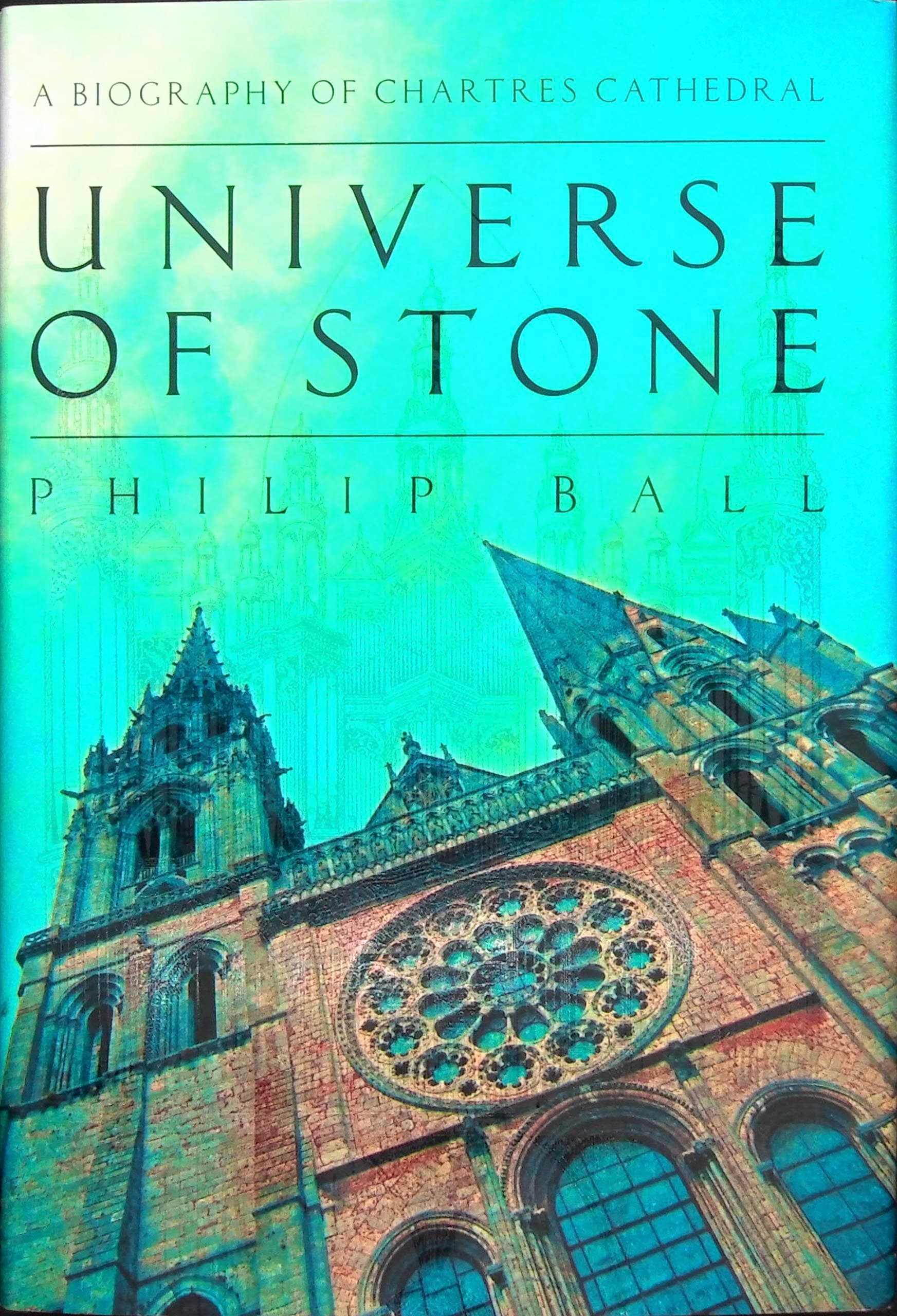
Description
Harper, New York. Published date: 2008. Hardcover with dust jacket, vii, 322 pp plus 16 unnumbered pages of plates; 24 cm. First U.S. edition (with full number line); Illustrated with black and white and some color photographs, diagrams, architectural drawings, and maps.
Condition & notes
In very good condition with a very good dust jacket. Black paper-covered boards with gold lettering on spine; light bumping to edges and corners with mild surface wear; binding firm; interior pages clean and unmarked. Dust jacket has light edge wear and mild surface wear but remains bright and intact. Now in an archival quality (removable) Brodart cover. [From front jacket flap] Chartres Cathedral, south of Paris, is revered as one of the most beautiful and profound works of art in the Western canon. But what did it mean to those who constructed it in the twelfth and thirteenth centuries? And why, during this time, did Europeans begin to build churches in a new style, at such immense height and with such glorious play of light, in the soaring manner we now call Gothic? Universe of Stone shows that the Gothic cathedrals encode a far-reaching shift in the way medieval thinkers perceived their relationship with their world. For the first time, they began to believe in an orderly, rational world that could be investigated and understood. This change marked the beginning of Western science and also the start of a long and, indeed, unfinished struggle to reconcile faith and reason. By embedding the cathedral in the culture of the twelfth century - its schools of philosophy and science, its trades and technologies, its politics and religious debates - Philip Ball makes sense of the visual and emotional power of Chartres. Beautifully illustrated and written, filled with astonishing insight, Universe of Stone argues that Chartres is a sublime expression of the originality and vitality of a true "first renaissance," one that occurred long before the birth of Leonardo da Vinci, Michelangelo, or Francis Bacon.