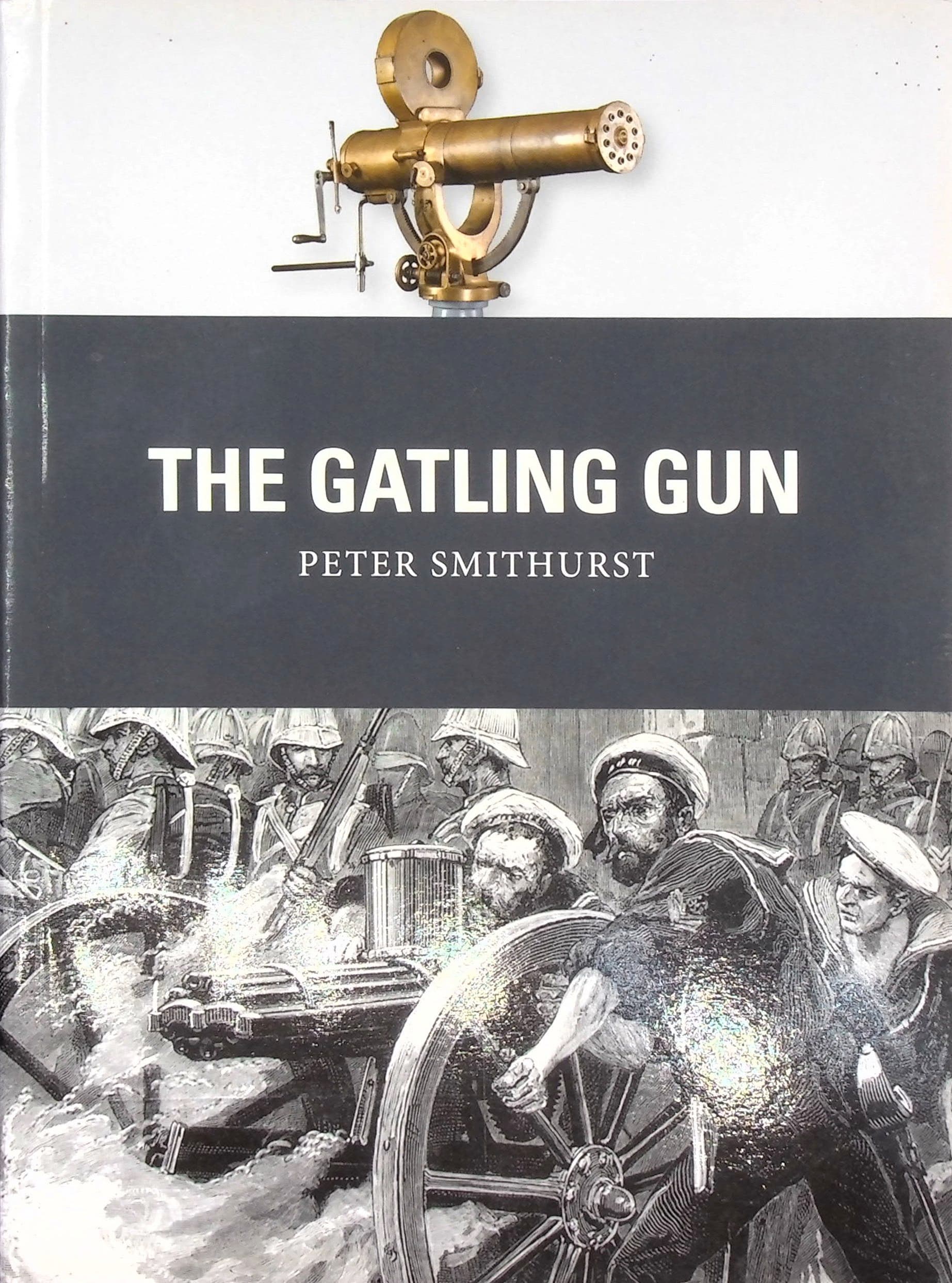
Description
Osprey Publishing, Oxford, Published date: 2015. Softcover, glossy pictorial paper covers; 80 pp; 25 cm. Weapon series, no. 40. Illustrated throughout with full-color artwork by Johnny Shumate and contemporary black and white photographs and illustrations; glossary; bibliography; index.
Condition & notes
In very good condition. Glossy illustrated paper covers have minimal shelf wear; binding tight. A comprehensive study of the origins, development, combat use, and lasting influence of the Gatling gun, one of the first practical rapid-fire weapons. Covers its 50-year career with US, British, and other forces from the American Civil War through the Spanish-American War, including its famous absence at the Battle of Little Bighorn. Contents: Introduction; Development: A New Species of Weapon Is Born; Use: The Gatling at War; Impact: 'A Terrible Gun Which Shoots All Day'; Conclusion; Glossary; Bibliography; Index [From back cover] A crucial chapter in the history of firearms, the multibarrelled, hand-cranked Gatling gun was one of the very first practical rapid-fire weapons to be used in anger. It revolutionized warfare by introducing the capability to project deadly, high-intensity fire on the battlefield, and foreshadowed the devastation that automatic weapons would wreak in World War I. During its 50-year career, it saw service with US, British and other forces on a host of battlefields through conflicts in Zululand and the American West, to the Spanish - American War. Though widely used in the hands of industrialized nations against groups of indigenous native warriors, it was famously left behind by Custer at the battle of Little Bighorn, where some argue it could have made all the difference. This study investigates the origins, development and combat use of the formidable Gatling gun, exploring the lasting legacy of the key precursor to the modern machine gun.