Description
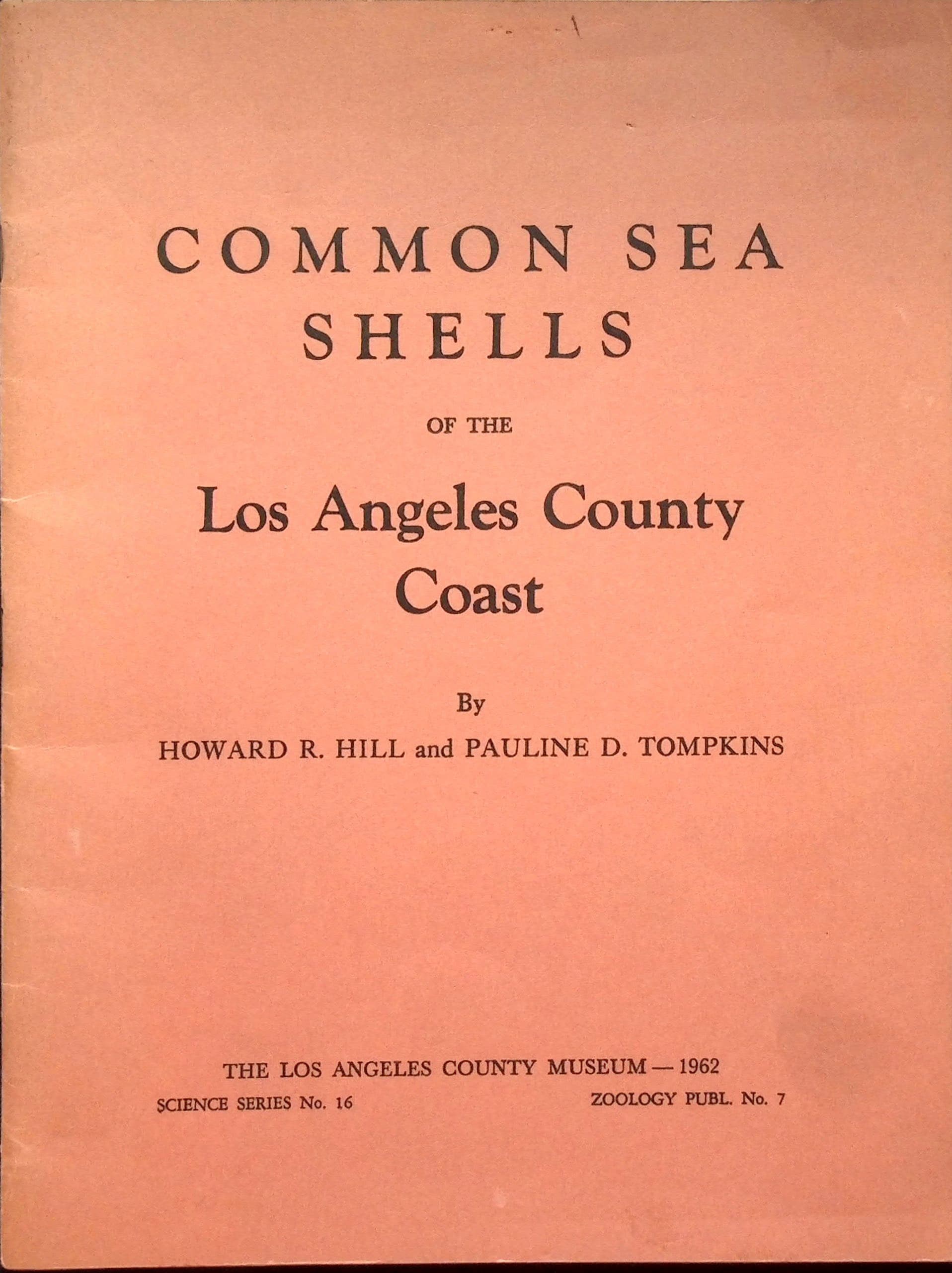
The Los Angeles County Museum, Published date: 1962. Paper covers; 48 pp; 26 cm. Third printing. Illustrated throughout with black and white photographic plates.

Rare, out-of-print & unusual books · Since 1997
Turn the pages with the arrows, keyboard, or a swipe.
The Los Angeles County Museum, Published date: 1962. Paper covers; 48 pp; 26 cm. Third printing. Illustrated throughout with black and white photographic plates.
In good condition. Original salmon-pink paper wrappers printed in black; light edge wear and mild surface soiling; small creases at spine fold; binding sound. Interior pages lightly toned with age; text and images unmarked. Illustrated natural history handbook describing and identifying common marine shells found along the beaches of Los Angeles County, intended as a practical guide for shoreline visitors and students. Includes introductory text on mollusks, sections on bivalves and gastropods arranged by family, photographic plates with descriptive captions, glossary, and index. From introduction, page 3: The sea shells that are found on the beaches of Los Angeles County are the hard parts of invertebrate animals called "Mollusks". Like all other animals they begin life as tiny eggs. Upon hatching they are soft-bodied and soon start building their shells which serve as a protection. Calcium (lime) is obtained from sea water and the shells are thickened and enlarged as the animals grow. You may find "dead" shells on the shore from which the mollusk animals have disappeared after death, and "live" shells that still contain the living animals. The bivalves (Pelecypoda) are mollusks with two shell parts or valves which in life are attached by a hinge and interlocking teeth. The univalves (Gastropoda) are mollusks with shells of one part, usually coiled as in our common garden snail. Multivalves (Loridata) have many interlocking plates, usually eight in number, as in the Chitons or Coat-of-Mail Shells. Scaphopods have slender, tube-like shells which are without whorls and taper toward one end. The shells are slightly curved and open at either end. Although there are over a thousand different kinds of mollusks found along our coast, a great many are rare or occur in such deep water as to be seldom seen. This handbook describes briefly and illustrates some of the more interesting species that visitors to our nearby shoreline are likely to come across. It is hoped that it will be useful as a ready means of identification for the common shells herein included.