Description
Craftsman House, Roseville East, NSW [Published date: 1995]. Hardcover in dust jacket, 152 pp; color and black-and-white photographs, drawings; glossary; index; 28 cm.

Rare, out-of-print & unusual books · Since 1997
Turn the pages with the arrows, keyboard, or a swipe.
Craftsman House, Roseville East, NSW [Published date: 1995]. Hardcover in dust jacket, 152 pp; color and black-and-white photographs, drawings; glossary; index; 28 cm.
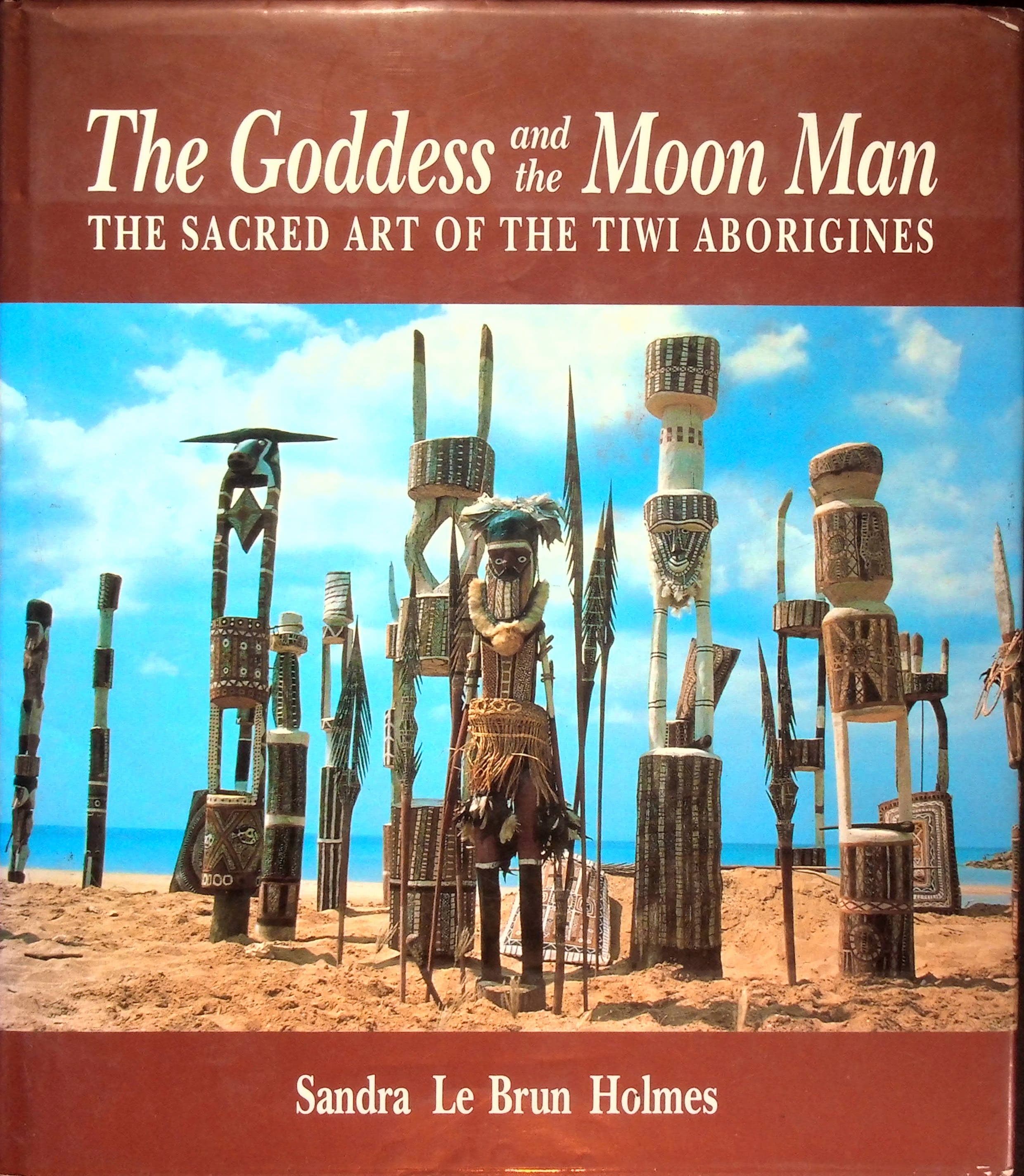
In good condition / good dust jacket. Brown paper over boards with silver lettering on spine. Bumping and scuffing to edges and corners with the color scuffed off in several spots along bottom edges of covers. Binding tight. Light soiling to edges of text block. Otherwise pages are clean and unmarked. Dust jacket has several small nicks and tears and creasing along edges. Light overall scuffing and soiling to jacket as well. Now in an archival quality (removable) Brodart cover. [From front jacket flap] The story of how man became mortal unfolds in the beautiful and dramatic story of the Tiwi Pukamani ceremony. It is illustrated with the magnificent sculptures, grave posts and bark paintings that in the absence of a written language preserved and perpetuated the ancient customs and religion of the Tiwi people of Melville Island. The author, whose Tiwi name is Tipalamow, worked for some years as an anthropological researcher for the Australian Institute of Aboriginal Studies. Throughout this time, she recorded and photographed a number of Pukamani mortuary ceremonies for the Institute's Canberra archives. At the same time, she also assembled the only complete Pukamani collection in the world. This collection, which includes thirty large grave posts and a series of intricately carved spears, clubs, artefacts, bark paintings, bags and ceremonial paraphernalia, is now housed in the Museum and Art Galleries of the Northern Territory, Darwin, and is officially named 'The Holmes Tiwi Collection'. During the course of her work, Sandra Holmes observed that the Tiwi customs and religion were being overwhelmed by a dominant white culture and that Christian burial practices were replacing the traditional Pukamani ceremonies. Tiwi ceremonial sculptures, paintings and artefacts were also being classed as art and craft and sold off to visiting dealers. With the passing of many elders and the irreversible changes that have overtaken the islanders, the golden age of Tiwi religious art has gone and can never come again. The Holmes Tiwi Collection could not have been made without the loyalty and encouragement of two important Tiwi elders, Alie Miller Wurraputiwai of the Mungatopi family and his wife Polly Miller Paiahningmaiu. To honour Sandra Holmes for her dedication to saving the collection and documenting their customs and ceremonies, Alie and his wife adopted her into the Mungatopi family. Alie Miller named her Tipalamow, after a legendary heroine. This unique book describes and illustrates aspects of the traditional Tiwi culture that has now virtually disappeared. Chapters include: Land of the Tiwi; Murantawi: The Coming of the White Man; Tiwi Teachers: Learning Their Ways; Tiwi Elders of High Degree; Alie's Story: How Man Became Mortal; Islands of the Gods; The Stone Relic; For Love of Tipalamow; Something Saved from the Wreck; Pukamani for a Woman; The Passing of Alie Wurraputiwai Mungatopi; Shadows Over the Land; The Face of Change; Cyclone Tracy; Old Friends Passing; The Evolution of Tiwi Designs; Epilogue: Shadows on the Sand; Explanations: Ceremonial regalia pukamani and kularma.