
Description
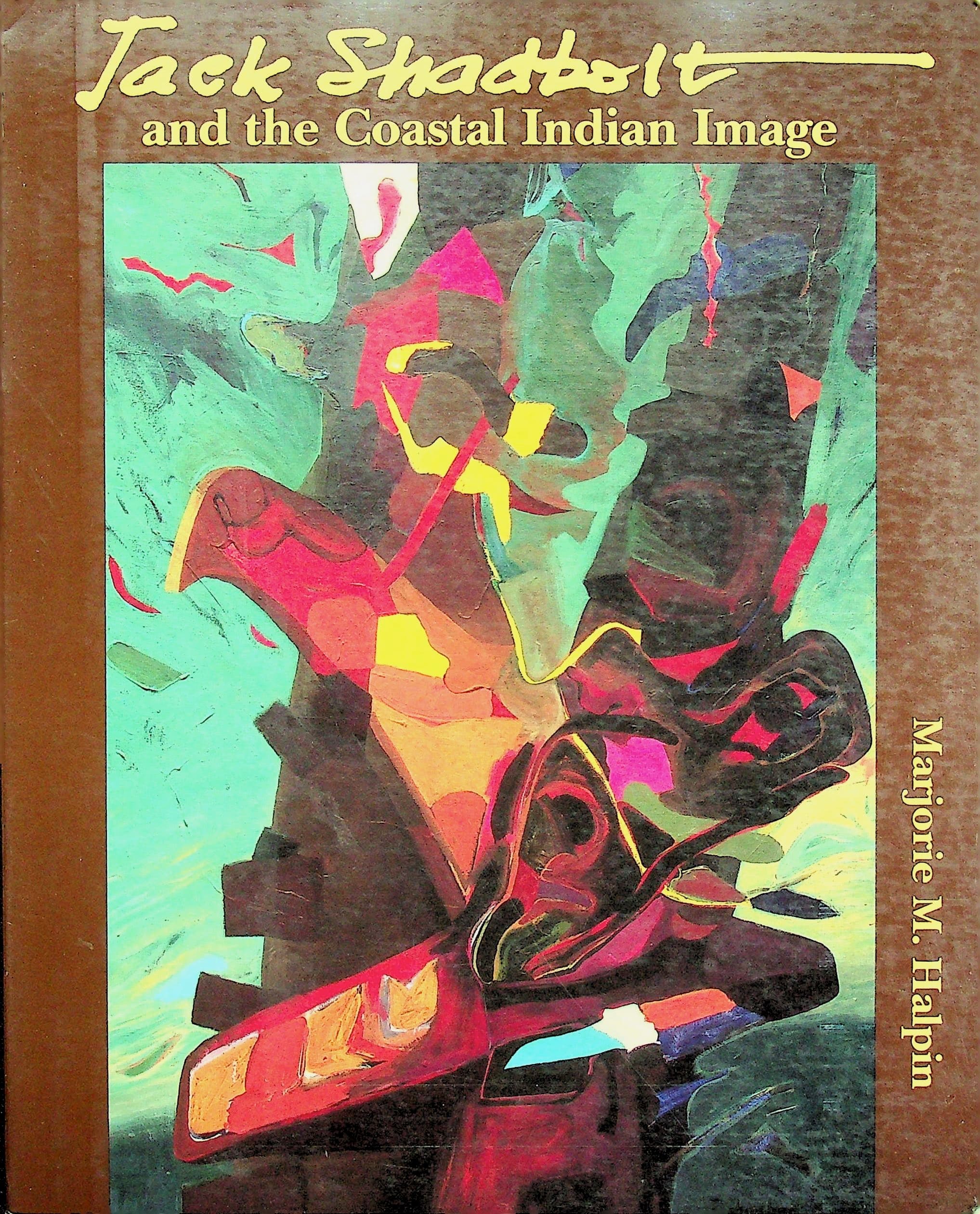
University of British Columbia Press in association with the UBC Museum of Anthropology, Vancouver [Published date: 1986]. Softcover, 58 pp; includes one folded leaf of plates; illustrated throughout with black-and-white and some color reproductions; 25 cm. Series: Museum Note (Vancouver, B.C.), No. 18. Foreword by Michael M. Ames. In good+ condition. Illustrated paper covers featuring Jack Shadbolt's Toward Totem on front and printed text on rear; light bumping to edges of covers and rubbing and some scuffing to covers as well. Binding tight. Pages clean and unmarked. This catalog accompanied the 1986 exhibition Jack Shadbolt and the Coastal Indian Image at the University of British Columbia Museum of Anthropology. [From back cover] Jack Shadbolt was inspired in his formative years by his contact with Emily Carr and with her brooding works portraying the remnants of Indian villages against the overwhelming wilderness. He made sketches of Indian artifacts and the Cowichan Reserve in the 1930s, but it was only after World War II that elements of Indian art began to show up in his style. Marjorie Halpin finds in the changes in the way Indian forms occur in Shadbolt's paintings an appropriate expression of the changing attitudes of British Columbians to native society and the political will the native people now manifest. As she demonstrates, the place of Indian motifs in Shadbolt's painting can be broadly correlated with the cultural quickening of Indian society in recent years. From the late 1940s until his 1969 retrospective, Shadbolt chiefly used details from Indian sculptures as elements in highly designed watercolours. Subsequently, they became part of more generalized primitives, combining with elements of tribal art of the Southwestern United States and Melanesia. But in the 1980s, the coastal artifacts have become wholly integrated yet autonomous forms in the paintings. Though Jack Shadbolt has never been an ideological artist, he recognizes that his recent works make direct political statements. But he believes his expression of his feelings must continue to be in poetic rather than literal terms. Shadbolt's paintings reveal his emotional sympathy with Kwagiulth, Haida, and Tlingit forms and his deep response to the Indians' spiritual and historic presence in the British Columbia environment. Marjorie Halpin adds an informative and intriguing commentary to the growing body of critical literature on Jack Shadbolt and the various movements of which he has been a part. Significantly too, she stresses the commonalities between Canadian native and non-native artists in addressing universal artistic concerns. Contents include: Foreword; Introduction; In Search of Freedom; From Primitivism to Place; Jack Shadbolt's journal, 24 February 1985; "Act of Art"; Cultural Transformations; Jack Shadbolt's journal, 9 July 1985; Lenders to the Exhibition; List of Paintings and Artifacts; Bibliography; Acknowledgements.