Description
Cambridge University Press [Published Date: 1914]. Softcover, xv, 180 pages. First paperback edition.

Rare, out-of-print & unusual books · Since 1997
Turn the pages with the arrows, keyboard, or a swipe.
Cambridge University Press [Published Date: 1914]. Softcover, xv, 180 pages. First paperback edition.
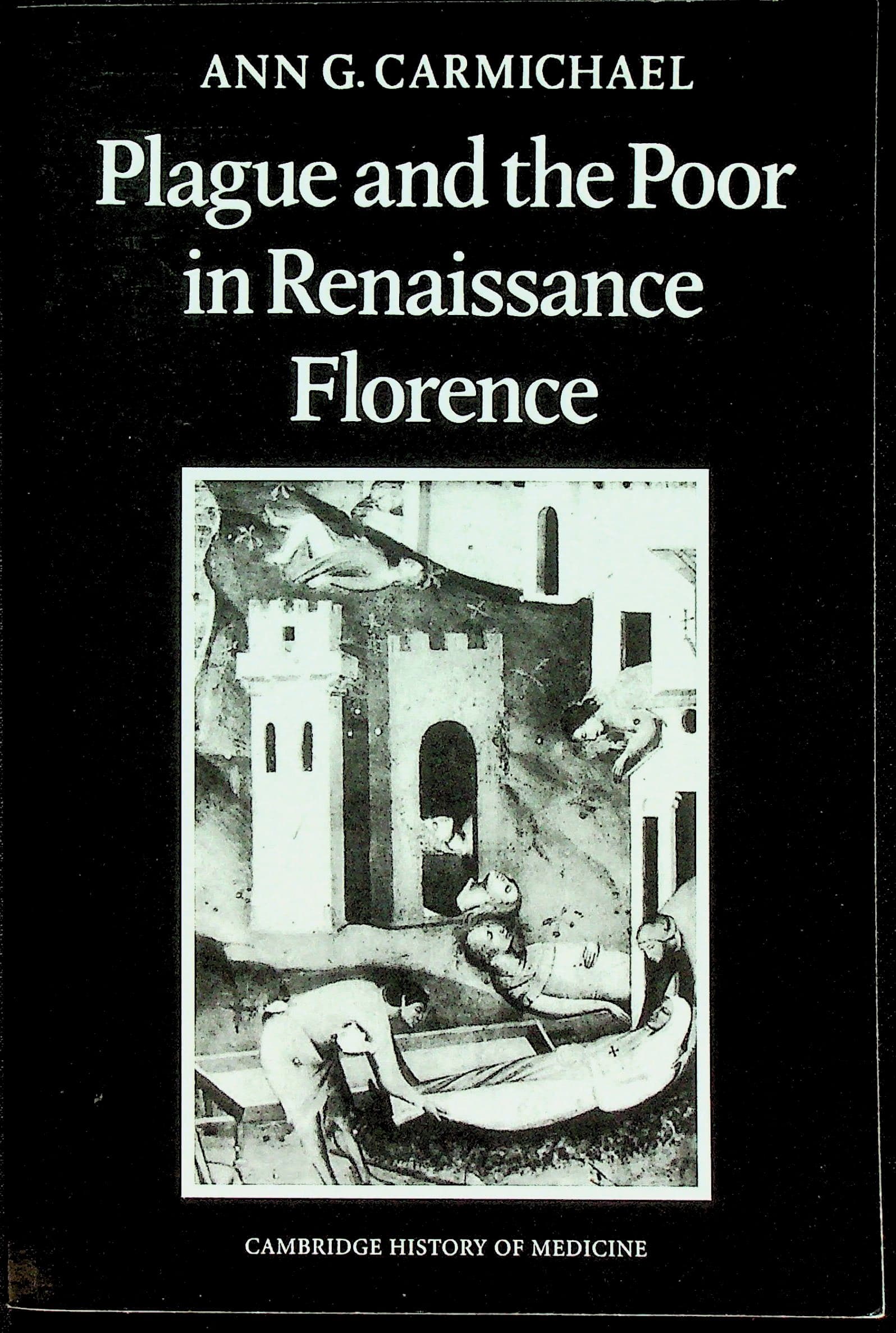
In very good condition. Glossy black and white illustrated paper covers have light bumping to edges and light overall scuffing. Binding tight. Pages clean and unmarked. Some black and white illustrations. [From back cover] This book uses Florentine death registers to trace the changing character of plague from the first outbreak of the Black Death in 1348 to the mid-fifteenth century. Through an innovative study of this evidence, Professor Carmichael develops two related strands of analysis. First, she examines the extent to which true plague epidemics occurred by exploring the role of other infectious diseases that may have significantly contributed to outbreaks of epidemiological "pestilence," identifying key differences between the epidemics of the fourteenth and fifteenth centuries. She then demonstrates how these differences influenced the perceptions of Italian city dwellers in the fifteenth century. While survivors of the fourteenth-century outbreaks, which claimed many prominent citizens, could not reasonably view plague as a disease of the poor, wealthy Florentines of the 1430s increasingly believed that fleeing the city could protect them. This shift in understanding paved the way for public health responses such as quarantine, pest houses, and health boards - measures that, ironically, increased the mortality of the poor and reinforced the belief that they constituted a dangerous element of Renaissance society.