
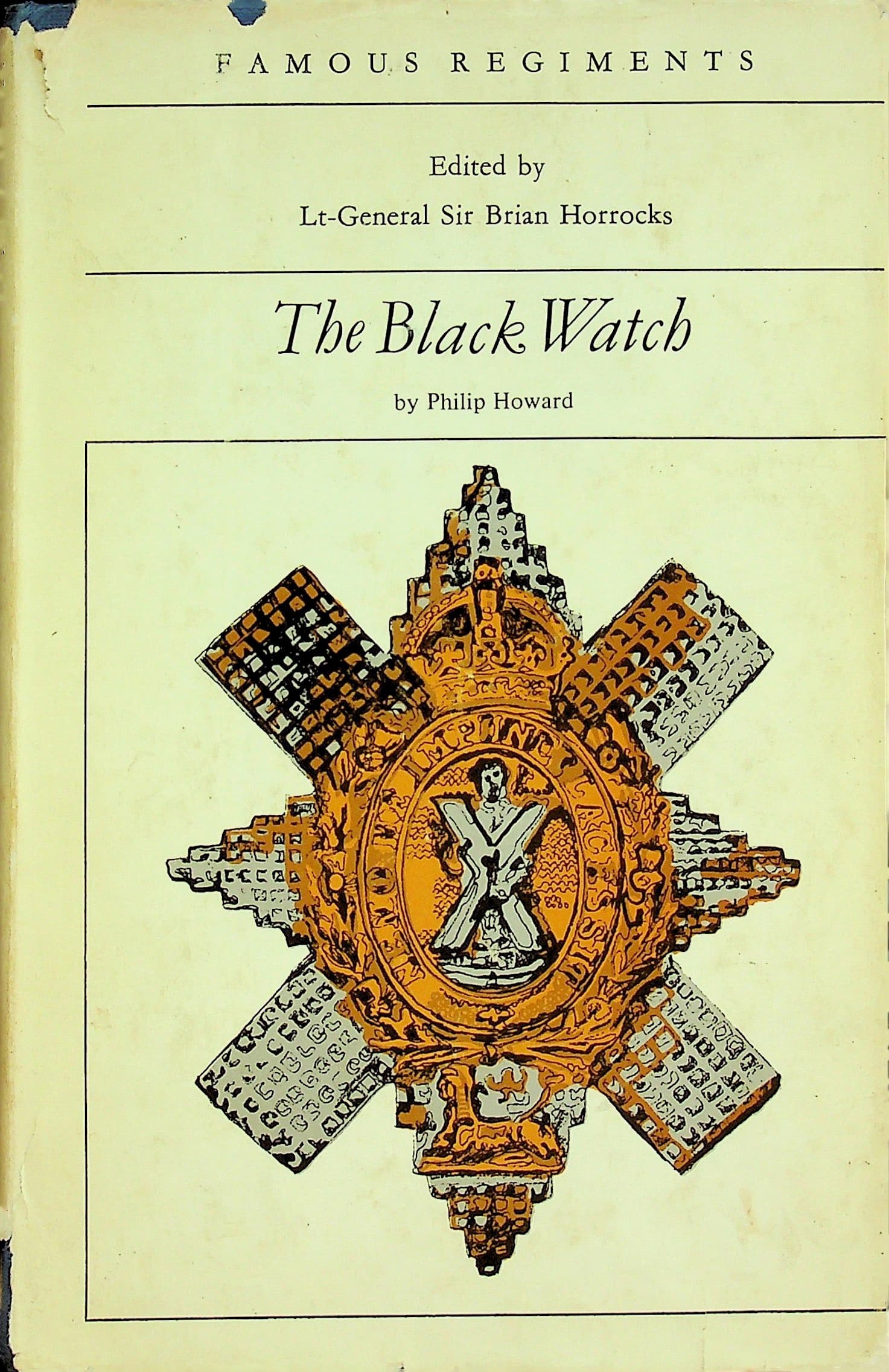
Description
Leo Cooper [Published Date: 1968]. Hardcover, 141 pp. First edition. Good in acceptable+ dust jacket. Blue cloth covered boards with gold lettering on spine. light scuffing and fading to edges of covers. Binding tight. Previous owner's name and circular stamp on front paste-down. Otherwise pages are lightly aged but unmarked. Dust jacket has a few 2" or less nicks and tears and creasing along edges. Light to moderate overall scuffing, aging and soiling to jacket as well. NOT price clipped. Now in an archival-quality (removable) Brodart Cover. Black and white illustrations. [From front jacket flap] The Royal Highlanders... the Gallant Forty-Two... The Germans christened them "the ladies from hell." Down the stormy centuries from Fontenoy to the Hook in Korea, Britain's enemies have called them other less printable names. But when they were first raised as a police force to keep the peace in the turbulent and inaccessible Highlands, the locals nick-named them (in Gaelic, of course) the Black Watch. And the menacing name has stuck. Their old 'black' tartan has stuck too, and today is worn by imitators around the world from Tokyo to Trinidad. It was the first kilted regiment in the British army, the original ancestor of all the other famous regiments that were later raised in the Highlands. Until Waterloo, Gaelic was the language of the Black Watch, and it is still spoken on occasions. They brought the bagpipes into the British army, because the Highlanders refused to march without their pipes. In those early days they charged with claymore and dirk. Today they are fully motorized and mechanized for nuclear war. But the heart of the Black Watch is still Highland. The stern old regiment still keeps its unique traditions. In the wild places of the world, in the most ferocious battles of the British army where victory was balanced on a bayonet point, the Black Watch has usually been there. And still today he is a man of lead whose imagination does not tingle when he hears the pipes play "Hieland Laddie," and sees the long lines of kilts swinging jauntily down the hill.