
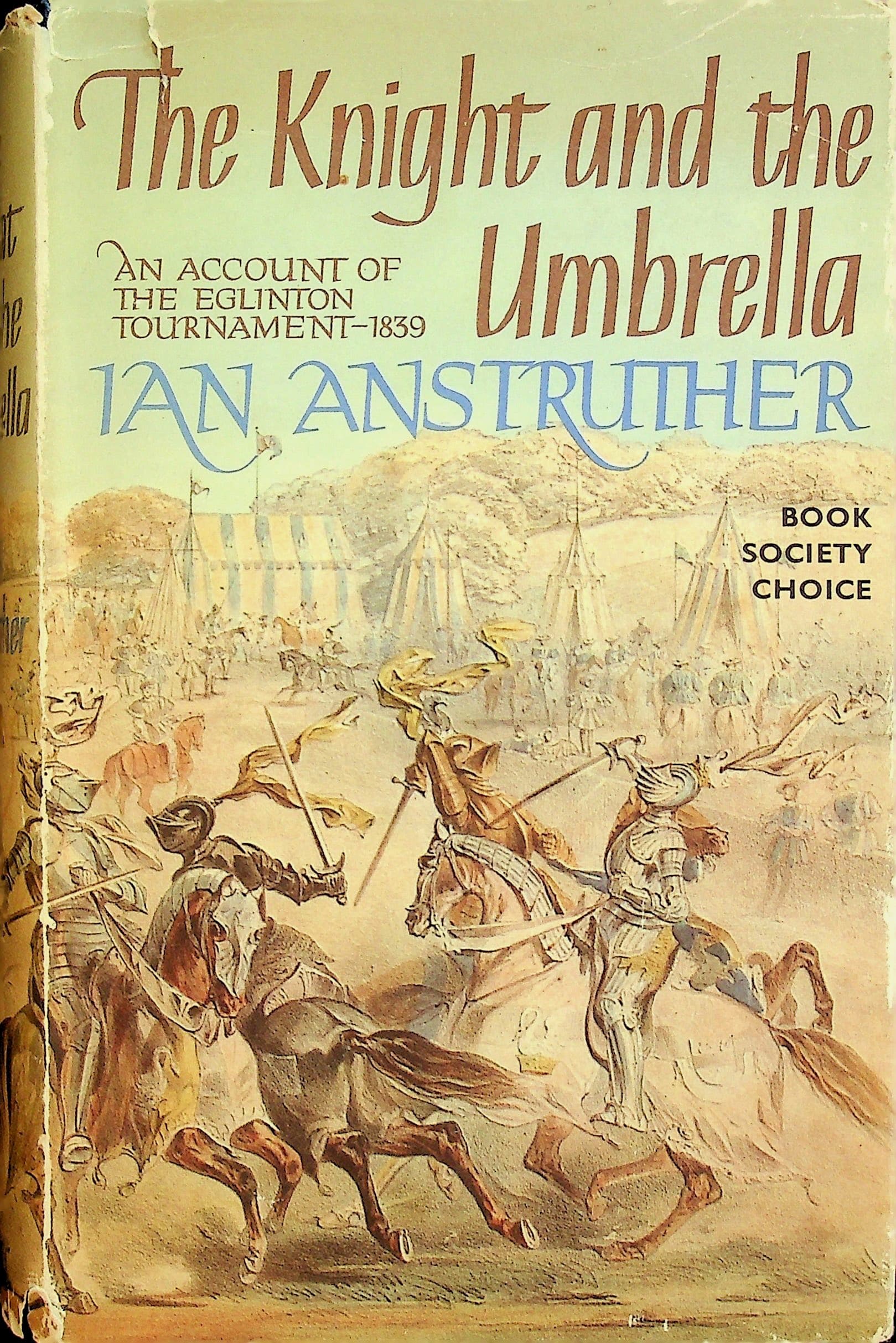
Description
Geoffrey Bles [Published Date: 1963. Hardcover, xvii, 270 pages. First edition. Very good in good dust jacket. Blue cloth covered boards with gold illustration of knight on horseback on front and maroon block with gold lettering on spine. Light bumping and scuffing to edges of covers. Binding tight. Pages very lightly aged but otherwise unmarked. Dust jacket has several 1" or less nicks and tears and creasing along edges. Light to moderate overall scuffing, aging and soiling to jacket as well. NOT price clipped. Now in an archival-quality (removable) Brodart Cover. Black and white illustrations, facsimiles, 1 genealogical table, maps, portraits. [From jacket flaps] What was the Eglinton Tournament and why was it so important? To say that it was the dying, nostalgic protest of an aristocracy infatuated with the myths of chivalry and medieval ceremony is to oversimplify. The Earl of Eglinton, rich, spoilt and only 26 years old, egged on by his stepfather who had been done out of a job by the Whig Government's decision to remove practically all ceremony from Queen Victoria's coronation, decided to hold a Tournament at his Ayrshire 'Gothic' castle. That would teach the Prime Minister, Lord Melbourne, that the age of chivalry was far from dead: the kill-joy Whigs were paying too great lip-service to this absurd industrialism and 'popular' reform. But the era of steam had arrived. Wealth was being re-distributed. A new influence was gaining power in the country's affairs. Yet the sponsors of the Tournament were out of touch with this ineluctable progress. Lord Eglinton, regardless of the enormous personal cost, persisted in his intention and the Tournament duly took place, to be followed by a traditional banquet and ball. Thousands in medieval costume flocked to the spectacle. The weather, however, was unkind. It rained heavily, bringing mud and dismay. Nonetheless, Lord Eglinton and his friends fulfilled their purpose. They had made a stand for tradition and past splendour. Using contemporary documents, Ian Anstruther has wittily recaptured the sotry in The Knight and the Umbrella displaying as it does the strange folly of man.