
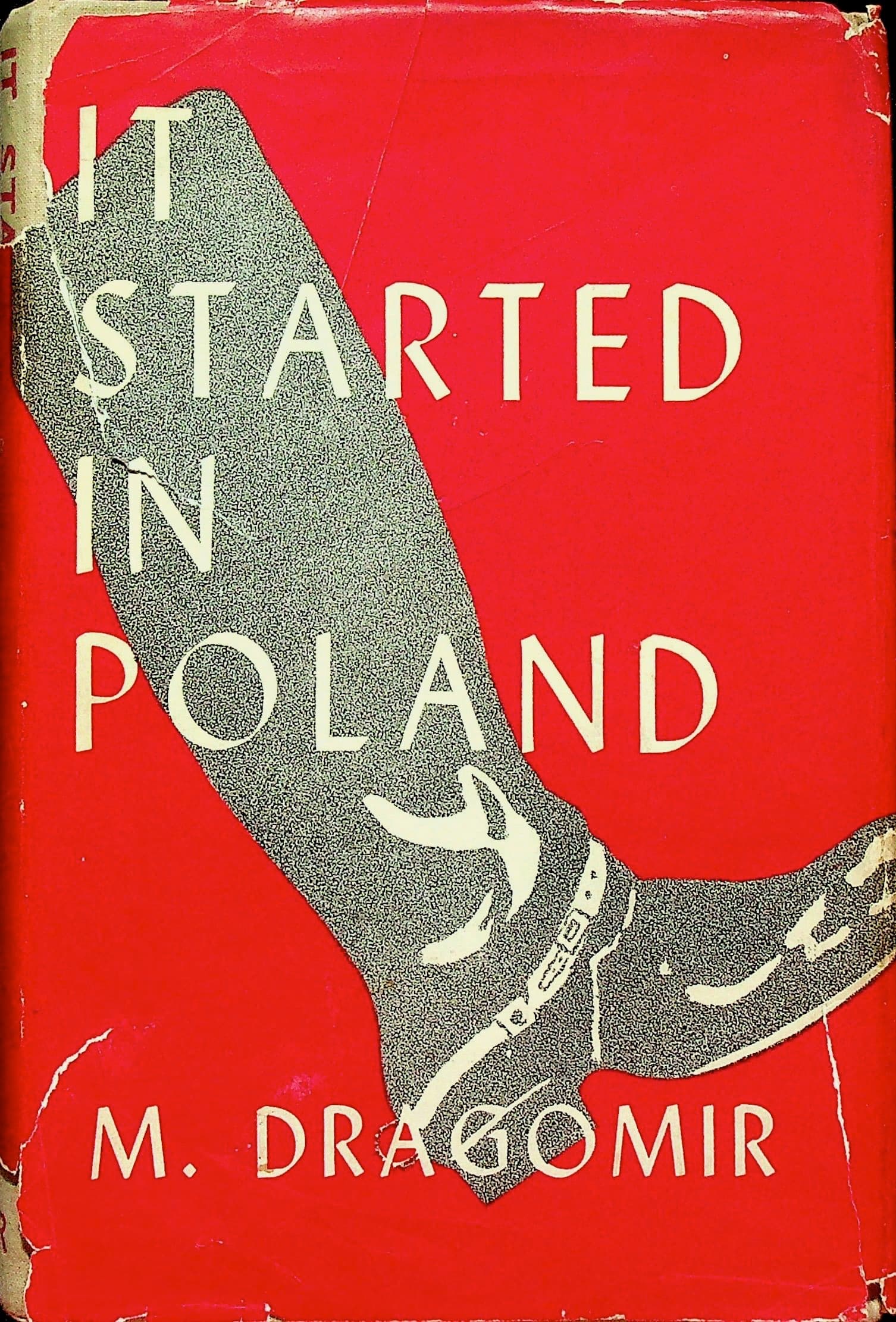
Description
Faber and Faber [Published Date: 1941]. Hardcover, 249 pp. First Edition. Good in acceptable dust jacket. Tan cloth covered boards with red lettering on spine. Light bumping to edges of covers and light overall scuffing, aging and soiling to covers as well. Binding tight. Pages lightly aged but otherwise unmarked. Dust jacket is tattered with two large chunks missing from the paper over the top and bottom of spine and several other large chips and tears and creasing along edges. Moderate overall scuffing, aging and soiling to jacket as well. What remains is now in an archival-quality (removable) Brodart Cover. [From front jacket flap] Mr. Dragomir was a Polish Civil Servant; his life was comfortable and cultivated; he was happy. Then suddenly, in September 1939, he became a wandering refugee, unshaved, dressed in rags, halfstarved. Written from a personal point of view this book is nevertheless a brilliant account of the sufferings of a people whose natural existence was suddenly wrested from them. During his wanderings in Eastern Poland Dragomir gained a first-hand knowledge of all the aspects of the German and Russian invasions. The chapters on the Russian invasion are particularly interesting since so far little has been written on this subject. But this book is not just one long chapter of misery. Dragomir returned to Warsaw and discovered a means by which he could live without starving and at the same time help his fellow-countrymen. Together with an adventurous woman friend he set up a bootlegging business which covered an organisation to help Poles to escape from the concentration camps. It was successful; he made money; but the secret police were on his track and any day he might hear their jackboots at the door. So he and his sister planned an extraordinary and daring escape. This last chapter on their escape to America reads like one of the most exciting adventures of the Scarlet Pimpernel. Action, adventure, horror, love - sometimes even humour - all go to make this book one of the most remarkable pieces of reportage this war has produced.