Description
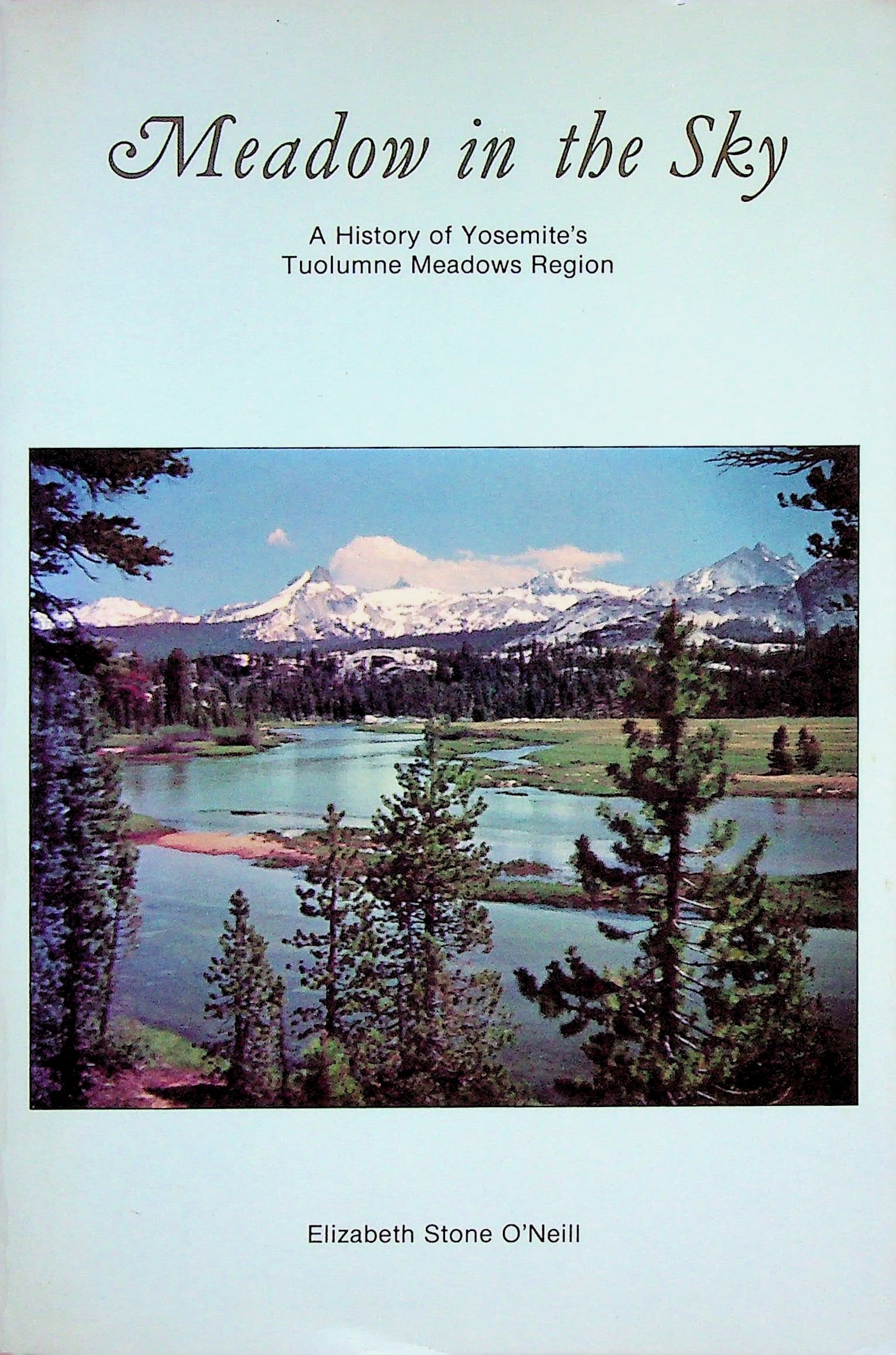
Panorama West Books [Published Date: 1986]. Softcover, 162 pp. Second Printing Revised, 1986.

Rare, out-of-print & unusual books · Since 1997
Turn the pages with the arrows, keyboard, or a swipe.
Panorama West Books [Published Date: 1986]. Softcover, 162 pp. Second Printing Revised, 1986.
In good condition. Blue pictorial paper covers have light bumping and creasing to edges and corners and light overall scuffing. Binding tight. Pages clean and unmarked. NOT Ex-Library. NO remainder marks. Black and white illustrations. [From Introduction] This book came to be because of an ending. In 1976 the National Park Service closed the walk-in campground at the Soda Springs. Benches and tables were removed, fireplaces were razed and raked clean, and one sunwarmed hillside of Tuolumne Meadows returned to forest. Not a bad thing, one might say. Yet for me, and I am sure for many others, a deep sadness arose at the thought that this historic spot, site of so much history and of so many happy personal memories, was being shut down.There was still the Parsons Memorial Lodge, but it was shuttered and locked, a forlorn reminder of bygone days. How many an evening I had spent there, reviewing with like-minded companions the pleasures of the day's hiking and climbing and planning hikes and climbs to come! After knowing the lodge for thirty years, I suddenly began to wonder how it came to be in the first place. Who was Parsons to be so memorialized? Why was it built here? Days spent in the Yosemite National Park Research Library (with the friendly help of librarians Steve Medley and Mary Vocelka) gave me some answers. From the pages of old Sierra Club Bulletins, from yellowed letters and manuscripts, Parsons emerged as a real person. He became one of my comrades on the trail, one of the honored ghosts of Tuolumne Meadows. My article, "Parsons Memorial Lodge," was published in Sierra in September, 1978. Meanwhile, the lodge was reopened. But this was only the beginning. I wanted to know more. I wanted to meet the other ghosts who walked what I egotistically thought of as my trails in my mountains. More days and months of research and interviews brought them slowly to life, like long-silent tree spirits now released and walking about in my mind. Soon for me Tuolumne Meadows was peopled with Indians and miners, scientists and dreamers, rangers and climbers for whom they were their meadows, their trails. I had become infinitely rich in unseen companions. I had come, too, to appreciate more fully and deeply the meadows I had known for much of my life: their great age, their beauty, their fragility. And to become more achingly aware of what I like to call their meaning.This book is the result. I hope that through it you will share with me the joy of the mountains and of those who have loved them. May it signify for you not an ending, but a beginning.