
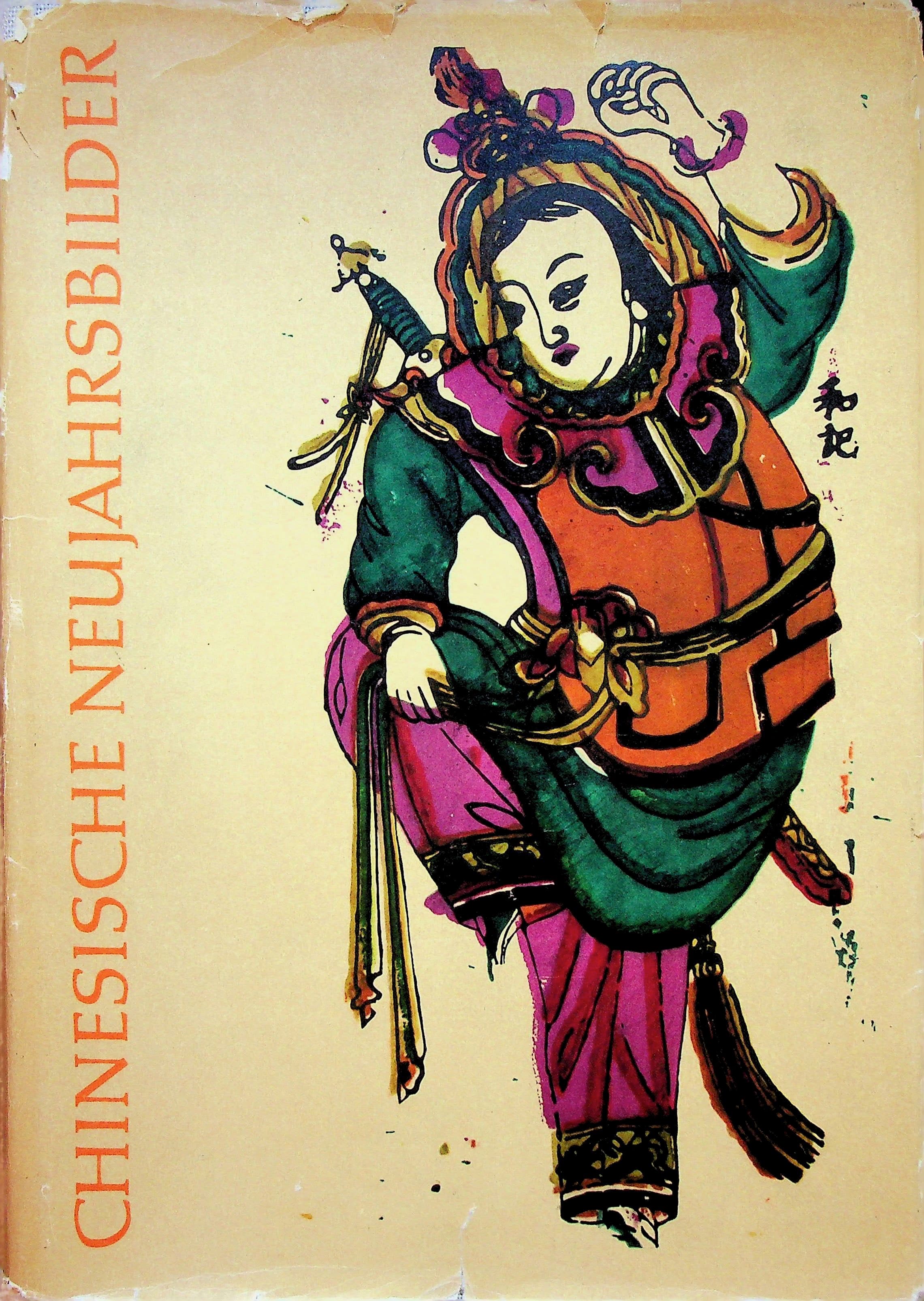
Description
Verlag der Kunst Dressen [Published date: 1961]. Hard cover, 202 pp. Text in German. Good+ in acceptable dust jacket. Cream textured cloth covered boards with green lettering on front and spine. Light bumping and scuffing to edges of covers. Binding tight. "Gift of Mrs. Gerd Wallenstein" stamped at the bottom of front and rear free end papers. Otherwise pages are lightly aged but clean and unmarked. Dust jacket has a 2" tear on the top edge of the back cover and several other smaller chips and tears and creasing along edges. Light to moderate overall scuffing, aging and soiling to jacket as well. Now in an archival-quality (removable) Brodart Cover. NOT Ex-library. Color and black and white illustrations throughout. [From front jacket flap (translated from German to English)]. Every year, from the turn of the year to the beginning of the Spring Festival, a flood of millions of colorful images pours out across China, expressing the thoughts and wishes associated with each new year. The Chinese New Year image - in its current form so full of life and contemporary that one would almost believe that it was born from the spirit of our time - has a very long tradition. Old records report that more than two thousand years ago, the gates and doors of estates and houses were decorated with symbolic representations, simple symbols of protection and good luck, which were refreshed and renewed every year. The popularity of New Year's pictures has increased over time, especially in the countryside. The farmers began to create such images themselves in the winter months when farm work was suspended, and a real folk art emerged. The Chinese New Year painting eventually became the most popular form of Chinese pictorial art. Born entirely from the imagination and creative imagination of the people, his imagery takes us from the dawn of Chinese culture to the present. This book traces the long tradition of the New Year image and traces the diverse forms of its development. The author addresses the world of thought and customs in ancient China; particularly in detail on the habits associated with the celebration of the New Year, a festival that has always been characterized by many of its own customs, in which the ancient longing and urge of the people for prosperity and happiness are expressed.