Description
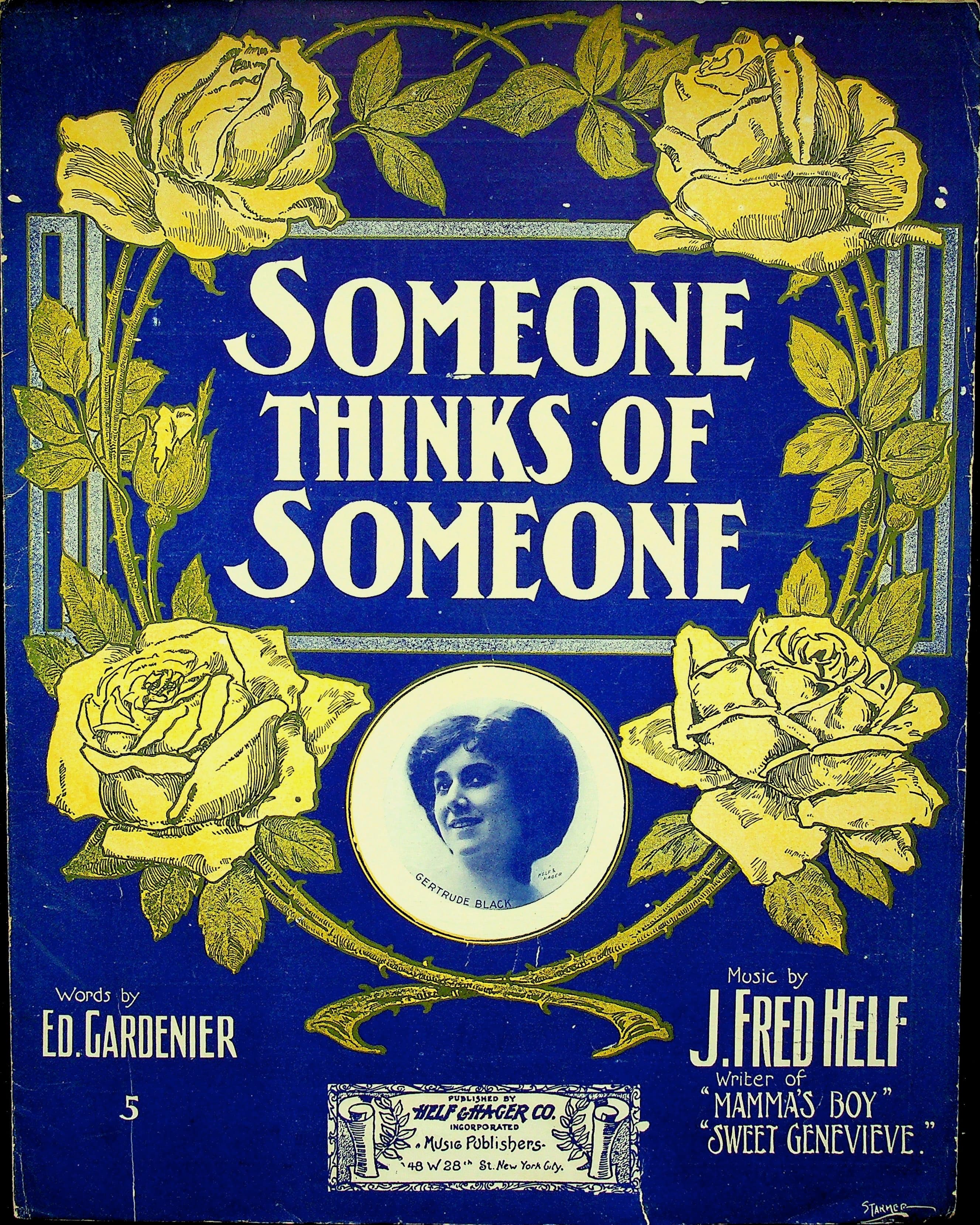
Helf & Hager Co. [Published Date: 1905]. Sheet music, large format (10.75" x 13.5"). With inset photo of Gertrude Black. Paper covers, 6 pages (including covers). For voice and piano.

Rare, out-of-print & unusual books · Since 1997
Turn the pages with the arrows, keyboard, or a swipe.
Helf & Hager Co. [Published Date: 1905]. Sheet music, large format (10.75" x 13.5"). With inset photo of Gertrude Black. Paper covers, 6 pages (including covers). For voice and piano.
In good condition with a few small nicks and tears and light creasing along edges and with longer slits running along the top and bottom of the fold of the outer covers. Light overall scuffing, aging and soiling to pages as well, but otherwise unmarked. Beautiful cover design by Starmer. Ed. Gardenier was a lyricist active between the 1890s and early 1900s. His known works include a variety of compositions that ranged in genre, and his association with the Tin Pan Alley era positioned him as an influential, though under-documented, figure in American music. J. Fred Helf (1870? - 1915) was an American composer, songwriter, and music publisher. He started his career in New York City after moving from Kentucky at the age of 31. Helf became a prolific songwriter, working with many other prominent names like Will A. Heelan. Helf's career saw its ups and downs, including a bankruptcy in 1910. He passed away at the age of 45, leaving behind a legacy of over 100 compositions. [Verse I] Lad and a maid idly they strayed Stars in the heavens were beaming, As with a sigh he said goodby, Tears in her soft eyes were gleming. Sweetheart don't grieve tho' I must leave and two fond hearts may grow lonely; By night and day When I'm away my thoughts are of some one only. [Chorus] Some one thinks of some one all the live long day, Sadly misses someone when some one's away. Sweetly dreams of some one All the night hours through, Some one thinks of some one some one thinks of you. . . A note about the cover art : Some of the most creative and eye-catching cover art of the ragtime-era were done by one of the prolific, but elusive, Starmer Brothers. Their work was of consistently high quality and they were turning out nearly a quarter of all large format covers from the late 1890s to around 1919. The identity of the artists was unknown until an invoice was discovered with a printed heading describing "Starmer" as artist and medical draughtsman. Not much else is known about the Starmer family.