
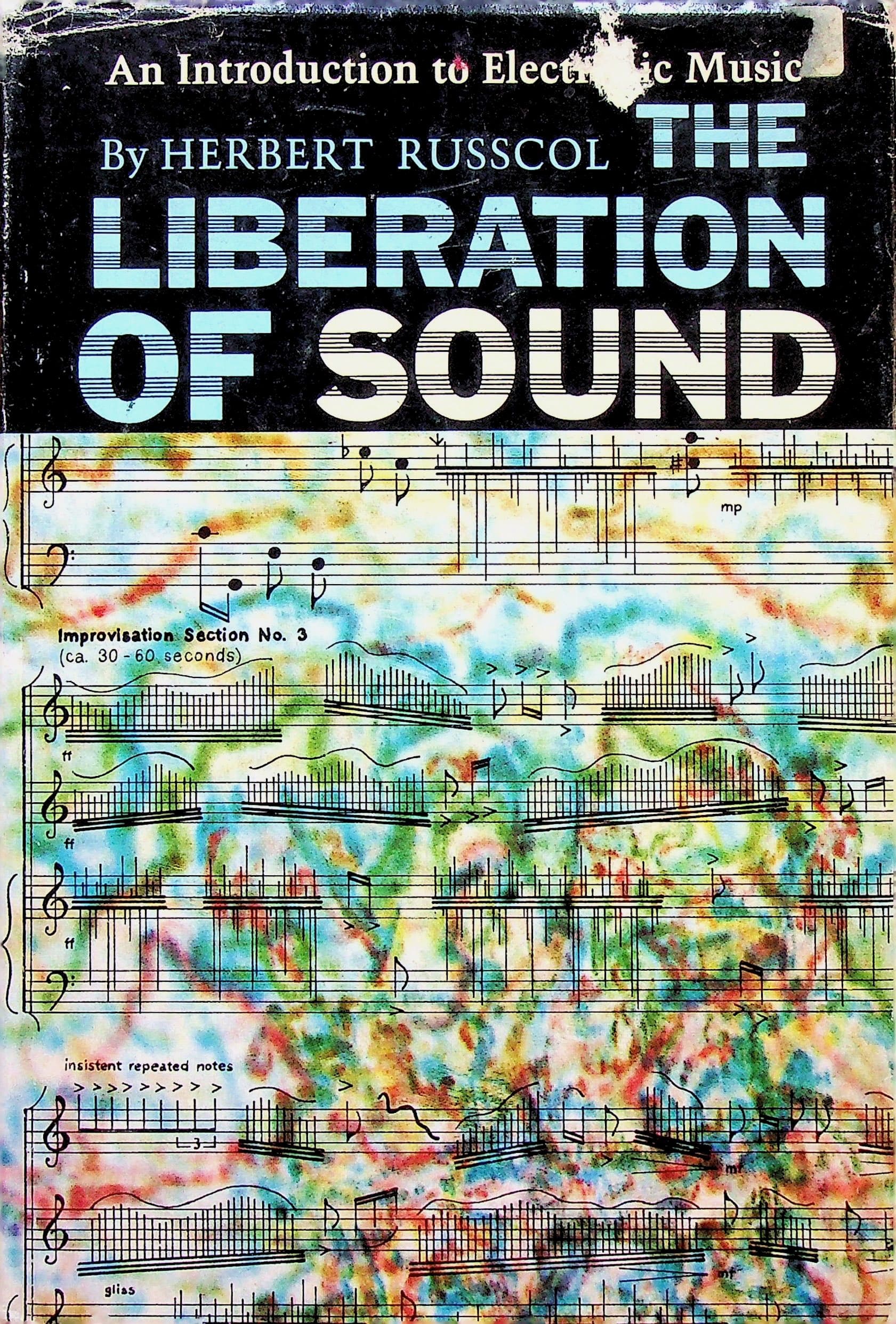
Description
Prentice Hall [Published date: 1972]. Hard cover, 315 pp. Third printing. Good in acceptable dust jacket. Maroon cloth covered boards with blind stamped decoration on front and blue lettering on spine. Light bumping and scuffing to edges of covers and light overall scuffing and soiling to covers as well. Binding tight. Pages lightly aged but otherwise clean and unmarked. Dust jacket has several 1/2" or less chips and tears and creasing along the edges. 1" square scratched patch at top of front cover where price sticker was removed taking top colored layer of paper with it. Light to moderate overall scuffing to jacket as well with a bit of the color scuffed off along the edges and spine. Price clipped. Now in an archival-quality (removable) Brodart Cover. NOT Ex-library. NO remainder marks. Includes an 8 page section black and white illustrations. [From jacket flaps] Ping, pluck, THUD, the hum of the airport, whir of the turnstile, scream of the universe ...ELECTRONIC SOUND. Electronic wasn't even in the dictionary until 1940, and the tape recorder and magnetic tape weren't developed until the 50s. In its current forms, electronic music is essentially a product of post-World War II society, yet the roots of what has been called the New Music extend back more than a century. The Liberation of Sound is the first book about electronic music that is intended for laymen as well as professional musicians and electronic enthusiasts. With insight and skill, Herbert Russcol traces the growth of this new music - from the cautious yet revolutionary departures from strict tonality in the nineteenth century to the mind-bending experiments with sound today. In detailing the context within which the New Music has developed, Russcol discusses the nature of sound and analyzes the dreams and techniques that have led to its liberation. Of particular interest is the far-reaching work being done with electronic sound and computer-produced composition at Bell Laboratories. As a result of this kind of work, composers now have available to them for the first time the entire spectrum of sound and the technology of the electronic age. What emerges is a music that is still controversial - thought of by some as cold and mechanical, by others as reflecting the ambiguities and complexities of modern life more eloquently than any other art form. Drawing on history and sociology, Russcol focuses on men and events - the partnership of Le Corbusier and Varèse in building the great Poème electronique for the Brussels World's Fair . . . the smashing of equipment by angry New York Philharmonic musicians who refused to play a John Cage composition . . . the mad rush of millions to buy the Beatles' "Sgt. Pepper" album. His biographical sketches of significant composers - including the towering figures of Busoni and Varese, as well as Xanakis, Berio, Boulez, Stockhausen among the Europeans, Ives, Ruggles, Luening, Babbitt, Subotnick, Brown, and Cage among the Americans-are more than accumulations of dates and statistics. They include anecdotes, the opinions of friends and detractors, and the author's analysis and evaluation of each composer's work. In addition Russcol reviews selected recordings and reprints a partial discography of electronic music compiled by Peter Frank. He also presents a collection of significant essays provided for this book by their authors: "Documented History of the Cologne School" by Otto Luening, "Some Thoughts on Computers and Music" by Dr. J. B. Pierce of Bell Laboratories, and "The Composer and Computer Music" by Professor Hubert S. Howe, Jr. From Jacques Barzun's preface entitled "A Request for the Loan of Your Ears" to the detailed overview that follows, The Liberation of Sound is continuously informative and absorbing. It is a major contribution to the understanding and appreciation of a complex contemporary phenomenon.