
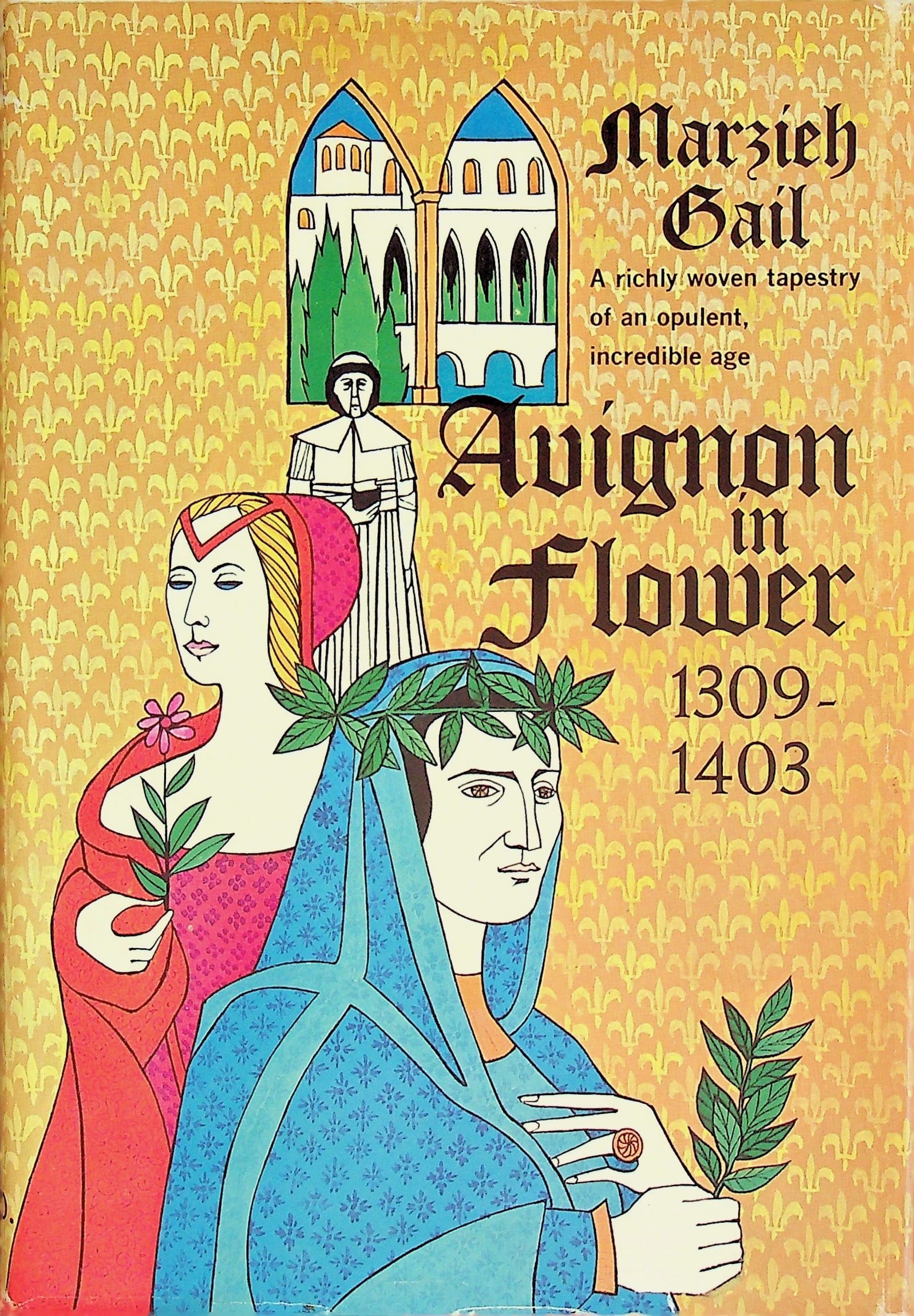
Description
Houghton Mifflin, 1965]. Hardcover, 324 pp. Stated First Printing. Very good in very good dust jacket. Cream cloth covered boards with gold decoration on front and tan cloth and blue metallic lettering on spine. Light bumping and scuffing to edges and corners of covers. Binding tight. Pages clean and unmarked. Dust jacket has a few small nicks and tears and light creasing along edges. Light overall scuffing to jacket as well. Now in an archival quality (removable) Brodart cover. Not Ex-library. No remainder marks. Nice map of Avignon on end-papers. Lovely decorations by Pauline Baynes. [From jacket flaps] In a book that blends erudition with charm, Marzieh Gail re-creates the tone and tempo of the late medieval world. Glittering rooms, old streets, ancient hills, and the River Rhone form the backdrop for this tale of Machiavellian intrigue, poetic drama, and spiritual hope. In 1305 Philip the Fair of France, strongest king in all of Europe, induced a Gascon Frenchman to sit on the papal throne. Such influence on papal elections by temporal monarchs had occurred before in the Middle Ages, but Philip's act was unprecedented in one way: his Pope, Clement V, was to sit not in Rome but in France. In the end, Clement chose Avignon, next door. Avignon, an ancient city antedating the Roman Empire, suddenly became a center of late medieval culture. For more than seventy years the popes reigned unchallenged in Avignon. This period has been called the "Babylonian Captivity," but for Avignon it meant a new lease on life. The early popes ranged from baker's son to noble, from the "Midas of Avignon" who piled up an enormous fortune to the profligate who spent it. They ruled over the passions of men in a world of power, poison, and treachery. As a witness to their greatness and a protection against their enemies they raised a monumental papal palace, still standing today. Here they celebrated their power with epicurean banquets. At these feasts Petrarch would often appear, the center of attention for his wit and learning and for the exquisite poetry inspired by his mysterious love, Laura. Later popes, ever mindful of the might of France, which lay just across the River Rhone, grew restive in Avignon and yearned to return to Rome, traditional citadel of the Church. Two popes attempted to re-establish the papacy in Rome, but only one succeeded - by dying in Rome. And his death only gave rise to new strife that was not to be resolved until the greatest days of the Italian Renaissance. This is history told in a series of golden tapestries. Marzieh Gail alternates evocations of Petrarch's love for Laura with sharply drawn portraits of the popes to give us a magical picture of a world now lost forever.