Description
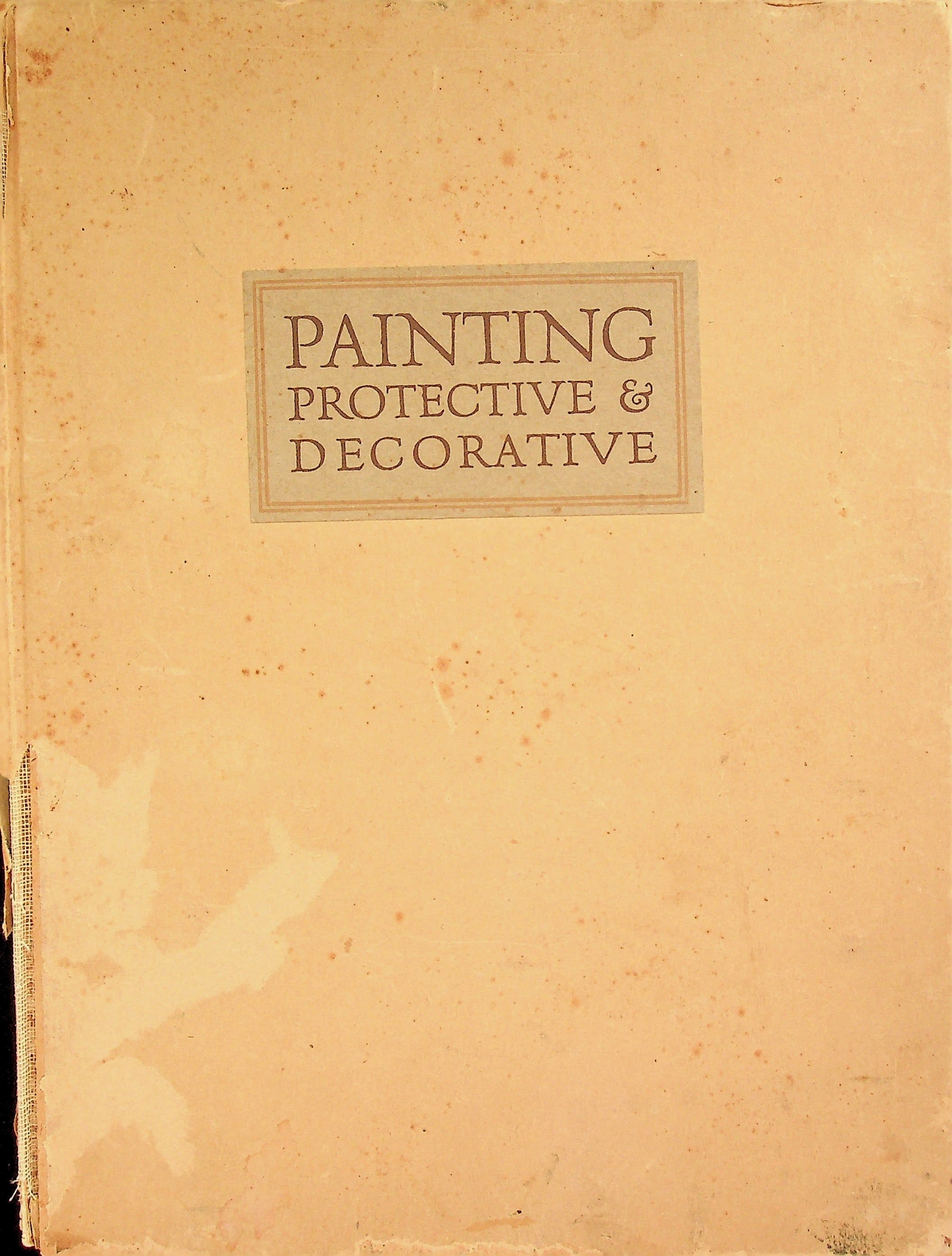
National Lead Company [Published Date: 1913]. Hardcover, 48 pp.] No other printings listed.

Rare, out-of-print & unusual books · Since 1997
Turn the pages with the arrows, keyboard, or a swipe.
National Lead Company [Published Date: 1913]. Hardcover, 48 pp.] No other printings listed.
In acceptable condition. Brown paper over boards with title plate pasted on front cover. Nicking and chipping to paper over the spine and along edges with underlying boards exposed in several spaces. Moderate overall scuffing, aging and soiling to covers as well. Binding tight. Previous owner's name in ink on front paste-down. Otherwise pages are aged but unmarked. Not Ex-library. No remainder marks. Includes 12 color plates and color frontis-piece of iconic Dutch-Boy Painter. National Lead Company was originally capitalized in 1887 as the National Lead Trust. It became the National Lead Company in 1891 and until 1972, it dominated the manufacture and sale of lead products in the United States. It was an aggressive promoter of lead-based paints for home use. This promotional book emphasizes the importance of using "pure white lead". Contents include: I. What Paint is: Only One Vehicle, A tough Film, Why Lead should be Pure; What White Lead Is; Mixed Pigments; Appearances are Deceitful; A test for Adulteration; II. What Paint Does: Penetrates the Pores; Scraping and Burning; Priming Coat Most Important; III. What Paint Costs: Expensive in Reality; Difference in Price; IV. How to Paint: Brush it in; Choose Warm Tints; Employ a Good Painter V. Choosing the Exterior Color Scheme: General Suggestions of Color; More Important than Color; Where the Danger Lies; How to Protect Yourself; VI. Planning the Grounds: What kinds of Flowers and Shrubs; VII. Decorating the Interior of the Home: VIII. Stenciling; Tints of Paint (gives formulas for tints mentioned in the books). Includes some lovely color plates of both interior and exteriors of early 20th century homes with landscaping. Overall, a fascinating piece of history, both from a design perspective and from a public health perspective. Notably, one year after the book was published, in 1914, the United States had its first confirmed childhood death from lead poisoning after a child had repeatedly bitten the railings of his crib that was painted with lead paint. It would be over 55 years before Congress passed the Lead-Based Poisoning Prevention Act in 1971, restricting residential use of lead paint.