
Description
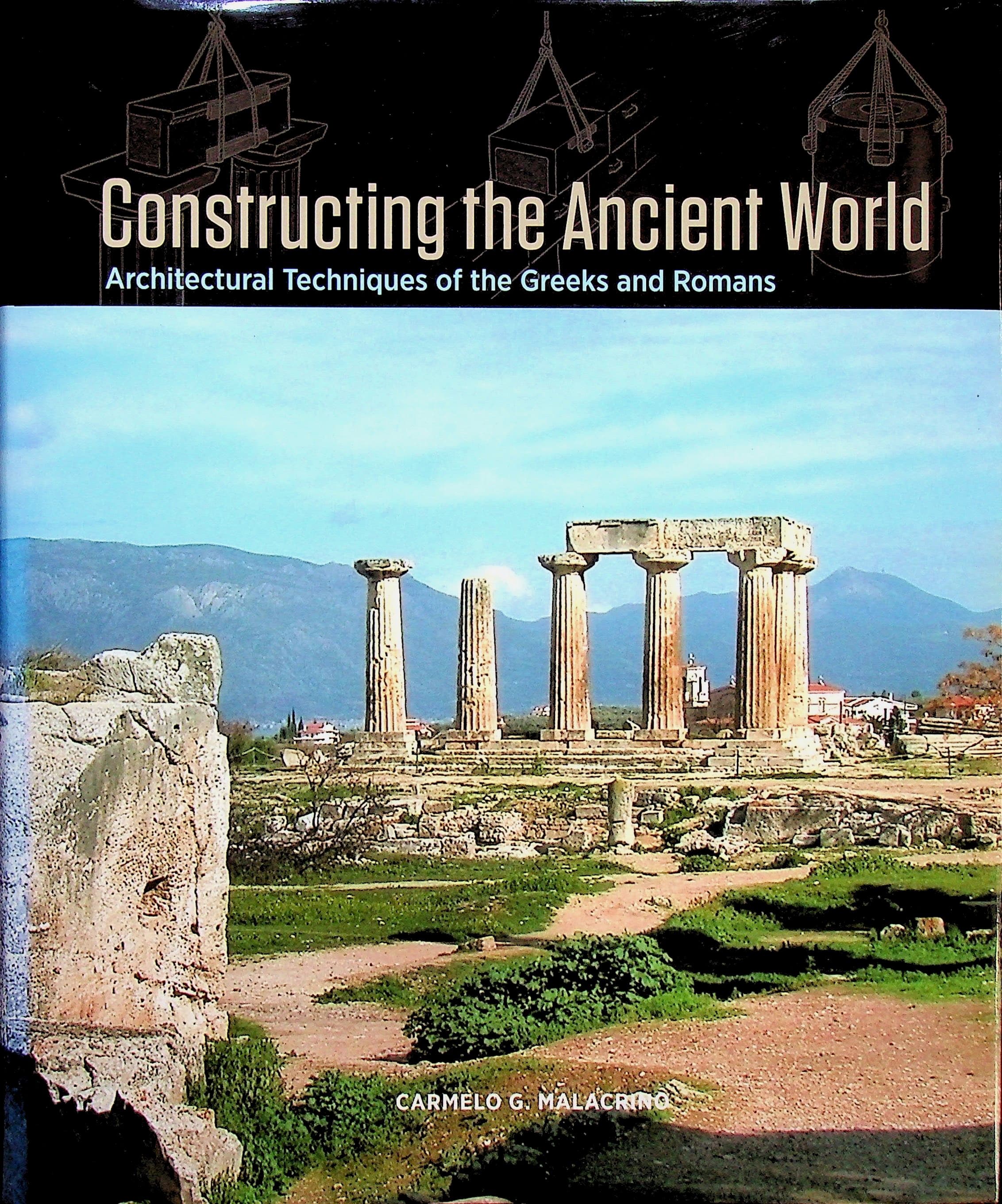
J. Paul Getty Museum [Published Date: 2010]. Hardcover, 216 pp. First English edition, 2010. Very good in very good dust jacket. Brown cloth covered boards with gold lettering on spine. Light bumping and scuffing to edges of covers. Binding tight. Pages clean and unmarked. Dust jacket has a few small nicks and light creasing along edges. light overall scuffing to jacket as well. Now in an archival-quality (removable) Brodart Cover. NOT Ex-Library. NO remainder marks. [From front jacket flap] Architectural remains are among the most important archaeological evidence we have from Greco-Roman antiquity, helping us to understand the values and the technology of the societies that created them. In this richly illustrated book, Carmelo G. Malacrino relies on architectural remains as well as on ancient literary and historical sources to present a wide-ranging overview of the materials and techniques used by ancient Greek and Roman builders from the third century B.C. to the fifth century A.D. The author begins by examining the variety of materials used in ancient buildings and discussing how these materials varied across time and geographical location, often giving a regional look to architecture. From the Greeks' early employment of wood, plant materials, and clay to their adoption of stone as the principal building material in the seventh century B.C., Malacrino traces the development of increasingly sophisticated technologies to quarry and prepare stones for shipment to their building sites. The theme of construction technology occupies the central part of the book, with a discussion of the Greeks' mastery of the process of working with white marbles, the material preferred by the leading architects of antiquity. The Greeks devised several ingenious methods for transporting materials from quarries to building sites, including inclined roads that were specially paved to act as slipways and underwater suspension systems set between two ships. They also invented hoisting systems for raising and positioning monumental elements. The Romans not only expanded on the engineering experiments of the Greeks but also developed their own methods and materials, such as their version of concrete (opus caementicium), which was used to make the vaulted roof of the Pantheon, an advance unequaled for many centuries.