
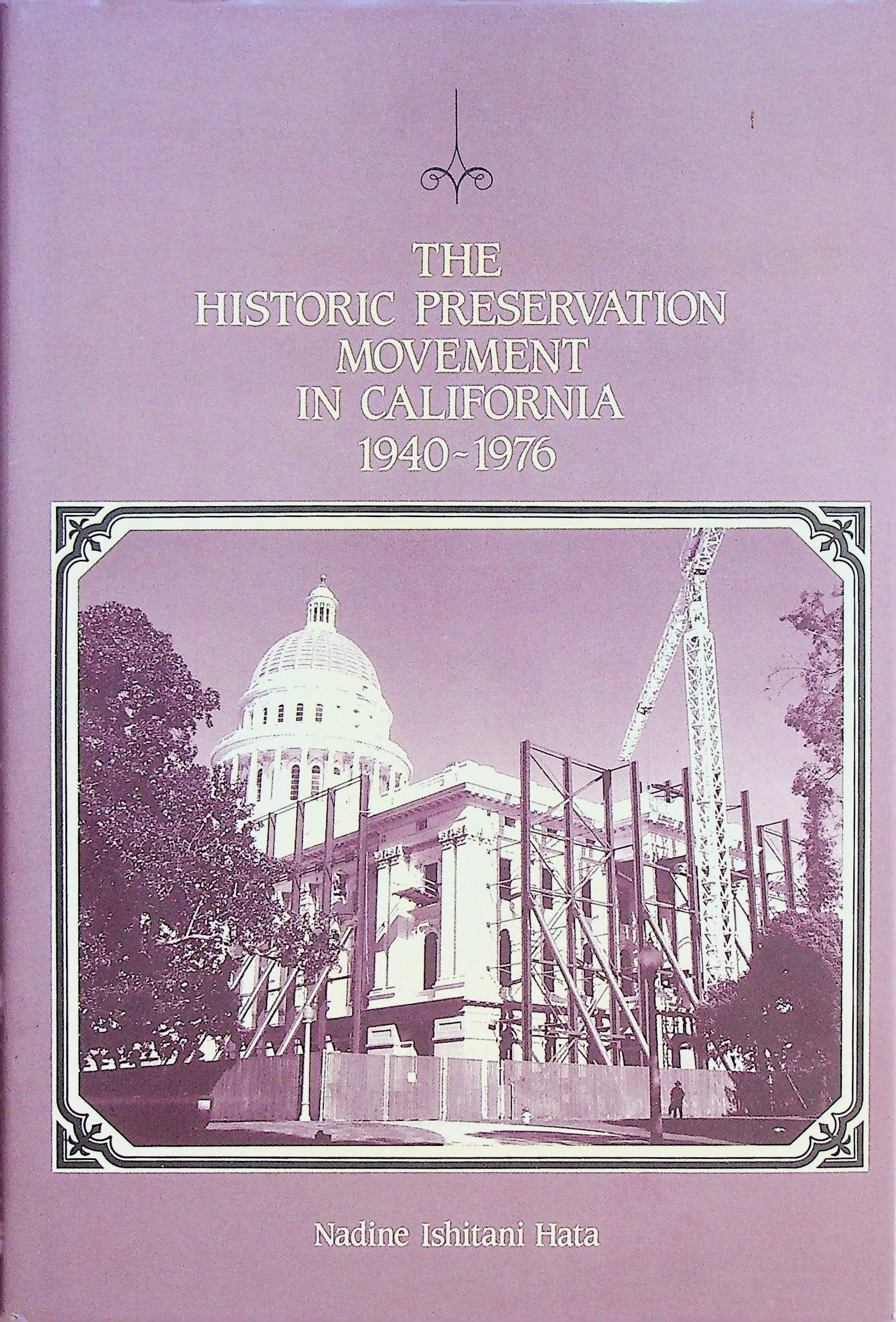
Description
California Dept Parks and Recreation, 1992. Hard cover, 374 pp. NO other printings listed. Inscribed (personalized) and signed by Hata on front free end paper together with Hata's gold foiled "library" seal and Hata's business card affixed to page. Very good in very good dust jacket. Maroon cloth covered boards with gold lettering on front and spine. Light bumping and scuffing to edges of covers. Binding tight. Pages clean and unmarked. Dust jacket has a few tiny nicks and light creasing along the edges. Light overall scuffing to jacket as well. Now in an archival-quality (removable) Brodart Cover. NOT Ex-library. NO remainder marks. Includes notes, bibliography, index. [From review in The Public Historian Vol. 16, No. 3, Summer 1994] notes, bibliography, index. In her carefully crafted study, Hata describes the long-term efforts of private groups and public agencies to preserve and protect California's historic places and sites. Although the volume concentrates on the years from the eve of World War II to the nation's bicentennial celebrations in 1976, the author begins with two brief chapters summarizing historical preservation and related activities prior to 1940, and her treatment of the post-World War II era carries some topics into the very recent past. This work makes an important contribution to the literature of historic preservation, providing a detailed account of the state government's developing responsibilities for historic preservation in what long remained the fastest-growing, most culturally diverse state in the United States. In California, as in most eastern states, the historic preservation. movement received its original impetus from private individuals and organizations, including both the Roman Catholic Church and such exponents of Anglo-Saxon cultural nationalism as the Native Sons and Native Daughters of the Golden West. At a relatively early date, however, Californians began to rely on the state legislature and the voting public to provide tax funds for saving, protecting, and restoring sites of historical importance, and for commemorating events associated prominently with the shaping of the state's European-American society. The creation of a state parks commission in 1927, followed a year later by passage of the first state parks bond referendum, promoted the state government's dominant role in the development of California's historic preservation movement. Subsequently, as Hata demonstrates, the professionalization of historic preservation in California mainly reflected the accomplishments of a few extraordinary leaders--some of national prominence-working through the state parks system.