
Description
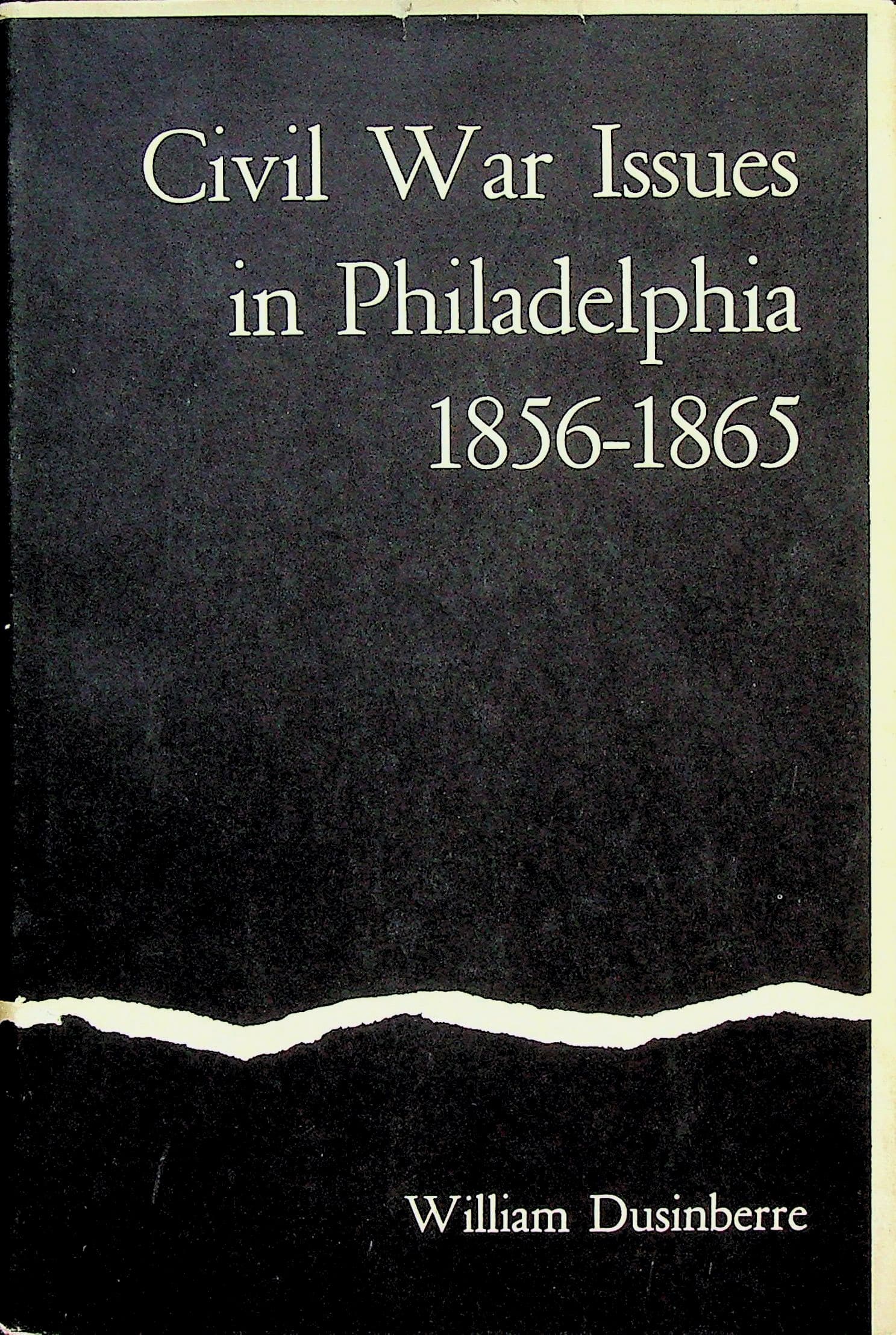
University of Pennsylvania Press [Published Date: 1965]. Hardcover, 197 pp. First Edition. Very good in good dust jacket. Black cloth covered boards with silver lettering on spine. Light bumping and scuffing to edges of covers. Binding tight. Pages lightly aged but otherwise clean and unmarked. Dust jacket has a 1" chip to the paper of the bottom edge of the back cover near the spine and a few other smaller nicks and tears and creasing along edges. Light to moderate overall scuffing and soiling to jacket as well. Price clipped. Now in an archival-quality (removable) Brodart Cover. NOT Ex-Library. NO remainder marks. Index [From jacket flaps] Philadelphia, before the Confederate bombardment of Fort Sumter, was not simply a "Northern" city. Unlike pro-slavery Washington but also unlike anti-slavery Boston, Philadelphia lay in the "Northern border area," where mixed sympathies led to divided loyalties and to frequent convulsions over the great issues which preceded the war. In Civil War Issues in Philadelphia, 1856-1865, the author examines three traditional interpretations of the war and shows how each has to be modified to fit Philadelphia's experience. He suggests that the analysis of Philadelphia opinion may be relevant for the large area extending from New York City to southern Illinois. In Part 1 he portrays the fundamental Philadelphia attitudes as they appeared in 1856, and the two main controversies - the fugitive slave question and the territorial issue - as they developed until 1858. Part II is devoted to the John Brown affair and the secession crisis. Part III analyzes wartime issues: the treatment of dissenters, the Negro question, and the recruitment of short-term soldiers when Confederate armies approached Pennsylvania. From this investigation emerges a vivid portrait of the North's second greatest city and its leading citizens - racist sympathizers with the South, cautious conciliators, firm conservatives, unconstrained anti-Southerners, outnumbered idealists - contending with the crisis of the Civil War period. Thus, this book will appeal to readers interested in the general interpretation of the Civil War. Some, especially residents of large cities, may be attracted by an analysis which refutes cherished ideas about Northern race attitudes. Others will be curious to find how a movement which increased racial justice gained support from men who were unconcerned with that issue. The author's use of primary sources - newspapers, diaries, and correspondence - lends his account immediacy and pungency, as for example, in the description of pro-slavery, Democratic meetings; in the speeches of William Kelley, leading Republican; or in the recurring abolitionist excitement. But the balance between chronicle and history is never lost; events are not only portrayed, but precisely scrutinized and evaluated with reference to the fundamental issues.