
Description
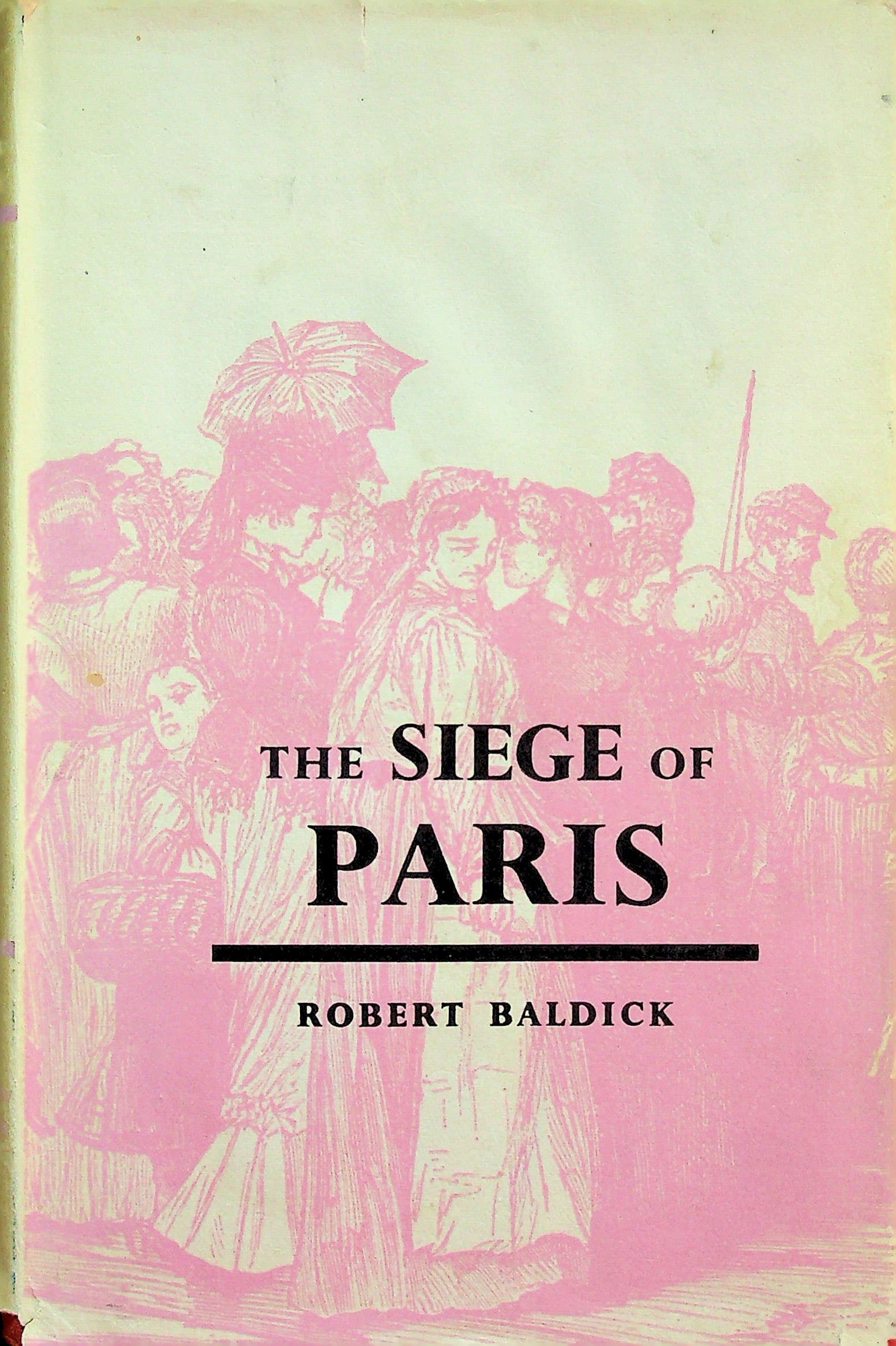
History Book Club [Published Date: 1965]. Hardcover, 248 pp. History Book Club edition. Good in good dust jacket. Rust cloth covered boards with gold lettering on spine. Light bumping and scuffing to edges of covers. Binding tight. Light spotting to edges of text block. Otherwise pages are lightly aged but unmarked. Dust jacket has a few 1" or less nicks and tears and light creasing along edges. Light to moderate overall scuffing, aging and soiling to jacket as well. Now in an archival-quality (removable) Brodart Cover. NOT Ex-Library. NO remainder marks. Black and white illustrations. [From Preface] The Siege of Paris in the autumn and winter of 1870-1 was the last full-scale siege of a European capital, the first occasion of the indiscriminate bombardment of a civilian population, the source of immense hardship and suffering, and the origin of a division in the French nation which has still not been healed. Yet for the past 50 years or more it has generally been regarded either as a heaven-sent retribution for the sins of a frivolous society or as an amusing interlude in the grim history of European conflict. It was in the hope of placing the Siege in its proper perspective that I embarked several years ago on the research for this book. There was, I found, no dearth of material: on the contrary, there was a positive embarras de richesses. In the end, confronted with a mass of prejudiced, chauvinistic and often demonstrably false testimony, I decided to present the Siege as far as possible through the eyes and in the words of a number of perceptive and reasonably impartial observers. These include Edmond de Goncourt, who never showed himself a greater diarist than in his record of 'the Terrible Year'; Henry Vizetelly, the indefatigable correspondent of the Illustrated London News; Henry Labouchere, alias 'the Besieged Resident', the witty and intrepid representative of the Daily News in Paris; and Henry W. G. Markheim, who recorded his impressions of the Siege under the pen-name of 'the Oxford Graduate', and was later elected a Fellow of my old College, Queen's. I should make it clear that this book does not pretend to be a military history of the Siege: I have neither the qualifications nor the desire to write such a work. It is simply an attempt to tell the story of the life of the French capital during some of the darkest and most momentous days of its turbulent history. . .