
Description
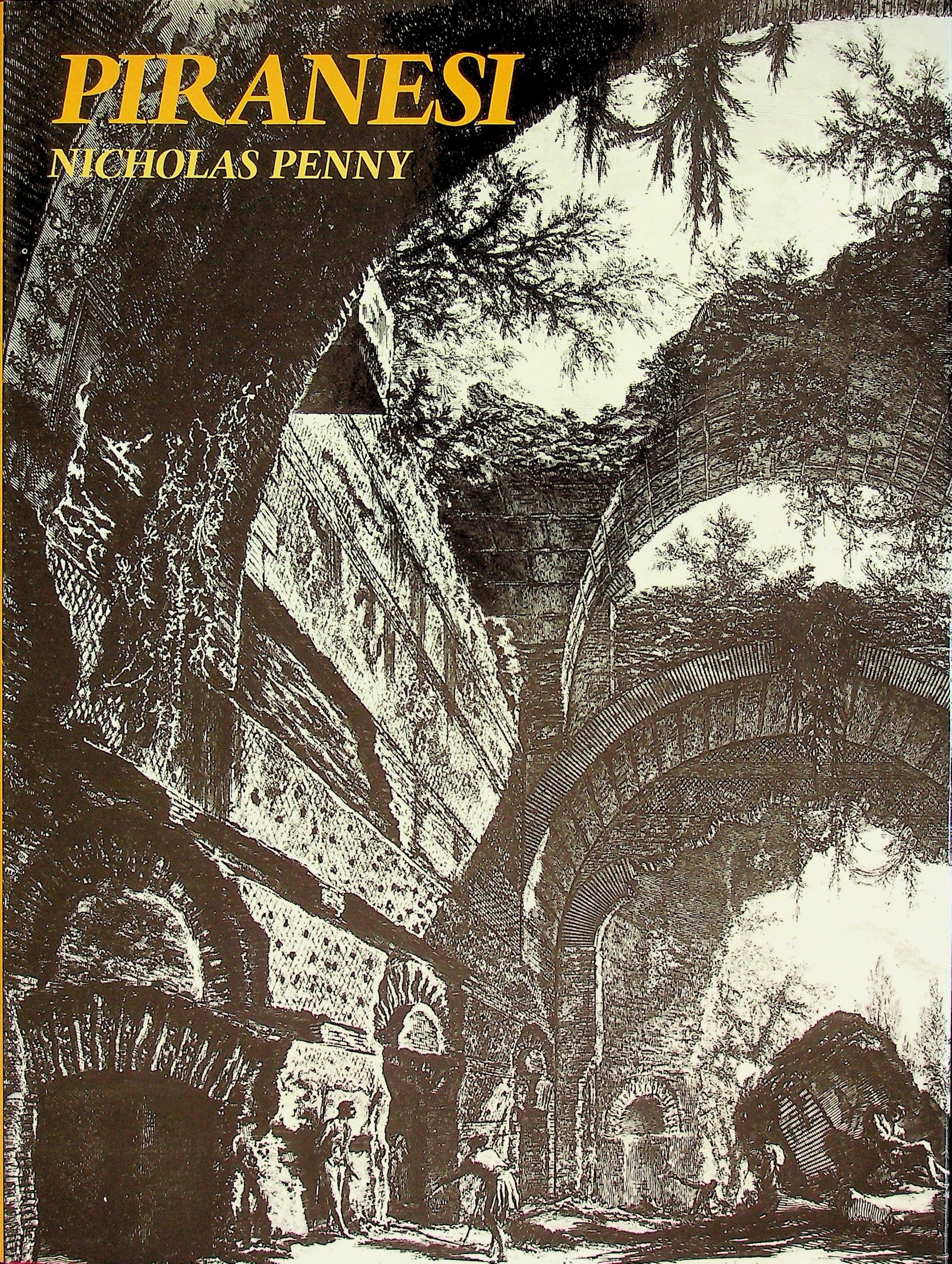
Bloomsbury Books [Published Date: 1978]. Hardcover, 96 pp. No other printings listed. Very good in very good dust jacket. Red cloth covered boards with gold lettering on spine. Light bumping and scuffing to edges of covers. Binding tight. Pages clean and unmarked. Dust jacket has as few small nicks and light creasing along edges. Light overall scuffing to jacket as well. Now in an archival-quality (removable) Brodart Cover. NOT Ex-Library. NO remainder marks. [From front jacket flap] Piranesi's magnificent and grandiloquent concoctions constitute one of the summits of the etcher's art. Drawing upon his immense knowledge of ancient civilizations, much of which derived from his own archaeological excavations, Piranesi presented an intensely personal interpretation of the antique ruins of Rome as they appeared in the eighteenth century. But his vibrant imagination marked all of his etchings and spilled over into his celebrated views of the baroque monuments of papal patronage, into his capricious architectural fantasies and into his masterpiece, the series of Carceri or prison scenes, menacing dungeons whose monumentality complements the disconcertingly organic interpenetration of masonry and vegetation so characteristic of his vision of decayed splendour. Nicholas Penny documents every stage of Piranesi's restless career with over one hundred illustrations, many from his best known and most representative drawings and series of etchings. He measures the impact of the pictorial traditions of Piranesi's native Venice and of the paintings by such older masters as Magnasco, Canaletto and Panini upon his wildly varied work in papal Rome. In turn, Piranesi's own influence upon other artists, especially the younger generation of English and French architects and draughtsmen, is fully assessed, while the often contradictory strands of his personal aesthetic idiom, at once looking back to the baroque in the only major architectural project he completed while pointing unmistakably forward to the Neo-Classical revival in his etchings, are carefully dissected. Nicholas Penny's study is a fully-rounded portrait of a man whose prints have retained their enormous popularity as personal statements of the obsession with the ancient past, of the fascination with the practicalities of building and even of a contentious and disputatious temperament which were all entirely typical of the Italian artistic enlightenment of the eighteenth century.